Which Part Of Cebu Has The Best Beaches?
The best beaches in Cebu, Philippines, by area: Bantayan and Malapascua in the north, Mactan near the airport, Moalboal in the south, plus Camotes, Olango and Sumilon, with fees and how to choose.
Cebu, the island province in the Central Visayas region of the Philippines, splits its beaches across four distinct coastlines, and the "best" one depends entirely on what a trip is for. The north, meaning Bantayan Island and Malapascua, carries the whitest sand and the flattest, calmest swimming water. Mactan Island, next to the airport, trades some of that polish for convenience and resorts. The south, around Moalboal, pairs ordinary grey-sand beaches with the most extraordinary marine life in the province. And the east, the Camotes Islands and Olango, sits quietly between the two. This page, from the Cebu Travel Guide editorial desk, lays out each area honestly so the choice is easy.
Which Part Of Cebu Has The Best Beaches?
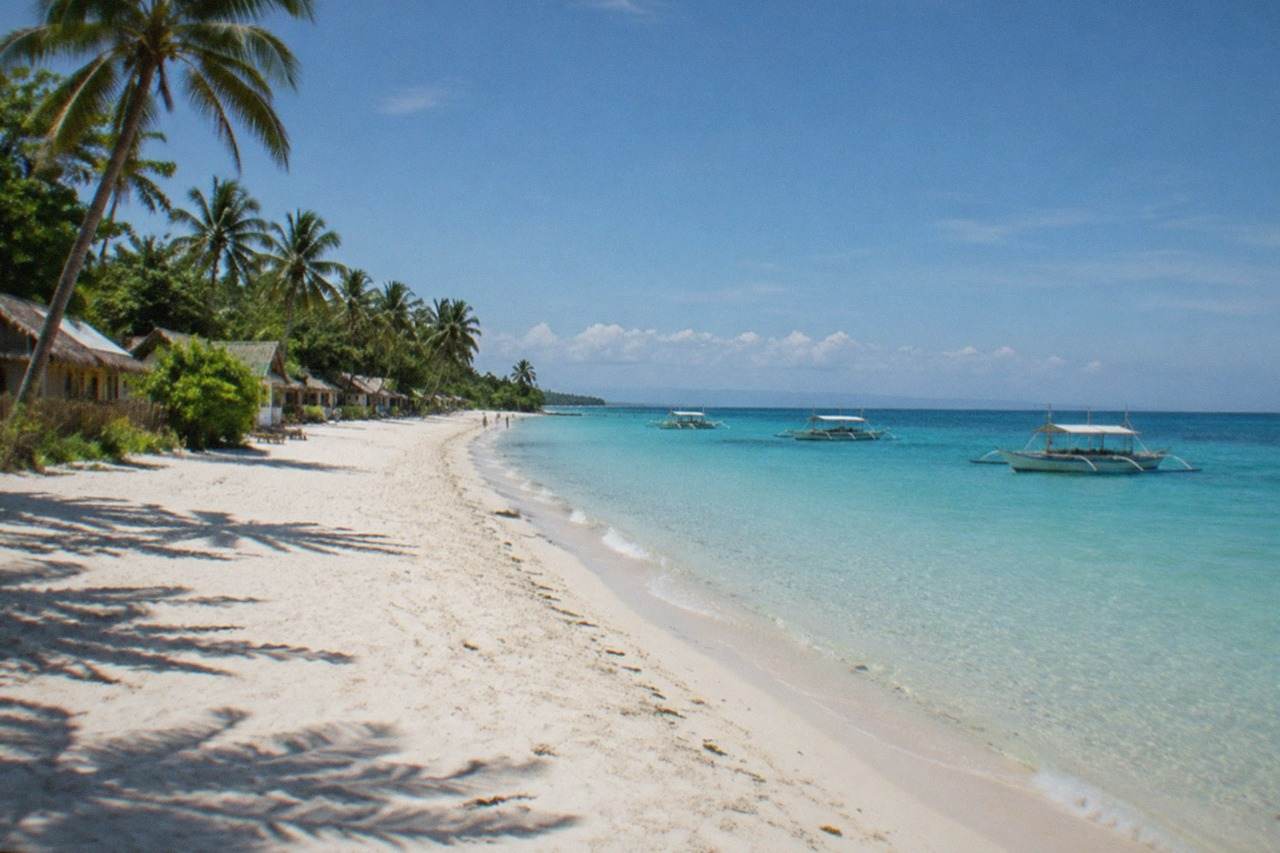
For pure white sand and swimming, the north of Cebu province has the best beaches: Bantayan Island's Santa Fe coast and Malapascua Island, both reached from the northern tip of mainland Cebu. For convenience, Mactan Island beside the airport wins. For marine life rather than sand, the south around Moalboal is unbeatable, because the sardine run sits a few metres from shore. Many travellers combine two of these areas in one trip.
The honest answer is that Cebu is not Boracay. No single beach here is the whole point of the island, and travellers who arrive expecting one postcard stretch of sand are sometimes disappointed by the mainland coast, which is largely mangrove, port and fishing barangay. The famous sand is on the offshore islands, and each of those islands asks for a different amount of travel time.
Bantayan Island sits off the northern tip of mainland Cebu. Its Santa Fe coastline is the closest thing the province has to a classic tropical beach: wide, pale sand, shallow water, and a slow island rhythm. The Department of Tourism confirmed in late October 2025 that Bantayan's ports were fully operational and the island open to visitors, following the magnitude 6.9 earthquake that had struck offshore northern Cebu on 30 September 2025, so the area has recovered and is receiving travellers again.
Malapascua, further north still, is smaller and built around diving rather than sunbathing, but its Bounty Beach strip is genuinely pretty. The island is the base for thresher shark dives, which run to Kimud Shoal in the early morning.
Getting north takes time. The ferry to Bantayan leaves from Hagnaya on the mainland's north coast, and arrivals at Santa Fe pay a small ecological fee on top of the terminal fee at Hagnaya. It is a full-day commitment each way from Cebu City, which is exactly why the beaches stay quiet.
Where Are The Best White Sand Beaches In Cebu?
Bantayan Island, specifically the Santa Fe coast in the island's south-east, has the best white sand beaches in Cebu province. Malapascua Island's Bounty Beach is the runner-up, and Sumilon Island, the small resort island off Oslob in the south, has the most photographed sand of all, though day visitors pay a resort day-pass rate for it. Mactan's resort beaches are good but not in the same class.
Bantayan deserves its reputation. The sand at Santa Fe is fine and pale, the water shelves gently, and the whole island runs on bicycles, motorbikes and fish drying. The fees are small: the terminal fee at Hagnaya is P25 (about US$0.4) per person, and the ecological fee on arrival at Santa Fe is P30 (about US$0.5). Neither will change anyone's budget, but both are cash transactions at small counters, so keep small notes.
Sumilon Island is the outlier. It is a tiny private resort island off the southern town of Oslob, and its sandbar and lagoon photographs circulate online as "Cebu's best beach". The sand is real and lovely, but access runs through the island resort's day-use programme, with transfers, lunch and sanctuary access bundled in. The resort's own offers page lists day rates in the region of P1,600 (about US$25) to P2,000 (about US$32) net per guest depending on the day and package. That is a different proposition from a free public beach, and it is worth knowing before the photographs set an expectation.
Malapascua's Bounty Beach is a thinner strip, backed by dive shops rather than resorts, and the island's reason to exist is the early-morning thresher shark dive rather than the shoreline. Divers pay roughly P1,800 (about US$29) to P2,000 (about US$32) per dive plus marine park fees, according to the dive sites' published rates, and environmental and terminal fees are collected at Maya port on the crossing.
For planning around weather rather than geography, the dry season rule for the whole Philippines, per PAGASA, runs December to May, with the rainy season June to November. The best month to visit Cebu question is covered in its own page, but the short version for beaches is that the December-to-May window gives the calmest seas for the island crossings.
Is Mactan Or South Cebu Better For Beaches?
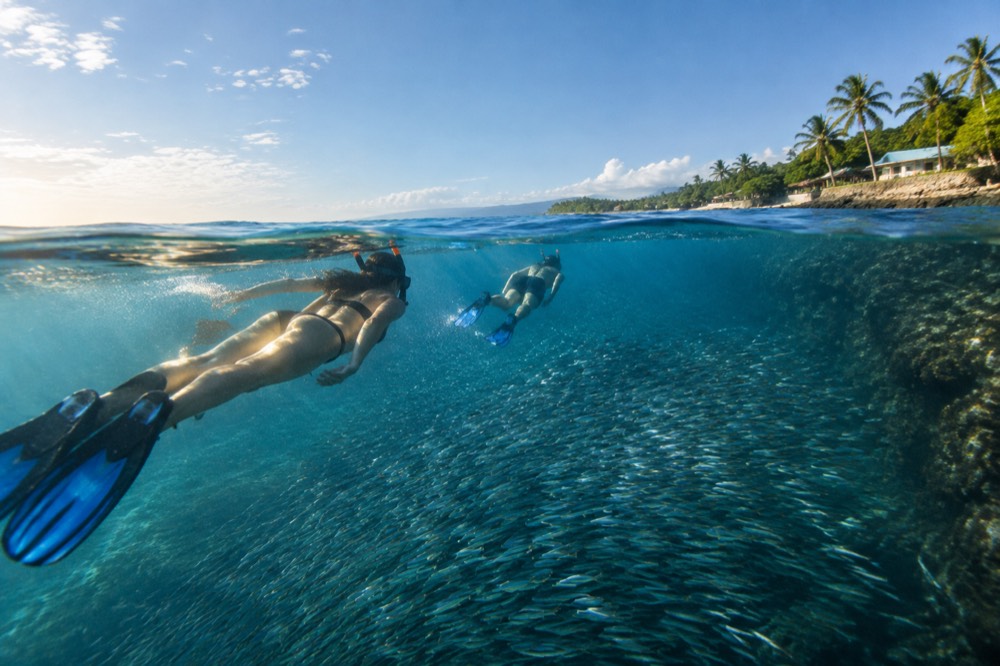
Mactan Island is better for beaches you can reach in under an hour from the airport, with resort-lined sand and island hopping to Hilutungan, Nalusuan and Pandanon directly offshore. South Cebu, around Moalboal, is better for what is in the water: the sardine run swims metres from Panagsama's shore, but the beach itself is a narrow, partly rocky strip. Neither has Bantayan's sand.
Mactan is where many visitors actually sleep, because it sits beside Mactan-Cebu International Airport and holds a dense cluster of resorts. The island's own beaches are decent resort sand rather than wild coastline, but Mactan's real asset is its position: the marine sanctuaries of Hilutungan, Nalusuan and Pandanon sit a short boat ride offshore, and island-hopping trips with lunch run daily. The Mactan beaches guide covers the individual resorts and public stretches in detail.
The fees on the Mactan side are worth understanding before booking. Lapu-Lapu City charges an environmental fee for island hopping: P100 (about US$1.6) for foreign tourists, cut to P20 (about US$0.3) for local tourists by a July 2025 amendment to the city ordinance. On top of that, the marine sanctuaries themselves charge entrance fees, typically in the P150 (about US$2.4) to P300 (about US$4.8) range per person at Hilutungan and Nalusuan. Some boat packages include these, some collect them at the sanctuary pontoon in cash, and it is worth asking the operator which.
Moalboal in the south is the opposite trade. Panagsama Beach, where the sardine run happens, is a narrow strip of greyish sand and rock, unremarkable by any postcard standard. But the sardine run, a permanent resident school of millions of fish, sits roughly 20 to 30 metres from shore, and the municipal tourism office confirms it is accessible by swimming from the beach. The environmental user fee to swim or snorkel is P100 (about US$1.6) per person under the local ordinance, with a P25 (about US$0.4) beach-access variant. White Beach, a short tricycle ride south at Basdaku, supplies the actual sand when the snorkelling is done.
The south also holds Oslob, of whale shark fame, and from Oslob it is a short boat ride to Sumilon. A common southern loop is whale sharks in the early morning, Sumilon's sandbar at midday, and Tumalog Falls in the afternoon, all within a few kilometres of each other. The distance between Cebu's beaches is a real planning factor: the island is long, and Oslob sits at its far southern end.
What About Camotes, Olango And The Lesser-Known Beach Areas?
The Camotes Islands, east of mainland Cebu across the Camotes Sea, hold the province's most underrated beaches, particularly around Santiago Bay and Mangodlong, and they are the easiest quiet alternative to Bantayan. Olango Island, between Mactan and Olango Channel, is a bird sanctuary rather than a beach destination, but it combines well with snorkelling trips from Mactan. Both are half the travel time of the northern islands.
The Camotes group, made up of Pacijan, Ponson, Poro and Tulang, sits off the east coast of mainland Cebu and is reached by ferry from Danao City or Cebu City. Santiago Bay on Pacijan is a broad, calm swimming bay with low-key resorts, and Mangodlong's rocky coves and white sand sit nearby. The islands also hold caves and a lake, which is why a full-day Camotes tour covering caves, lake and beach is one of the more complete single-day options from Cebu City. Camotes never crowds the way Bantayan can in high season, and the ferry crossing is far shorter than the drive-plus-ferry combination the north demands.
Olango is a different animal entirely. The island's fame rests on the Olango Island Wildlife Sanctuary, a Ramsar wetland of international importance, designated on 1 July 1994 as the first Ramsar site in the Philippines. Over 60 migratory shorebird species rest and feed there between September and March, per the DENR's own materials. The beaches are functional rather than beautiful, but the sanctuary entrance fee is modest, P100 (about US$1.6) for foreign visitors and P30 (about US$0.5) for Filipino adults, and the island sits directly across the channel from Mactan, making it a genuine half-day trip from the resort zone. Bird watching and snorkelling are commonly combined on the same trip, since the boat crosses from Angasil on Mactan.
For visitors who want the quiet version of a Cebu beach trip, the ranking by crowd level runs roughly: Camotes quietest, Bantayan quiet outside peak weeks, Malapascua busy with divers but small, Moalboal busy with snorkellers, Mactan busiest of all. The nicest beach in Cebu question is answered with specific named beaches on its own page.
How Do You Choose The Right Beach Area For Your Trip?
Choose Bantayan for a relaxed sand-and-swim holiday of three or more nights, Mactan for a short stay or a resort base with island hopping, Moalboal for snorkelling and canyoneering, and Malapascua for diving. Camotes fits a two-night quiet escape, and Sumilon fits as a day trip from Oslob. The single biggest factor is travel time: the northern islands are half a day from Cebu City, while Mactan is minutes from the airport.
The practical table below matches each area to a trip type, with the fees the pack verifies for each.
| Beach Area | Best For | Entry Fees To Budget | Travel From Cebu City |
|---|---|---|---|
| Bantayan Island (Santa Fe) | White sand, calm swimming, slow pace | Hagnaya terminal P25 (about US$0.4), Santa Fe eco fee P30 (about US$0.5) | Ferry from Hagnaya; a full morning or afternoon door to door |
| Malapascua Island | Diving, thresher sharks, small-island vibe | Maya port environmental and terminal fees, roughly P95 (about US$1.5) to P140 (about US$2.2) | Long drive north plus short banca crossing |
| Mactan (Lapu-Lapu) | Resort stays, airport access, island hopping | Environmental fee P100 (about US$1.6) foreign, P20 (about US$0.3) local; sanctuary fees P150 (about US$2.4) to P300 (about US$4.8) | Minutes from the airport |
| Moalboal (Panagsama and Basdaku) | Sardine run, turtles, canyoneering nearby | Environmental user fee P100 (about US$1.6), beach access P25 (about US$0.4) | Roughly 2.5 to 3.5 hours by bus or van |
| Sumilon Island | Postcard sandbar, resort day trip | Resort day pass, about P1,600 (about US$25) to P2,000 (about US$32) | Short boat ride from Oslob, which is 3 to 4 hours from the city |
| Camotes Islands | Quiet beaches, caves, lake, low crowds | Modest municipal fees at the attractions | Ferry from Danao or Cebu City |
Two trip shapes cover a visit here. The first is the south loop: base in Moalboal or Oslob, do the sardine run, whale sharks and Kawasan Falls, and add Sumilon as a day trip. The second is the north escape: base on Bantayan for the beach, optionally splitting the journey with a night in Malapascua for the diving. Trying to do both coasts in under five days is the classic mistake, because the island is long and the transfers eat the beach hours.
Visitors basing in Cebu City itself, rather than Mactan, get a different trade: no beach at the doorstep, but the city's food scene, heritage sites and tour departures on tap. The best part of Cebu to stay question, and the Mactan versus Cebu City comparison, are covered on their own pages.
Between beach runs, the city's markets are the natural filler, and a guided food walk is the efficient way to do them.
The walk pairs well with a northern or southern beach plan: most beach transfers leave early, so a city food afternoon slots into the day before departure or the day of arrival. It also makes a good bookend for the quieter island days, when the evening back in the city is the liveliest part of the schedule and a market walk fills the gap before the next early ferry.
Common Questions About Cebu's Best Beach Areas
Which part of Cebu has the best beaches?
Bantayan Island in the north has Cebu's best white sand beaches, centred on the Santa Fe coast. Malapascua is second for sand and first for diving, while Moalboal in the south has the best marine life rather than the best beach, and Mactan has the most convenient resort beaches beside the airport.
Is Mactan or Bantayan better for a beach holiday?
Mactan is better for short stays, resort comforts and airport access; Bantayan is better for the sand itself and a quieter pace, but it costs a half-day of travel each way from Cebu City, via the ferry from Hagnaya.
Can you swim at Moalboal if the beach is not great?
Yes. Panagsama's beach strip is narrow and partly rocky, but the sardine run swims roughly 20 to 30 metres from shore, and the environmental user fee to swim or snorkel is P100 (about US$1.6) per person. White Beach at Basdaku, a short ride south, supplies the sand.
What is the closest good beach to Cebu airport?
The Mactan resort beaches are the closest, minutes from the terminal, and island-hopping boats to the Hilutungan and Nalusuan marine sanctuaries leave from the same island. The sanctuary entrance fees run about P150 (about US$2.4) to P300 (about US$4.8) per person on top of the city environmental fee.
When is the best time of year for Cebu's island beaches?
The dry season, December to May, per PAGASA's national classification, gives the calmest seas for the ferry and banca crossings to Bantayan, Malapascua and Camotes. The rainy season, June to November, brings rougher crossings and occasional typhoon disruption.
Is Sumilon Island worth it for the beach alone?
The sandbar and lagoon are genuinely beautiful and among the most photographed in the province, but access is through the island resort's day programme at roughly P1,600 (about US$25) to P2,000 (about US$32) net per guest. It is a resort day trip, not a free public beach, so it suits a southern loop with Oslob rather than a dedicated trip.
The short version: match the beach to the trip, not the photograph. Bantayan for sand, Moalboal for water, Mactan for convenience, and Camotes when the aim is simply to be somewhere quiet with a swimming bay and no schedule.