What Is The Nicest Place In Cebu?
The honest answer to what is the nicest place in Cebu, from the sardine run at Panagsama to the heritage core of Cebu City, with verified entry fees and day trip options.
Ask ten travellers what is the nicest place in Cebu, the island province in the Central Visayas region of the Philippines, and you will collect ten different answers. Some will say the whale sharks of Oslob, others the turquoise pools of Kawasan Falls, and a heritage buff will make a strong case for the Basilica del Santo Niño, founded in 1565 and still the heart of Filipino Catholic devotion. All of those answers are defensible. But one place keeps coming out on top for the sheer improbability of what it offers, and it costs almost nothing to see.
What Is The Nicest Place In Cebu?
The nicest place in Cebu for most visitors is Panagsama Beach in Moalboal, on the island's southwest coast, where a permanent school of millions of sardines swirls in a bait ball just a few metres from shore. The Moalboal municipal tourism page lists the sardine run among the town's main attractions and notes 7 to 9 AM as the best time to swim with the school. No boat, no dive ticket and no long trek separates you from it, only a short swim from the beach.
That last detail is what settles the argument. Every other contender for the nicest place in Cebu asks something of you first: a 3 to 4 hour bus ride south for the whale sharks, a canyoneering descent for the best of Kawasan, a drive up the hills for the view at Tops. The sardine run at Panagsama asks for a mask, a pair of fins and a willingness to float. The school is resident, not migratory, so it is there in the rainy season and the dry season alike, and the municipal environment fee to swim or snorkel is P100 (about US$1.6) per person under the local ordinance.
It is also, quite simply, one of the strangest sights in Philippine waters. The bait ball shifts shape as one organism, parting around snorkelers and reforming behind them, silvering the surface from below. If you want the fuller argument on where this ranks worldwide, read where to see whale sharks and sardines best, and for the timing question see the best month for Cebu's marine life.
| Place | What it is | Entry cost | Why it contends |
|---|---|---|---|
| Panagsama sardine run, Moalboal | Resident bait ball metres from shore | P100 (about US$1.6) user fee | Swim-in access, year-round |
| Oslob whale sharks | Regulated snorkel with whale sharks | P1,000 (about US$15.9) foreign, P500 (about US$8.0) local | The biggest animal encounter on the island |
| Kawasan Falls, Badian | Multi-tiered turquoise falls | P200 (about US$3.2) Level 1 entrance | The classic postcard of Cebu |
| Tops Lookout, Busay | Hilltop panorama above Cebu City | P100 (about US$1.6) regular | Open 24 hours, city lights after dark |
| Sirao Flower Garden, Busay | Flower terraces above the city | about P100 (about US$1.6) | Colour and cool air close to town |
Why The Sardine Run At Moalboal Beats The Famous Names
Moalboal's sardine run wins because it is the only headline attraction in Cebu that combines three things at once: it is free of schedule risk, since the school lives at Panagsama rather than passing through; it needs no boat or dive shop, since the fish sit off the beach wall; and it sits in walking distance of restaurants, dive centres and budget rooms. The municipal site confirms the run is a permanent feature, with 7 to 9 AM the recommended window before wind chops the surface.
Compare that with the island's other icons. The whale sharks at Oslob are magnificent, but sightings are not guaranteed: in late May 2026 the sharks were absent from the Tan-awan interaction area for roughly four days when the plankton they follow moved to a neighbouring barangay, and local news reported the pause plainly. Kawasan Falls is gorgeous, but its best pools sit at the end of a canyoneering route that closes after heavy rain, and the Level 1 basin where walk-ins swim has banned cliff jumping since 2025. Tops Lookout is open around the clock, yet it is a viewpoint, something you look at rather than enter.
The sardine run has none of those caveats. You check the wind, you walk down to the water, and the show is on. Pescador Island, with its coral walls and turtle traffic, sits a short boat ride away for anyone who wants to upgrade the day, and the same base serves both.
A combined package that pairs the sardine snorkel with the Kawasan canyoneering descent is the efficient way to see both faces of south Cebu in a single day, and a small-group islands-plus-falls tour covers the same ground with less planning on your side. Whichever route you take, book the early slot. The municipal guidance on the 7 to 9 AM window exists because the sea is calmest then, and the bait ball photographs best with sun overhead.
The Nicest Places In Cebu City Itself
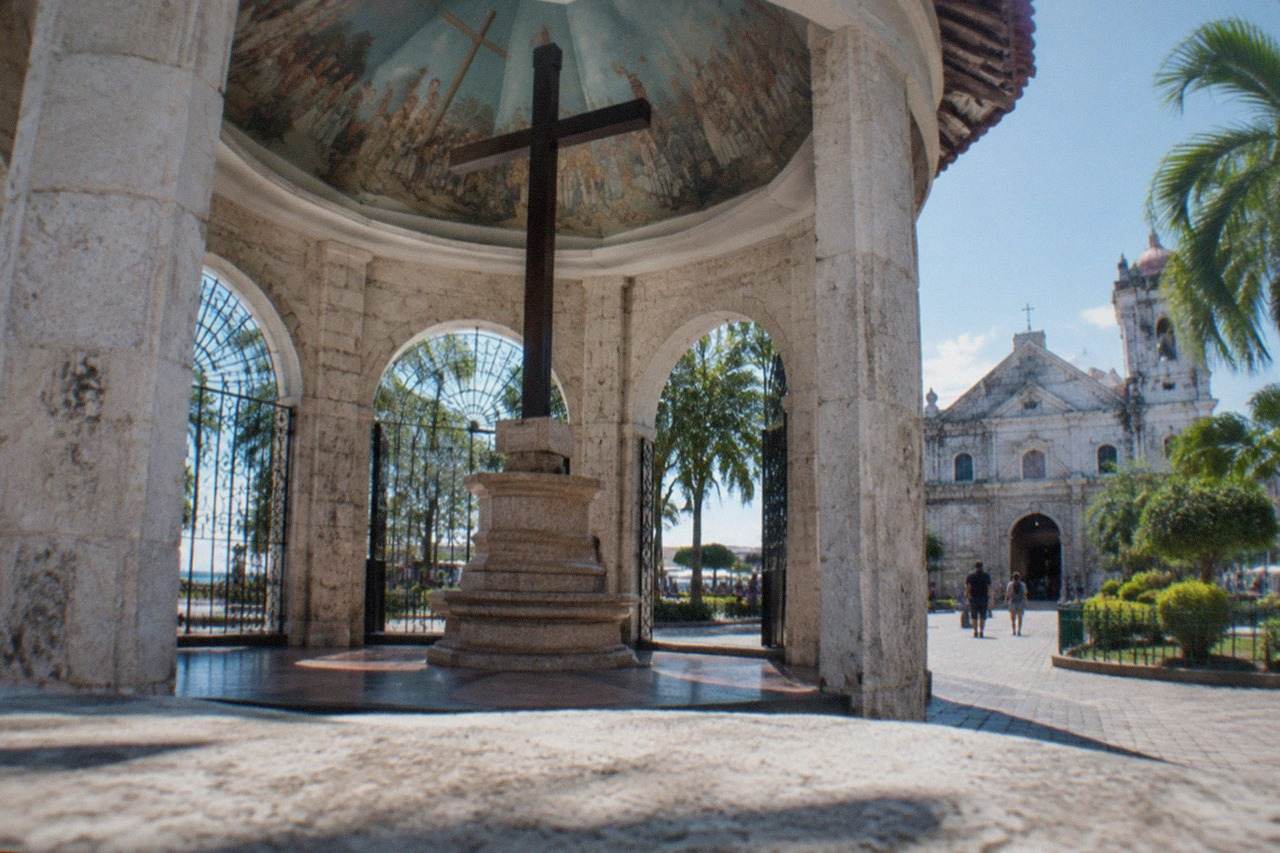
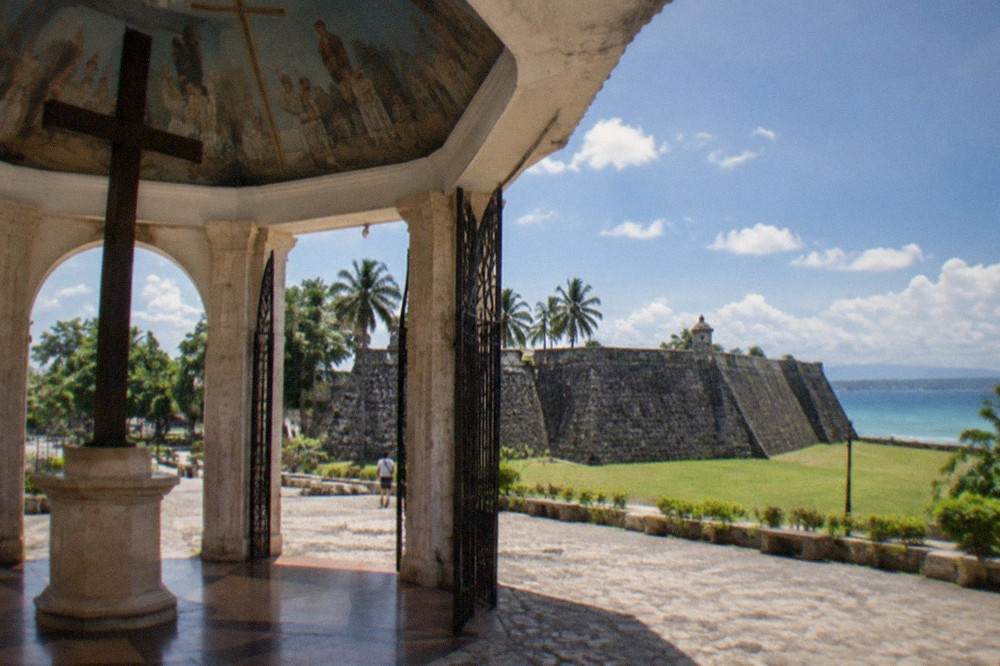
Within Cebu City the nicest place is the heritage cluster around Magellan's Cross and the Basilica del Santo Niño, where the 1521 cross planted by Ferdinand Magellan's expedition stands in its own pavilion, free to visit, beside a basilica founded on 28 April 1565 on the very day the Santo Niño image was found. Fort San Pedro, the country's oldest triangular bastion fort, with stone walls dating to 1738, sits a short walk away. Together they compress five centuries into one walkable morning.
The fort charges P50 (about US$0.8) regular admission, a small price for the oldest triangular bastion in the country. The Basilica's own chronicles trace the story: the Flemish-made image was presented to Queen Juana at her baptism in 1521, lost when the settlement burned, and found by a soldier in a wooden box in 1565, reportedly undamaged. Whether or not you share the faith, the church is the emotional centre of Cebu and the anchor of the Sinulog festival, whose grand parade fills the Cebu City Sports Center on the third Sunday of each January. If your trip lands on that weekend, the city stops.
Above the downtown grid, the hills of Busay hold two of the city's favourite escapes. Tops Lookout is open 24 hours a day, with a regular entry fee of P100 (about US$1.6) and a reduced P70 (about US$1.1) for seniors and persons with disabilities, and the operator's own site confirms the round-the-clock hours. Sirao Flower Garden, a short drive further, plants its slopes in blooms for roughly P100 (about US$1.6) a head. Both are covered in the wider roundup of what Cebu is known for.
To taste the city rather than just look at it, the market walk below is the best first move. The tour's own listing keeps its price off the page, so treat the details there as current, and check the live listing for the meeting point and schedule.
What Is The Nicest Place In Cebu For Beaches And Islands?
For pure beach beauty the nicest corner of Cebu is the stretch around Sumilon Island and the sandbars of Bantayan, but the most convenient swimming for a short trip is the Mactan side, where island-hopping boats run daily to the marine sanctuaries of Hilutungan, Caohagan and Nalusuan. Sumilon's Bluewater resort sells day use from 8 AM to 3 PM with boat transfers included, while Bantayan charges small fixed fees on arrival at the Hagnaya terminal and at Santa Fe.
In pesos, those Bantayan arrivals cost P25 (about US$0.4) at the Hagnaya terminal and a P30 (about US$0.5) ecological fee at Santa Fe, both paid in cash.
The honest split is this. Mactan is where the resorts and the hopping tours are, and the beaches there are good enough that the question does Mactan have nice beaches gets a firm yes. But the sand that people photograph and post is further out: the white strip of Sumilon, the long flat shore of Santa Fe on Bantayan, and the quiet coves of the Camotes Islands. Each takes real travel time, which is exactly why they stay nice.
Sanctuary fees stack on the boat fare when you hop from Mactan. The Lapu-Lapu environmental fee is P100 (about US$1.6) for foreign tourists, cut to P20 (about US$0.3) for locals by a July 2025 amendment, and the individual marine sanctuaries at Hilutungan and Nalusuan charge roughly P150 (about US$2.4) to P300 (about US$4.8) each. Budget for those at the pier, in cash, because the booths are not always prepared for cards. For the full ranking, see the nicest beach in Cebu.
What Is The Nicest Place In Cebu To Visit On A Day Trip?
The nicest day trip from Cebu City is the south coast combination of Oslob and Kawasan, done in one long day with the whale shark interaction at Oslob in the early morning and the falls at Badian after midday. Whale shark sessions run from about 6 AM to noon and include the boat and the guide. Ceres buses from the South Bus Terminal take about 3.5 to 4.5 hours to Oslob and 2.5 to 3.5 hours to Moalboal.
The Oslob fee is P1,000 (about US$15.9) for foreign visitors and P500 (about US$8.0) for Filipinos, boat and guide included. The whale shark briefing is mandatory and the rules are enforced by the municipal government: keep about four metres from the animals, no touching, no sunscreen in the water, no flash photography, and only licensed spotters may feed. Sessions run roughly thirty minutes. It is a genuinely regulated operation, not a free-for-all, and the ethics of the feeding programme are worth reading up on before you decide.
Kawasan Falls, further down the same coast, is the second half of the classic south day. Walk-in swimmers pay about P200 (about US$3.2) for the Level 1 basin, while the full canyoneering descent with a Badian-accredited guide runs roughly P1,500 (about US$24) to P2,000 (about US$32) including gear, guide, fees and lunch. Note the Alegria route is suspended, so the Badian descent is the only one operating, and the site stayed open through a rehabilitation programme that began in June 2026.
| Day trip from Cebu City | Rough travel time one way | Headline sight | Main fee |
|---|---|---|---|
| Oslob | 3.5 to 4.5 hours by bus | Whale shark snorkel | P1,000 (about US$15.9) foreign, P500 (about US$8.0) local |
| Moalboal | 2.5 to 3.5 hours by bus | Sardine run off Panagsama | P100 (about US$1.6) user fee |
| Kawasan Falls, Badian | About 3 hours by bus | Turquoise falls, canyoneering | P200 (about US$3.2) Level 1 entrance |
| Bohol, by ferry from Pier 1 | About 2 hours by fastcraft | Chocolate Hills, Loboc River | Ferry from P960 (about US$15.3) tourist class |
Bohol deserves its mention here even though it is another province, because the fastcraft crossing from Cebu's Pier 1 takes only about two hours and the same-day countryside tour returns by evening ferry. The figures above are Cebu's verified ones; Bohol's own costs are a separate question, covered at is Bohol expensive.
If you would rather not think about bus terminals at 4 AM, the guided combinations handle the logistics, and the market food walk above is the gentlest introduction to the city itself on a rest day. For a deeper look at every option on the island, the Cebu Travel Guide hub and the nicest area to stay in Cebu roundup cover the decisions that come after you have picked your favourite spot.
Common Questions About The Nicest Places In Cebu
What is the number one tourist spot in Cebu?
By visitor volume it is the whale shark interaction at Oslob, which local reporting puts at 800 to 900 visitors a day in peak season. By historical weight it is Magellan's Cross and the Basilica del Santo Niño in Cebu City.
Is the sardine run at Moalboal guaranteed?
As close to guaranteed as marine wildlife gets. The school is resident at Panagsama year-round rather than migratory, and the Moalboal municipal site lists it as a permanent attraction. Weather and visibility still matter, which is why the 7 to 9 AM window is recommended.
Are the Oslob whale sharks guaranteed to appear?
No. In late May 2026 the sharks were absent from the Tan-awan interaction area for about four days when their plankton food moved to a neighbouring barangay, and operations paused until they returned. Sightings are usual but not certain, so keep your schedule flexible.
What is the nicest place in Cebu for a first visit with limited time?
Stay in Cebu City or Mactan, spend one morning on the heritage walk from Magellan's Cross to Fort San Pedro, and give one full day to the south coast for either the sardine run at Moalboal or the whale sharks at Oslob. That single day trip delivers the scenery most people picture when they think of Cebu.
When is the best time of year to visit Cebu's nicest places?
The dry season runs December to May under PAGASA's national rule, and the wet season June to November. The sardine run runs all year, but the sea is calmest and clearest in the dry months, and the third Sunday of January adds the Sinulog festival to a city visit.