Cebu Business Park
Cebu Business Park is the commercial heart of Cebu City in the Central Visayas region of the Philippines, a district of offices, malls and green space that sits between the older downtown and the IT Park waterfront. This guide covers what the area offers, what things cost nearby, and which day trips start closest to it.
Short answer
Cebu Business Park is a business and shopping district in northern Cebu City, Philippines, best used as a comfortable base: it is walkable, close to the IT Park, and well placed for buses and tours heading to Oslob, Moalboal and the mountains.
Cebu Business Park is a planned commercial district in Cebu City, the capital city of Cebu province in the Central Visayas region of the Philippines, and it has become one of the most convenient places in the metro area to stay, shop and stage day trips from. The city itself is one of three highly urbanized cities on the island, independent of the provincial government, and the park district sits in its northern half, close to the boundary with the IT Park and the Ayala-led commercial developments that have shifted the city's centre of gravity away from the old colonial downtown around Magellan's Cross and Colon Street. For a visitor, the district works as a base rather than a sight: the attractions are elsewhere, but the hotels, restaurants and transport links here are among the best on the island.
Where Is Cebu Business Park And What Is It?
Cebu Business Park is a commercial and business district in the northern half of Cebu City, the capital of Cebu province in the Central Visayas region of the Philippines. It is a district of office towers, a large shopping mall complex, hotels and landscaped open space, sitting between the older downtown core and the IT Park. It is not a tourist attraction in itself: it is the city's most comfortable base, with the island's transport links and day trips within easy reach.
The district grew out of a redeveloped golf course site, which is why it carries so much more green space than the rest of the city. Where downtown Cebu City is a dense grid of jeepney traffic and heritage churches, the business park is built around wide sidewalks, a central lawn and the Ayala Center Cebu mall complex on its edge. The contrast matters for visitors: this is the part of the city where walking is genuinely pleasant, and where a morning run or an evening stroll does not involve dodging traffic.
Geographically, the whole metro area is coastal. Cebu City faces the Mactan Channel, with Mandaue City and Lapu-Lapu City on Mactan Island across the water, and the Camotes Sea beyond. The business park sits a few kilometres inland of the waterfront, roughly between downtown and the IT Park. The IT Park is the closest sibling district, and if you are choosing between the two, the answer to what the IT Park is known for is nightlife and call-centre energy, while the business park is calmer and more mall-centric.
For orientation, the numbers are worth knowing. Cebu City counted 964,169 residents at the 2020 census, and the province excluding its three highly urbanized cities counted 3,325,385. Metro Cebu, as defined by the metropolitan development board, spans seven cities and six municipalities. The business park is one node in that spread, and everything a visitor wants to see, from heritage sites to waterfalls, radiates out from it.
What Can You Do Around Cebu Business Park?
The district's own activities are shopping, eating and walking, but its real value is as a launch point: the heritage sites of downtown Cebu City are a short jeepney ride away, the mountain viewpoints of Busay are reachable in under an hour, and the island's famous day trips to waterfalls and whale sharks all pick up from hotels in or near the business park. Plan two days for the city itself and give the rest to the south and north of the island.
Within walking distance, the Ayala Center Cebu complex covers shopping, cinemas and a large food court, and the terraces around it host weekend markets and events. The central park lawn is the district's social space, busy in the early morning with joggers and in the late afternoon with families. This is also where the city's professional class eats lunch, so the restaurant density within a ten-minute walk is higher than almost anywhere else on the island.
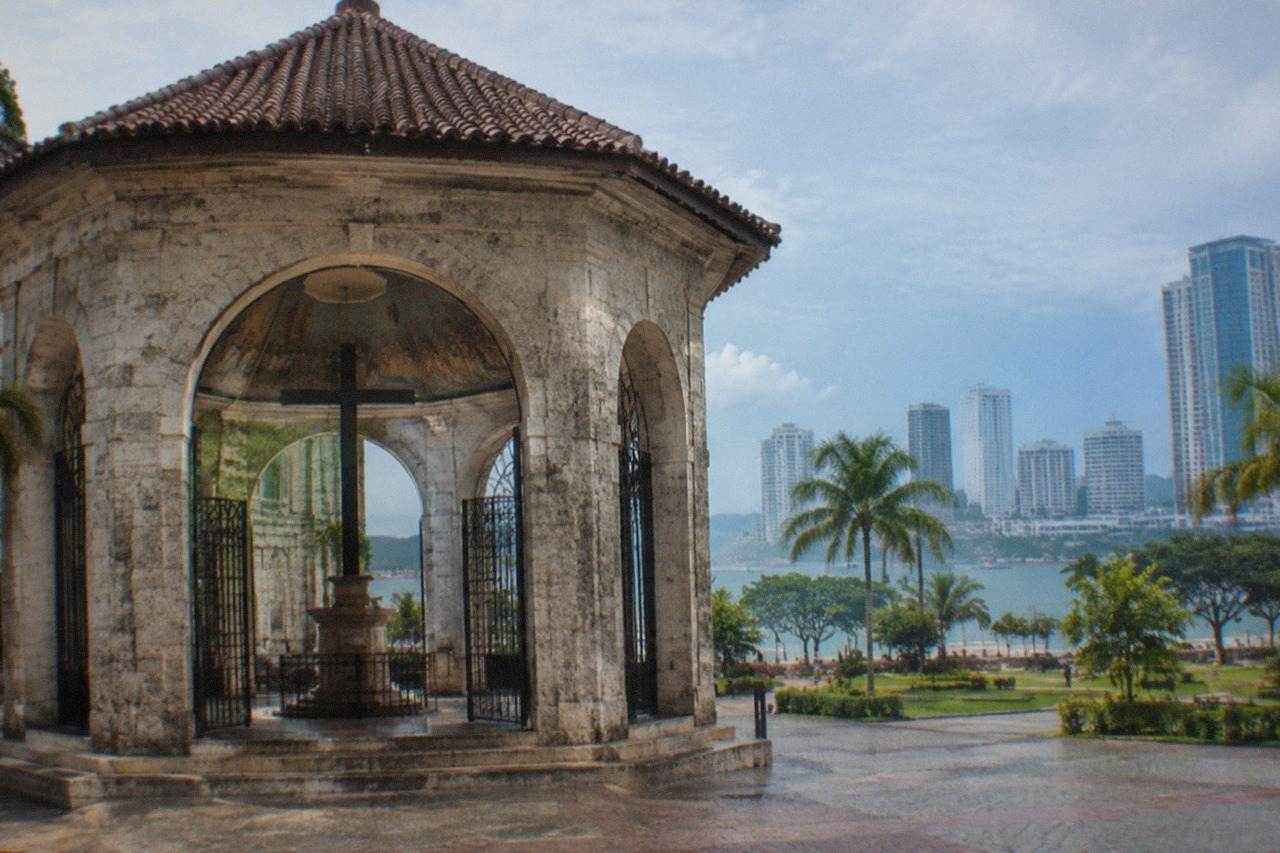
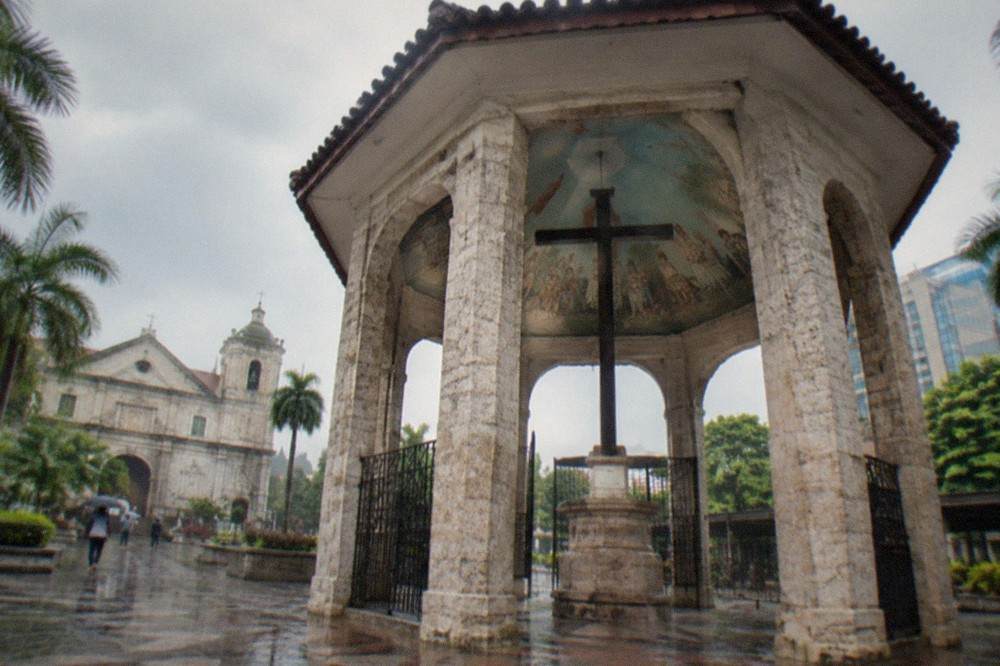
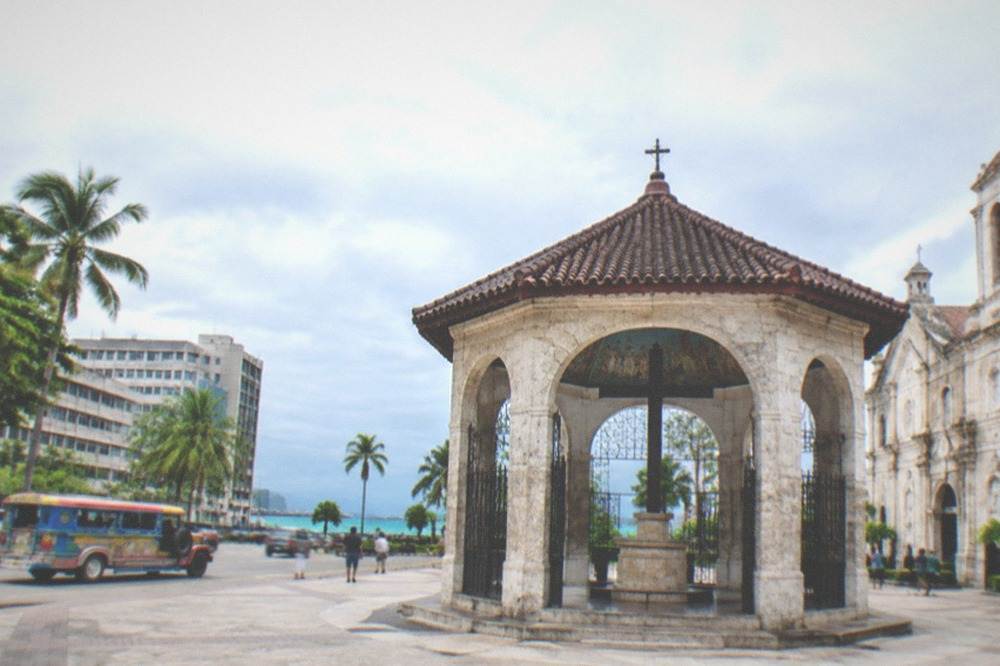
Downtown, the heritage cluster is compact. Fort San Pedro, the oldest triangular bastion fort in the country, charges P50 (about US$0.8) regular admission and P40 (about US$0.6) for students and seniors, with hours of roughly 8 AM to 7 PM. Magellan's Cross, the pavilion housing the cross planted in April 1521, is free to visit, and the Basilica Minore del Santo Niño stands next to it. All three sit within a few minutes' walk of each other, and the whole cluster can be covered in a half day from the business park.
Uphill, the mountain barangay of Busay holds the Tops Lookout, open 24 hours with a P100 (about US$1.6) entry fee, P70 (about US$1.1) for seniors and PWDs with ID, and the Temple of Leah, a grand stone shrine charging roughly P120 (about US$1.9) on weekdays and P150 (about US$2.4) on weekends. A half-day highlands tour is the easiest way to see both plus the Sirao flower gardens, and it departs from the city side, which makes the business park an ideal pickup point.
If you want someone else to handle the planning, these are the island's strongest day tours from this side of the city:
The Cebu City guide covers the downtown sights in more depth, and the things to do in Cebu overview lists every major activity on the island if you want the full menu.
Where Should You Eat Near Cebu Business Park?
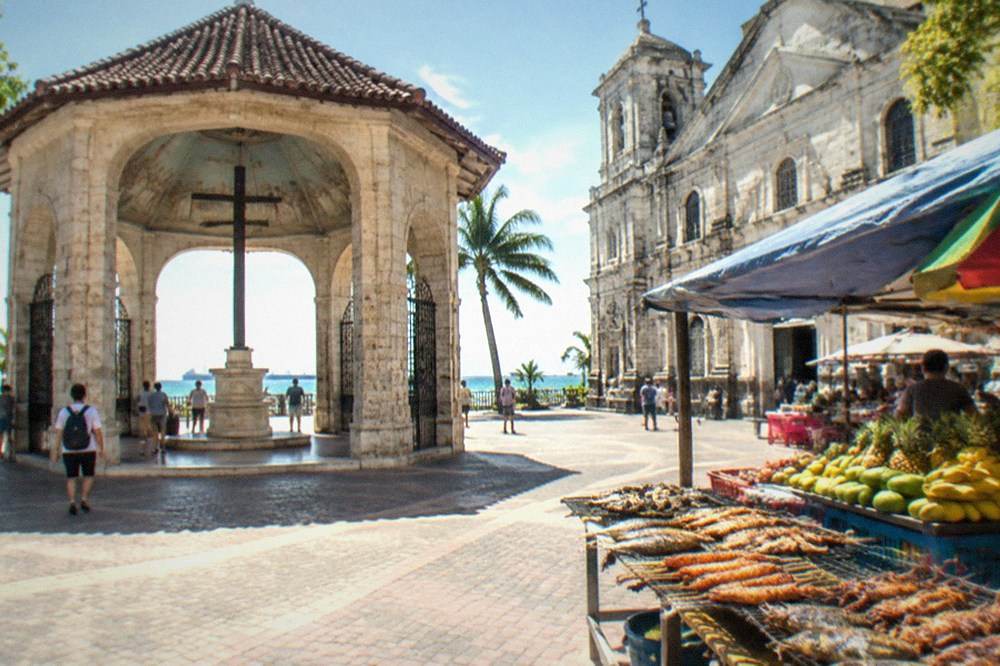
The business park's restaurant scene is the most varied in Cebu City, running from mall dining and international chains to serious Filipino kitchens, and the district sits close to both the lechon institutions of the city and the carbon and public markets where Cebuano street food is made and sold. A guided market walk is the fastest way to understand the food culture; after that, the malls and the downtown eateries are all within easy reach.
Cebu's most famous food is lechon, roast pig, and the city's best-known lechon names are all a short ride from the business park. The downtown markets add another layer: fresh seafood, ngohiong, tuslob buwa and the grilled skewers that office workers eat after shifts. The Colon Street area, often called the oldest street in the country, holds much of this, and it is close enough to the park district that a food-focused afternoon can combine both.
The one tour that ties it together is the Cebu Market & Food Tour, a guided walk through the city's markets with a local leading the tasting. The operator has not published a price for this tour, so check the live listing for current rates and availability:
If you would rather explore alone, the Ayala Center complex alone holds dozens of restaurants across every price band, and the weekend food events around the park lawn are a reliable way to sample local vendors without committing to a sit-down meal. Between the mall, the markets and the lechon shops, the district feeds its visitors as well as it feeds its office workers.
How Do You Get Around From Cebu Business Park?
The district is walkable internally, and everything beyond it runs on jeepneys, taxis and the Grab ride-hailing app, with the Cebu South Bus Terminal a short ride away for buses to the south coast and Pier 1 downtown for fastcraft ferries to Bohol. Jeepneys are the cheapest way to move, Grab covers the whole metro area with upfront pricing in the app, and the bus and ferry terminals that serve the island's day trips are both within a short ride of the district.
Jeepney fares are set by the national land transport regulator: from 28 September 2026 the approved minimum is P14 (about US$0.2) for the first 4 km on traditional jeepneys plus P2 (about US$0.0) per succeeding kilometre, and P17 (about US$0.3) for the first 4 km on modern units plus P2 (about US$0.0) per kilometre after. The national announcement does not spell out regional coverage, so treat those figures as the approved national matrix and confirm the posted fare on the unit you board.
Taxis in the city run on meters, with flag-down rates reported around P40 (about US$0.6) to P50 (about US$0.8) plus roughly P14 (about US$0.2) per kilometre; the exact regional tariff has not been published in a memo the site could verify, so agree on the meter or use the app. Grab is the dominant ride-hailing service in Metro Cebu and lists the city among its Philippine coverage areas, with designated pickup zones at the airport and app-shown pricing before you book.
For longer moves, the transport hubs matter more than the vehicle. Buses to the south coast leave from the Cebu South Bus Terminal: a Ceres Liner to Oslob takes roughly 3.5 to 4.5 hours and costs about P145 (about US$2.3) to P250 (about US$4.0), and a bus to Moalboal takes roughly 2.5 to 3.5 hours at about P120 (about US$1.9) to P210 (about US$3.3). Ferries to Bohol leave from Pier 1 downtown: OceanJet's fastcraft takes about two hours to Tagbilaran, with tourist-class fares at P960 (about US$15.3) and business class at P1,440 (about US$23) following a fuel surcharge that took effect on 21 September 2026.
The table below summarizes the costs of the moves a visitor based in the business park actually makes:
| Journey | Mode | Typical cost | Notes |
|---|---|---|---|
| Within the district | On foot | Free | The park and mall area is walkable |
| Business park to downtown | Jeepney | P14 (about US$0.2) minimum | Traditional units, first 4 km |
| Business park to downtown | Grab or taxi | P40 (about US$0.6) to P50 (about US$0.8) flag-down | Meter or app pricing |
| Business park to Mactan airport | MyBus via SM, then taxi or Grab | P50 (about US$0.8) bus fare to SM City Cebu | Airport bus runs 7 AM to 10 PM from the airport |
| Cebu South Bus Terminal to Oslob | Ceres bus | P145 (about US$2.3) to P250 (about US$4.0) | Roughly 3.5 to 4.5 hours |
| Cebu South Bus Terminal to Moalboal | Ceres bus | P120 (about US$1.9) to P210 (about US$3.3) | Roughly 2.5 to 3.5 hours |
| Pier 1 to Tagbilaran, Bohol | OceanJet fastcraft | P960 (about US$15.3) tourist, P1,440 (about US$23) business | About 2 hours, about 13 sailings a day |
One more piece of the network deserves mention. The city's bus rapid transit system began partial operations on 13 March 2026, running a single route between the IT Park area and the South Road Properties using a small fleet of buses, free at launch under a free-ride programme, with distance-based fares discussed afterwards. It is not yet a full network, and the World Bank loan behind it closes at the end of September 2026, so check the current status rather than planning around it.
What Do Attractions Near Cebu Business Park Cost?
The city's headline attractions are cheap to enter: the colonial fort downtown charges a small admission with a concession rate for students and seniors, the heritage crosses and churches are free, and the mountain viewpoints above the city each charge a modest gate fee. A full day of sightseeing from the business park costs well under a thousand pesos per person in entry fees, before food and transport, and most sites take cash only.
The verified and reported figures for the sites within easy reach of the district are set out below. Fees at privately run sites change without much notice, and several of these figures come from recent reporting rather than official price lists, so carry small cash and expect small differences.
| Attraction | Distance character | Entry fee | Hours |
|---|---|---|---|
| Fort San Pedro, downtown | City core | P50 (about US$0.8), students and seniors P40 (about US$0.6) | Roughly 8 AM to 7 PM |
| Magellan's Cross, downtown | City core | Free | Roughly 8 AM to 6 PM |
| Basilica Minore del Santo Niño | City core | Free entry | Masses daily, pre-pandemic schedule restored |
| Taoist Temple, Beverly Hills | Hillside | Free, donations welcome | Daytime, confirm locally |
| Tops Lookout, Busay | Mountain | P100 (about US$1.6), seniors and PWDs P70 (about US$1.1) | Open 24 hours |
| Temple of Leah, Busay | Mountain | About P120 (about US$1.9) weekday, P150 (about US$2.4) weekend | Daytime, hours shortened since April 2026 |
| Sirao Flower Garden, Busay | Mountain | About P100 (about US$1.6) | Daytime |
| Casa Gorordo Museum, downtown | City core | About P100 (about US$1.6) | Monday to Saturday |
Two caveats from the recent record. The M6.9 earthquake of 30 September 2025, with its epicentre off Bogo City in northern Cebu, closed several downtown museums for structural inspection in early October 2025, including Casa Gorordo and the Museo Sugbo; the Museo Sugbo reopened on 29 August 2025 after an earlier closure, and current status of the others is not confirmed, so check before a museum-focused day. And the Basilica's belfry, damaged in the 2013 Bohol earthquake, has long since been restored, so the church is fully open.
The Mactan side adds resort beaches and the Lapu-Lapu Shrine, reachable across the bridge in under an hour, and that half of the metro is covered in detail by the Mactan area guide.
When Is The Best Time To Stay In Cebu Business Park?
Cebu is tropical with a dry season from December to May and a rainy season from June to November, and the best months to base yourself in the business park are January to May: January adds the Sinulog festival, the driest and coolest stretch follows, and the typhoon-prone months of July to October bring the heaviest rain and the highest chance of disruption.
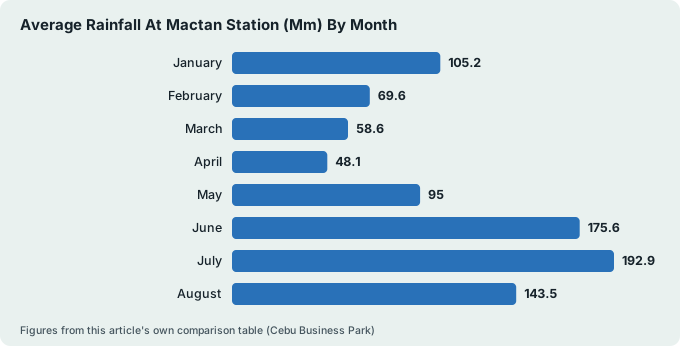
The national weather service's rule is simple: rainy season June to November, dry season December to May. The Mactan station's 1991-2020 normals put annual rainfall at 1,685.0 mm across 138 rain days, with a mean temperature of 28.1 C. The month-by-month rainfall shows how lopsided the year is: April averages just 48.1 mm while October averages 194.8 mm, four times as much.
| Month | Average rainfall at Mactan station (mm) | Season |
|---|---|---|
| January | 105.2 | Cool dry |
| February | 69.6 | Cool dry |
| March | 58.6 | Hot dry |
| April | 48.1 | Hot dry, driest month |
| May | 95.0 | Hot dry, turning |
| June | 175.6 | Rainy season begins |
| July | 192.9 | Rainy, typhoon peak |
| August | 143.5 | Rainy |
| September | 179.6 | Rainy, typhoon peak |
| October | 194.8 | Rainy, wettest month |
| November | 161.9 | Rainy, typhoon tail |
| December | 139.7 | Drying out |
The festival is the calendar's big draw. Sinulog, the grand procession honouring the Santo Niño, is held on the third Sunday of January at the Cebu City Sports Center, which is the main venue confirmed for 2026 and again for 2027, when the grand parade falls on 17 January with the opening salvo on 7 January. The sports centre is a short ride from the business park, and hotel rates across the district spike that week, so book far ahead or avoid the week entirely depending on your tolerance for crowds.
The typhoon record explains the rest of the calendar. Typhoon season runs June to November with peak activity roughly July to October, and the Visayas carries a high landfall risk into the closing months of the year. The most recent severe event, Typhoon Tino in early November 2025, brought record rainfall and severe flooding to Cebu, though the tourism department confirmed the core city and Mactan areas were largely unaffected and open within days.
Where Should You Stay: Cebu Business Park, IT Park Or Mactan?
Stay in or beside the business park if you want malls, restaurants and a central base for the whole island; stay in the IT Park if nightlife and a younger scene matter more; and stay on Mactan if your trip is mostly beaches, diving and resort time with a ferry-and-flight gateway at the door. The business park is the strongest all-round choice for a first visit that mixes city sightseeing with day trips.
The three bases serve different trips. The business park and the IT Park sit side by side in northern Cebu City, so the practical difference is atmosphere rather than location: the business park is calmer, greener and mall-centred, while the IT Park runs later and louder. Mactan, across the bridge, is where the resort hotels and the international airport are, and it trades city access for beachfront.
If your itinerary leans toward the island's famous day trips, the south-coast destinations are the deciding factor. The whale sharks of Oslob, the sardine run of Moalboal and the canyoneering at Kawasan Falls all sit on the south of the island, and every organized tour to them picks up from city hotels, with the business park among the first stops. The dedicated comparison answers on Oslob versus Moalboal, and on Mactan versus Cebu City as a base, go deeper on the trade-offs.
For a longer stay, the island's north adds Bantayan Island and Malapascua Island, both reached through ports on the north coast, both better done as overnight trips than day trips from the city. The Mandaue City side, by contrast, is industrial and transit-oriented rather than a visitor base.
What Day Trips Work Best From Cebu Business Park?
The day trips that work best from the business park are the whale shark interaction at Oslob, the canyoneering and waterfalls of Kawasan Falls near Moalboal, and the sardine run and turtle snorkelling at Panagsama Beach, all on the south of the island and all served by tours that pick up from city hotels in the early morning. Bohol across the water is the fourth option, a same-day return trip by fastcraft and road.
The south-coast trio is the reason many travellers base themselves on this side of the city. Oslob's whale shark interaction runs from about 6 AM to 12 PM daily, with the municipal fee at P1,000 (about US$15.9) for foreign visitors and P500 (about US$8.0) for Filipinos, boat and guide included, and a strict rule set: a mandatory briefing, a minimum distance of about 4 metres, no touching, no sunscreen and no flash photography, in sessions of about 30 minutes. Sightings are not guaranteed, and in late May 2026 the sharks were absent from the Tan-awan interaction area for about four days when the plankton moved, so book with flexibility in mind.
The full-day combination tour adds Tumalog Falls and Sumilon Island to the whale shark morning, and it is the single most complete south-coast day available from the city:
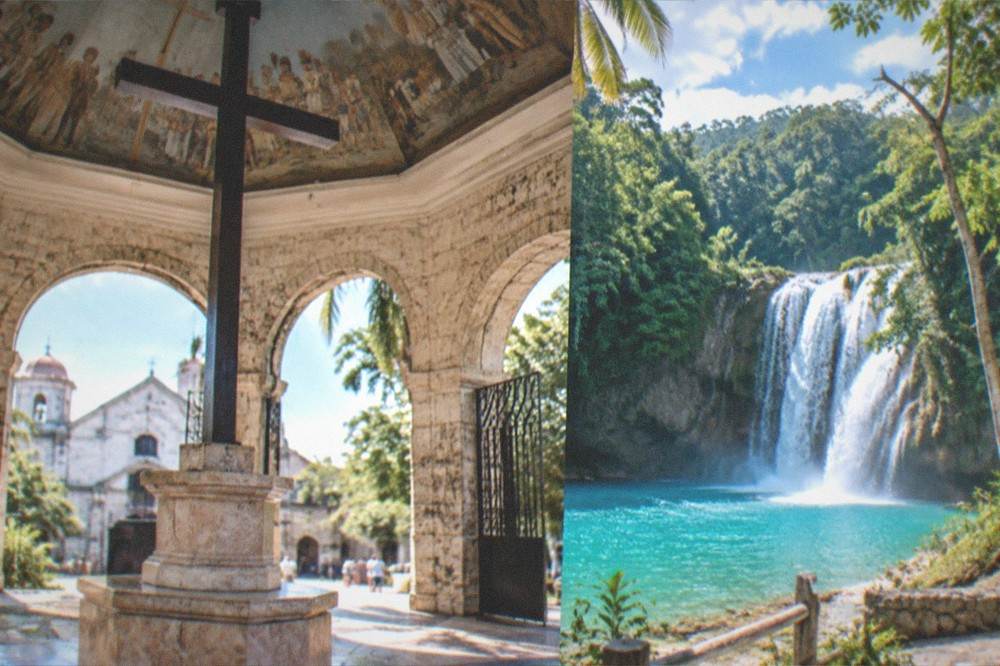
Kawasan Falls in Badian is the other headline trip. The Level 1 entrance fee is about P200 (about US$3.2) for swimming only, while the canyoneering route down the river gorge runs roughly P1,500 (about US$24) to P2,000 (about US$32) with a Badian-accredited guide, covering guide, gear, fees, transfers and lunch. The Alegria route has been suspended through 2025 and 2026, so only the Badian route operates, cliff jumping is banned at the main basin, and a phased rehabilitation worth 110 million pesos has been under way since June 2026 with the site staying open throughout.
The Moalboal canyoneering tour with lunch included is the most popular way to do it, and it pairs well with the sardine run at Panagsama Beach, where a permanent school of sardines sits a few metres from shore behind a P100 (about US$1.6) environmental user fee:
The full comparison of the two south-coast towns, including the falls and the fees, is in the dedicated guides to Oslob whale sharks and the Moalboal sardine run.
For the fourth option, Bohol, the fastcraft from Pier 1 makes a same-day countryside tour practical: about two hours across, a day of Chocolate Hills and river cruise, and an evening sailing back. The Bohol day trip itinerary covers the logistics end to end for anyone planning that route.
Common Questions About Cebu Business Park
Is Cebu Business Park the same as IT Park?
No. They are adjacent districts in northern Cebu City, but the business park is the older, mall-centred commercial district with more green space, while the IT Park is the newer business process outsourcing hub known for nightlife. They are close enough that many visitors stay in one and eat in the other.
Is Cebu Business Park a good place for tourists to stay?
Yes, as a base. The district has the city's best concentration of hotels, restaurants and shops, it is walkable, and it sits on the transport spine that day tours to Oslob, Moalboal and the mountains use for hotel pickups. The sights themselves are elsewhere on the island.
How far is Cebu Business Park from the airport?
Mactan-Cebu International Airport sits on Mactan Island across the channel from Cebu City, and the road distance to the city's northern districts is roughly 13 to 15 km, typically 25 to 60 minutes by road depending on bridge traffic. The MyBus airport service connects to SM City Cebu for P50 (about US$0.8), from where a short taxi or Grab ride reaches the business park.
Can you walk around Cebu Business Park at night?
The district itself is considered one of the more walkable and policed parts of Cebu City, with the mall complex and the park lawn lit and busy into the evening. As anywhere in the Philippines, standard urban caution applies, and the national advisory level for the country is exercise increased caution, with no Cebu-specific warning in place.
Do I need a visa to visit Cebu?
Nationals of the United States, the United Kingdom, Australia and every EU state get an initial 30-day visa-free stay for tourism, extendable through the Bureau of Immigration, with a passport valid at least six months and an onward ticket required. Every arriving passenger must also register on the free eTravel platform within 72 hours before arrival.
What is the best month to visit Cebu?
January to May is the strongest stretch: January brings Sinulog on the third Sunday of the month, and the dry season runs to May, with April the driest month at 48.1 mm of average rain. July to October is the wet, typhoon-prone end of the calendar, with October the wettest month at 194.8 mm.
Cebu Business Park is, in the end, a base that earns its keep: it puts the Cebu Travel Guide's whole island within a morning's drive, feeds you well when you get back, and makes the practical side of a Cebu trip, the buses, ferries and tour pickups, as easy as it gets anywhere in the Central Visayas.