Where To Go In Cebu For First Timers?
A first-timer's route through Cebu, Philippines: the heritage sights of Cebu City, the south-coast day trips to Oslob and Kawasan, and how many days to give the island.
Cebu, an island province in the Central Visayas region of the Philippines, rewards first timers who treat it as three destinations in one. There is the heritage core of Cebu City, where Magellan's Cross and the Basilica Minore del Santo Niño stand a short walk apart. There is Mactan, the resort island across the channel where most international flights land. And there is the long south coast, where whale sharks, canyoneering and a sardine run sit within a day's drive of the city. This page lays out the order that works, what each stop costs, and how many days to give each part.
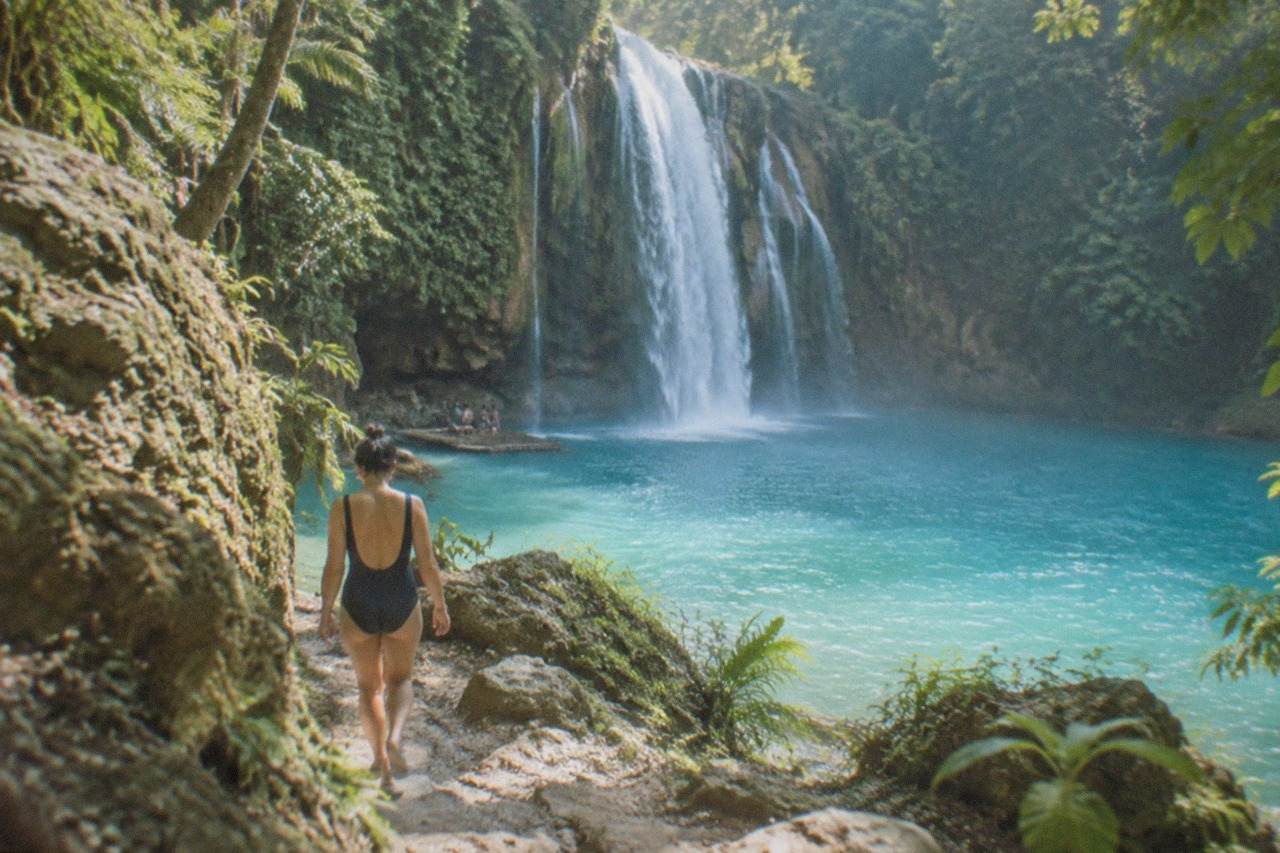
Where To Go In Cebu For First Timers?
First timers should split a Cebu trip into three layers: one to two days in Cebu City for Magellan's Cross, the Basilica, Fort San Pedro and Colon Street, a half day for the Busay highlands at Temple of Leah and Tops Lookout, then the south-coast day trips to Oslob for whale sharks and Badian for Kawasan Falls canyoneering. Visitors with a fifth day should add island hopping off Mactan or the Moalboal sardine run.
That order exists for a practical reason. The city sights are compact, cheap and walkable, so they absorb jet lag well. The highlands sit 30 to 60 minutes uphill by road, which makes them an easy half-day loop once the city core is done. The south-coast trips are the opposite: they demand pre-dawn starts, because Oslob's whale shark interaction window runs roughly 6 AM to 12 PM and the sharks feed closest to the surface in the morning.
The single biggest planning error is trying to do Oslob and Kawasan on the same day from Cebu City. Both sit on the same southern highway but far enough apart that a combined day means rushing both. The first time in Cebu question comes up often enough that the site keeps a dedicated answer for it, and the short version is: one headline trip per day.
Which Cebu City Sights Belong On A First-Day Route?
A first-day Cebu City route covers Magellan's Cross, the Basilica Minore del Santo Niño, Fort San Pedro and the Heritage of Cebu Monument, all within a walkable colonial core, with free entry at the cross and a modest admission charge at the fort. Magellan's Cross is open roughly 8 AM to 6 PM and Fort San Pedro roughly 8 AM to 7 PM, so the whole loop fits a single morning.
Start at the cross. The Basilica's own chronicles say a cross was planted in April 1521 after Magellan's fleet reached Cebu, and the painted pavilion housing it sits directly outside the Basilica Minore del Santo Niño, whose current stone structure dates from around 1735 to 1740. Fort San Pedro, begun as a wooden fort under Legazpi in 1565 and rebuilt in stone by 1738, is a ten-minute walk along the port side. The whole loop fits a morning. The wider set of guides lives on Cebu Travel Guide.
Costs stay low. Fort San Pedro charges P50 (about US$0.8) regular and P40 (about US$0.6) for students and seniors, per the 2026 fee update reported by SunStar. Magellan's Cross is free. Casa Gorordo Museum, a restored 19th-century house museum, charges about P100 (about US$1.6) and is worth the short detour if the afternoon is open.
| Cebu City sight | Entry cost | Hours (approx.) | Notes |
|---|---|---|---|
| Magellan's Cross | Free | 8 AM-6 PM | Planted April 1521; 1834 gazebo |
| Basilica Minore del Santo Niño | Free | 6 AM-6/7 PM | Current structure 1735-1740 |
| Fort San Pedro | P50 (about US$0.8) regular, P40 (about US$0.6) students/seniors | 8 AM-7 PM | Oldest triangular bastion fort |
| Casa Gorordo Museum | About P100 (about US$1.6) | Mon-Sat 9 AM-5 PM | Closed Sundays |
| Taoist Temple | Free, donations | 9 AM-5 PM | Beverly Hills subdivision |
For food, a guided market walk turns the city's eating culture into something legible in a few hours. The Cebu Market & Food Tour has not published a price, so the live listing is the place to check what it currently costs.
Which Day Trips Should First Timers Book From Cebu?
The three day trips that define a first Cebu visit are Oslob for whale shark watching, where the municipal fee covers the boat and guide, Badian for Kawasan Falls and canyoneering with an accredited guide, and Moalboal for the sardine run, which sits a few metres off Panagsama Beach. Each lies on the same southern highway and each consumes a full day from Cebu City, so first timers should plan one headline trip per day.
Oslob is the headline. The Municipality of Oslob's tourism office set the current rates effective 21 March 2025 under Municipal Ordinance No. 010, s. 2020: P1,000 (about US$15.9) per foreign tourist and P500 (about US$8.0) per Filipino, boat and guide included. The interaction window runs roughly 6 AM to 12 PM, with a mandatory briefing, a minimum four-metre distance from the animals, no sunscreen in the water and no touching. Sightings are not guaranteed: in late May 2026 the whale sharks were absent from the Tan-awan interaction area for about four days when the plankton moved, and operations paused until they returned. Tumalog Falls, a short habal-habal ride away, charges about P50 (about US$0.8) entrance and pairs naturally with the morning trip.
Kawasan Falls in Badian is the adventure option. Level 1 entrance for swimming only costs about P200 (about US$3.2); the full canyoneering run with a Badian-accredited guide, gear, fees and lunch runs roughly P1,500 (about US$24) to P2,000 (about US$32). Two 2026 rules matter: cliff jumping is banned at the main Level 1 basin, and the Alegria route stays suspended, so only the Badian route operates. A phased rehabilitation began in June 2026 and the site remained open throughout.
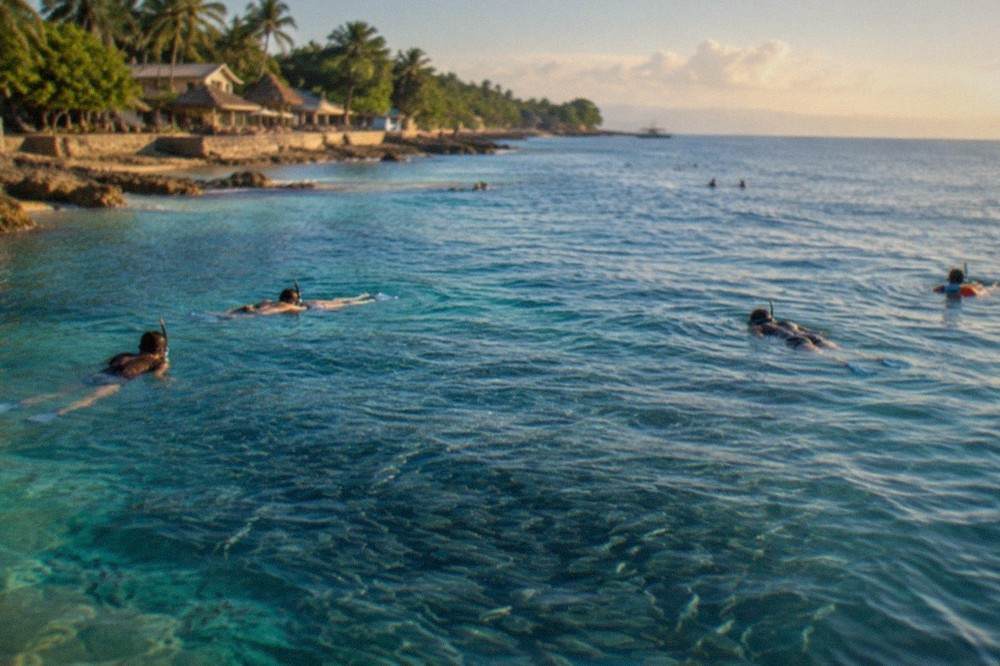
Moalboal is the easiest of the three, because the sardine run sits a few metres off Panagsama Beach and the municipal tourism office notes the best viewing around 7 to 9 AM. The environmental user fee is P100 (about US$1.6) under a 2021 ordinance.
| South-coast day trip | Core fee | Window | Bus from Cebu City |
|---|---|---|---|
| Oslob whale sharks | P1,000 (about US$15.9) foreign, P500 (about US$8.0) local | About 6 AM-12 PM | About 3.5-4.5 hrs |
| Tumalog Falls | About P50 (about US$0.8) | Daylight hours | Same route as Oslob |
| Kawasan Falls (swim) | About P200 (about US$3.2) | Daylight hours | Same route as Moalboal |
| Kawasan canyoneering | Roughly P1,500 (about US$24)-P2,000 (about US$32) | Full day, guided | Same route as Moalboal |
| Moalboal sardine run | P100 (about US$1.6) user fee | Best about 7-9 AM | About 2.5-3.5 hrs |
Booking versus self-organising is a real decision at Oslob and Kawasan. Ceres buses run south from the Cebu South Bus Terminal, but the whale shark window closes at midday, which is why most first timers take an organised departure instead. The Oslob versus Moalboal comparison breaks down which base suits which traveller, and the best month for whale sharks question covers timing.
How Many Days Do First Timers Need In Cebu?
Four full days is the realistic minimum for a first Cebu visit that includes the city, the highlands and one south-coast day trip, and five days adds a second headline trip such as Kawasan canyoneering or Moalboal. Three days works only for travellers who cut the highlands and pick a single day trip, and anything under three days should stay in Cebu City and Mactan rather than attempting the south.
The math is driven by travel time, not sight count. Each south-coast trip consumes a full day door to door. The city core plus the Busay highlands, Temple of Leah at about P120 (about US$1.9) weekday or P150 (about US$2.4) weekend and Tops Lookout at P100 (about US$1.6) with 24-hour access, fills another day comfortably. That is already four days before a beach afternoon on Mactan, where the Lapu-Lapu environmental fee for island hopping is P100 (about US$1.6) for foreign tourists.
First timers choosing where to sleep should read the best part of Cebu to stay question and the Cebu City or Mactan stay comparison: the city side shortens the south-coast departures, while Mactan shortens the airport run and puts the beaches outside the door.
What Should First Timers Know Before Arriving In Cebu?
First timers should know four things before landing: nationals of the United States, the United Kingdom, Australia and every EU state get 30 days visa-free, eTravel registration within 72 hours before arrival is mandatory and free, foreign tourists staying under a year are exempt from the Philippine travel tax rather than paying it, and the rainy season runs June to November with the dry season December to May.
The visa point matters because older pages still circulate a 21-day figure. The official e-visa policy page lists an initial stay of thirty days for the 157 visa-free countries, extendable through the Bureau of Immigration. The eTravel registration at etravel.gov.ph is free, and the Bureau of Immigration repeatedly warns about fake clone sites charging for it. The travel tax exemption is the one visitors tend to miss: the travel tax on economy class falls on Filipinos and residents, not on foreign tourists staying less than a year.
Weather shapes the itinerary more than anything else. PAGASA's national rule puts the rainy season June through November and the dry season December through May, and the Mactan station's 1991-2020 normals record 1,685.0 mm of annual rain across 138 rain days with a mean temperature of 28.1°C. October is the wettest month in the monthly series at 194.8 mm and April the driest at 48.1 mm. Typhoon risk peaks roughly July to October, and Typhoon Tino in early November 2025 brought severe flooding to Cebu before the Department of Tourism confirmed the core tourism zones were largely unaffected and open. The best month to visit Cebu question goes deeper on timing.
| Month | Rainfall at Mactan station (mm) | What it means for first timers |
|---|---|---|
| January | 105.2 | Dry season; Sinulog month, book early |
| April | 48.1 | Driest month; best for the south-coast trips |
| July | 192.9 | Rainy season; typhoon risk rising |
| October | 194.8 | Wettest month in the series; pack rain gear |
| December | 139.7 | Shoulder of the dry season; good all-round |
Money and getting around are simple at this scale. The currency is the Philippine peso, electricity is 230 V at 60 Hz with plug types A, B and C, and the time zone is UTC+8 with no daylight saving. For the full picture of costs, the is Cebu expensive question helps.
First timers after one consolidated list can start from the things to do in Cebu hub, which this site keeps as the master index of the island's tours and attractions. Cebu Travel Guide covers every page referenced here in depth.
Common Questions About Cebu For First Timers
Where to go in Cebu for first timers?
Start with Cebu City's heritage core, Magellan's Cross, the Basilica Minore del Santo Niño and Fort San Pedro, add the Busay highlands at Temple of Leah and Tops Lookout, then take day trips south to Oslob for whale sharks and Badian for Kawasan Falls. Four full days covers all three layers without rushing.
Is Cebu safe for first-time visitors?
Yes, at the level of ordinary urban precautions. The UK Foreign Office names no Cebu-specific restrictions for the Philippines, Australia's Smartraveller advises a general high degree of caution country-wide, and the Department of Tourism declared Cebu open and safe for visitors on 28 October 2025 after the northern earthquake.
Can you do Oslob and Kawasan Falls on the same day?
It is possible but not recommended from Cebu City. Both sit on the southern highway but far enough apart that a combined day forces a very early start and a rushed afternoon, and Oslob's whale shark window closes around midday. Most first timers take one trip per day or base overnight in the south.
Do first timers need to rent a car in Cebu?
No. Cebu City's core sights are walkable, jeepneys and taxis cover the city, Grab operates across Cebu City, Mandaue and Mactan, and Ceres buses run south to Oslob and Moalboal from the Cebu South Bus Terminal. A rental only pays off for a self-driven highlands loop or a multi-stop south-coast itinerary.
How much does a first trip to Cebu cost?
City sightseeing is cheap: Fort San Pedro is P50 (about US$0.8), Magellan's Cross is free and Tops Lookout is P100 (about US$1.6). The big line items are the south-coast trips, P1,000 (about US$15.9) per foreign tourist at Oslob and roughly P1,500 (about US$24) to P2,000 (about US$32) for Kawasan canyoneering, plus lodging and intercity transport.