Where Should I Go For The First Time In Cebu?
A first-timer's route through Cebu, Philippines: the heritage sights of Cebu City, the whale sharks of Oslob, the sardine run of Moalboal and the day trips that fit a first visit.
Cebu, an island province in the Central Visayas region of the Philippines, is the country's oldest city and its most convenient adventure base at the same time. A first visit usually splits into three moves: the heritage core of Cebu City, where Magellan's Cross and the Basilica del Santo Niño stand a short walk apart; the animal encounters of the south, from whale sharks in Oslob to the sardine run at Moalboal; and the beaches and island-hopping of Mactan and beyond. This page lays out that route in order, with the current fees, the realistic travel times and the trips that are worth booking ahead. Cebu Travel Guide covers each stop in depth, but the sequence below is the one that works for a first timer with limited days.
What Should First-Timers See In Cebu City First?
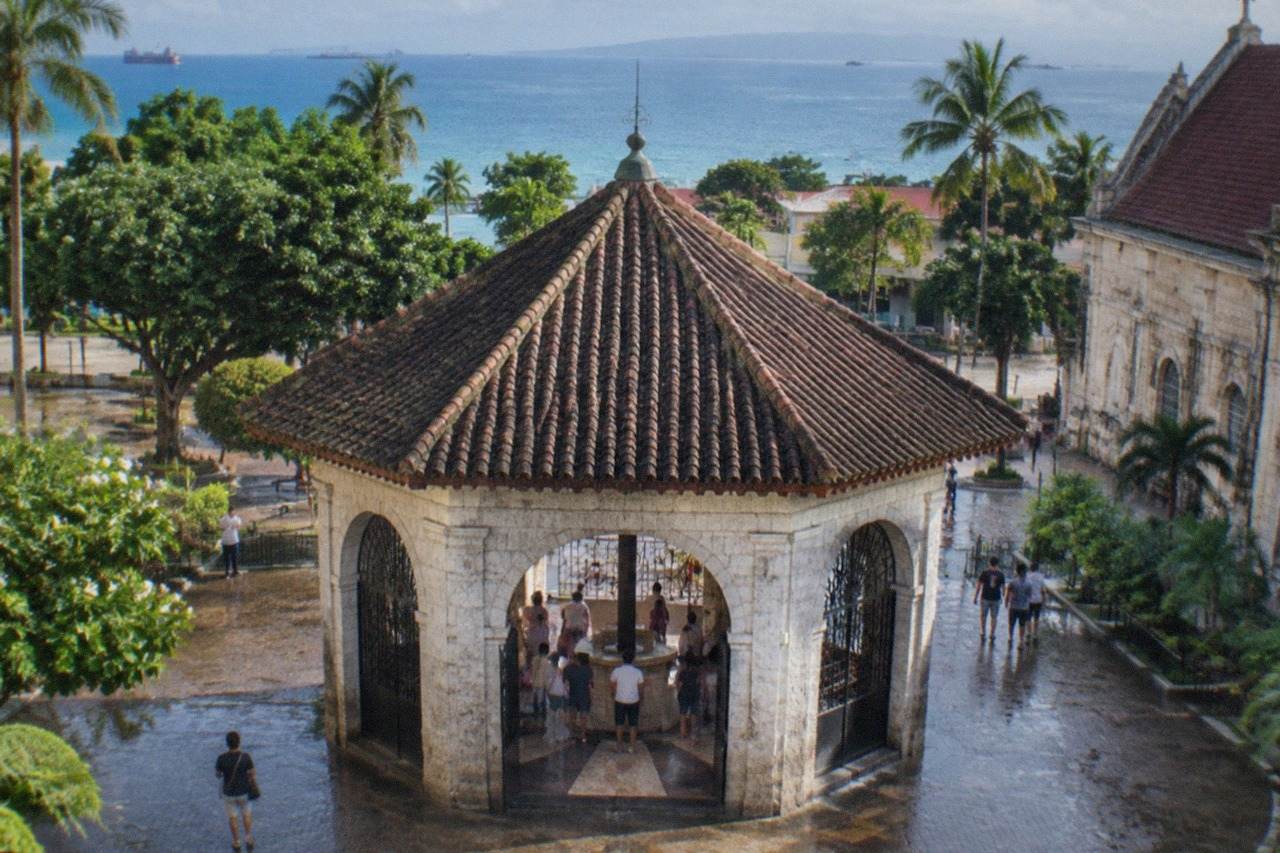
Start with the compact heritage cluster around Magellan's Cross, the Basilica del Santo Niño and Fort San Pedro, all reachable on foot in a single morning, then head uphill to Tops Lookout for sunset. Magellan's Cross is free, Fort San Pedro charges a modest entrance fee, and Tops Lookout stays open around the clock. This core gives first-time visitors the historical story of Cebu, the oldest city in the Philippines, without eating a whole day.
The Basilica del Santo Niño, founded on 28 April 1565 on the spot where the Santo Niño image was found, is the heart of the cluster and the centre of the Sinulog devotion each January. Magellan's Cross sits in a small pavilion next door; the Basilica's own chronicles say a cross was reported planted here in 1521. Fort San Pedro, whose present stone structure dates from 1738, is a short walk along the plaza and is the oldest triangular bastion fort in the country.
Entrance fees are light. Fort San Pedro charges P50 (about US$0.8) for regular visitors and P40 (about US$0.6) for students and seniors, per a 2026 SunStar report on the city's first fee update in seventeen years. Magellan's Cross costs nothing. Tops Lookout, the hillside viewpoint above the city, charges P100 (about US$1.6) regular entry per its operator's own site, and is open 24 hours, with a shuttle-plus-entry combination available from IT Park.
| Cebu City first-timer stop | Entry fee | Hours | Why it matters |
|---|---|---|---|
| Magellan's Cross | Free | Roughly 8 AM-6 PM | Cross planted at the 1521 arrival; pavilion dates to 1834 |
| Basilica del Santo Niño | Free (museum separate) | Daily, mass schedule restored 2024 | Founded 28 April 1565; home of the Santo Niño image |
| Fort San Pedro | P50 (about US$0.8) regular, P40 (about US$0.6) discounted | 8 AM-7 PM | Oldest triangular bastion fort in the country |
| Tops Lookout | P100 (about US$1.6) regular, P70 (about US$1.1) senior/PWD | Open 24 hours | Panoramic deck above Cebu City |
For a deeper look at what the island is known for beyond this cluster, see what Cebu is known for.
Where Should I Go For The First Time In Cebu?
The classic first-time answer is south Cebu: whale shark watching in Oslob in the early morning, Tumalog Falls before the crowds, then the sardine run and Pescador Island snorkelling around Moalboal, usually as an overnight or a long day trip. Oslob charges one thousand pesos per foreign visitor for the whale shark interaction, boat and guide included, and the session window runs roughly 6 AM to noon. Moalboal's sardine school swims metres from shore year-round.
Oslob is the single most famous stop for first-timers, and the rules matter as much as the fee. The municipal tourism office reverted to its 2020 ordinance rates in March 2025: P1,000 (about US$15.9) for foreign tourists, P500 (about US$8.0) for Filipinos, with a mandatory briefing, a minimum four-metre distance, no sunscreen and no touching. Sightings are not guaranteed. In late May 2026 the whale sharks were absent from the Tan-awan interaction area for about four days when the plankton moved, and the local government said operations simply pause and resume with the sharks. Booking through an organised tour handles the 3 AM-style departures from the city; the Oslob versus Moalboal question is worth reading before choosing where to sleep.
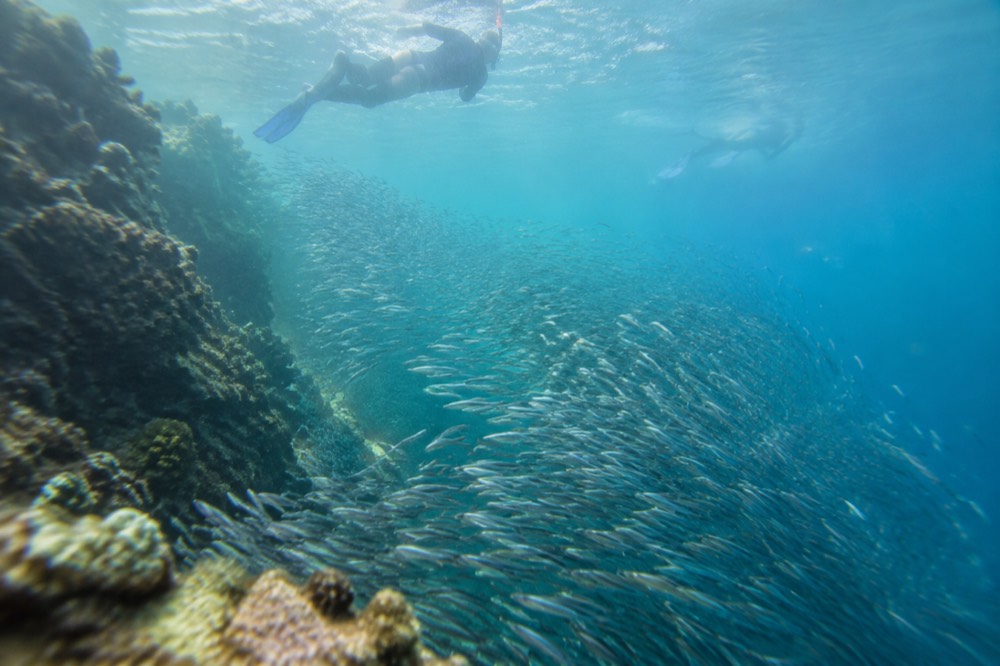
Moalboal is the more relaxed half of the south. The sardine run at Panagsama Beach is a permanent resident school, not a migration, and the municipal tourism page confirms it sits a few metres from shore, best in the early morning. A P100 (about US$1.6) environmental user fee covers swimming and snorkelling, collected at the beach kiosk. Pescador Island's marine sanctuary adds about P100 (about US$1.6) per dive or snorkel activity.
Which Day Trips Work Best For A First Cebu Visit?
Two day trips earn their place on a first visit: Kawasan Falls canyoneering in Badian, roughly a three-to-four-hour bus ride south, and the Bohol countryside tour across the Bohol Strait by fastcraft, about two hours each way. Kawasan's Level 1 entrance runs about two hundred pesos and canyoneering with a Badian-accredited guide roughly fifteen hundred to two thousand pesos. Bohol is a same-day return trip built around the Loboc River cruise and the Chocolate Hills.
Kawasan Falls is the adventure pick. Only the Badian route operates; the Alegria route has been suspended through 2025 and 2026, and cliff jumping is banned at the main basin. The site stayed open through a rehabilitation programme that began in June 2026, and canyoneering pauses temporarily after heavy rain, so a guided package with a local operator is the practical choice for a first-timer. A rockfall in October 2025 closed the canyon for two days, which is why guides and tours build in flexibility.
Bohol is the easiest big-ticket side trip from Cebu. OceanJet fastcraft runs the Cebu City to Tagbilaran crossing in about two hours, around thirteen sailings a day, with tourist-class fares at P960 (about US$15.3) since the September 2026 fuel surcharge. A organised countryside tour bundles the ferry, the Loboc River lunch cruise and the Chocolate Hills into one day with a same-day return, which saves a first-timer from choreographing four legs of transport alone.
If food is your entry point to a place, the Cebu market food tour tradition runs deep: the city's market and lechon culture is the subject of a dedicated Check availability link below, and the tour is the related pick for this page.
The same walk doubles as a shortcut through the heritage core, since the market route passes within a few blocks of the Basilica and the Colon Street district, so a first-timer gets the food and the history in one afternoon rather than two separate expeditions.
How Many Days Do First-Time Visitors Need In Cebu?
Four to five days is the sweet spot for a first Cebu trip: one full day for Cebu City's heritage core and a highlands sunset, one long day or overnight for Oslob and Tumalog Falls, one day for Moalboal's sardines and Pescador Island, and one spare day for either Kawasan canyoneering or the Bohol ferry trip. Three days works only if you cut either the south or Bohol entirely.
The constraint is distance, not variety. Oslob sits roughly three and a half to four and a half hours from the Cebu South Bus Terminal by Ceres bus, and Moalboal two and a half to three and a half, so first-timers who try to day-trip both from the city lose whole mornings to the highway. Sleeping one night in Moalboal or Oslob converts two exhausting days into one comfortable block, and the first-timers' route question covers the trade-offs in more detail. Where to base yourself matters too: the Cebu City or Mactan stay decision usually comes down to whether you want heritage and street food or beach resort access.
A sample shape for five days: day one, the city cluster plus Tops Lookout at sunset; day two, the market food walk and highlands temples; day three, bus south to Oslob for whale sharks and Tumalog Falls, continue to Moalboal; day four, sardines and Pescador Island, bus back; day five, Bohol by fastcraft or Kawasan by bus.
When Is The Best Time To Visit Cebu For A First Trip?
January to May is the best window for a first Cebu visit: PAGASA's rule puts the dry season from December to May, with April the driest month at the Mactan station and October the wettest. January also brings Sinulog, whose Grand Parade falls on the third Sunday, 17 January in 2027, at the Cebu City Sports Center. June to November is typhoon season, peaking roughly July to October.
The Mactan climate normals are blunt: October averages 194.8 mm of rain against April's 48.1 mm, and the station logs 138 rain days a year. Typhoon Tino in early November 2025 brought record flooding to parts of Cebu, though the tourism department confirmed the core zones of Cebu City and Mactan stayed open. The best time to visit guide breaks the months down, and if whale sharks are the reason for the trip, the whale shark timing question is the one to read next: Oslob runs year-round, but sightings, as May 2026 showed, follow the plankton rather than the calendar.
Sinulog week is the one January caveat: hotel rates in Cebu City spike and streets close for the parade, so first-timers who want the festival should book far ahead, and those who do not should check the dates before committing.
Common Questions About A First Trip To Cebu
Where should I go for the first time in Cebu?
Start with Cebu City's heritage cluster, Magellan's Cross, the Basilica del Santo Niño and Fort San Pedro, then head south to Oslob for whale sharks and Moalboal for the sardine run. Add Bohol or Kawasan Falls as a day trip if you have five days. This sequence gives first-timers history, wildlife and beaches without backtracking.
Is Cebu City worth visiting, or should I go straight to the beaches?
Cebu City is worth at least one full day. It holds the oldest city charter in the Philippines, dated 24 February 1937, and its walkable heritage core is unmatched elsewhere on the island. The beaches of Mactan are a short bridge away, so you can do both in a single trip.
Can you see whale sharks and the sardine run on the same trip?
Yes. Oslob and Moalboal are both on Cebu's south coast, roughly two hours apart by road, and most first-timers combine them over one or two days. Oslob's interaction window runs roughly 6 AM to noon, so whale sharks come first, with the sardine run, which is shore-accessible all day, in the afternoon.
How do first-timers get around Cebu without a car?
Cebu South Bus Terminal runs Ceres buses to Oslob and Moalboal multiple times daily, jeepneys cover city streets at a minimum fare, and Grab operates across Cebu City, Mandaue and Mactan. For the south-coast highlights, most first-timers use an organised day tour instead of self-driving.
Do I need a visa for a first trip to Cebu?
Nationals of the United States, the United Kingdom, Australia and EU states get a 30-day visa-free stay for tourism, per the official eVisa policy page, with a passport valid six months and an onward ticket. Everyone must register on the free eTravel platform within 72 hours before arrival. Foreign tourists staying under a year are exempt from the Philippine travel tax.
Is Cebu safe for first-time visitors?
Advisories for the Philippines, including the US State Department's Level 2 and the UK FCDO's guidance, carry no Cebu-specific restrictions. The usual city precautions apply. After the September 2025 earthquake in northern Cebu, the tourism department confirmed in October 2025 that Bantayan Island and Malapascua remained open and their ports operational.