Cebu Lechon And Local Food Guide
Cebu, an island province in the Central Visayas region of the Philippines, is the home of lechon, the roast pig that locals and visiting food writers treat as the country's finest. This guide covers what makes Cebu lechon different, how to eat it like a local, and the wider food scene around it.
Short answer
Cebu lechon is a whole pig roasted over charcoal, stuffed with lemongrass, spring onions, salt and pepper, and eaten without sauce, skin first. The province, and Carcar in particular, is famous for it. Beyond lechon, eat puso hanging rice, ngohiong rolls, sutukil seafood and dried fish, and take home otap and dried mangoes.
Cebu, an island province in the Central Visayas region of the Philippines, is the place Filipinos themselves point to when the subject of roast pig comes up. Lechon here is not a side dish or a festival novelty; it is the province's signature food, served at every celebration and sold by weight at stalls that roast pigs daily. The island's food scene runs far wider than that one dish, though. Markets, night food streets, dried fish from the north and coconut-based sweets all belong to the same story, and this guide walks through the lot: what lechon actually is, how to order and eat it, what else deserves space on your plate, and what carries home in a suitcase.
What Makes Cebu Lechon Different From Every Other Roast Pig?
Cebu lechon is a whole pig roasted for hours over live charcoal, stuffed with a simple mix of lemongrass, spring onions, salt and pepper, and seasoned from the inside out, so the meat carries its flavour without any sauce. The skin is the point of the whole exercise: thin, deeply browned and shattering crisp. Elsewhere in the Philippines lechon comes with a sweet liver sauce on the side; in Cebu, asking for sauce is widely treated as an insult to the pig, and the roast is expected to stand alone.
That confidence is not bravado, it is technique. The stuffing does the seasoning work that a sauce does elsewhere. Lemongrass is the backbone, its stalks packed into the cavity along with spring onions and coarse salt, and as the pig turns slowly on a spit the aromatics steam the meat from within while the charcoal dries and crisps the skin from without. The result is pork that tastes of lemongrass and its own juices rather than of a dipping bowl.
The skin deserves its own paragraph because it is the reason people queue. Done properly it blisters into a hard, glossy shell that cracks audibly when cut. The fat beneath it has mostly rendered away, which is what stops the skin from turning chewy as it cools. Locals judge a lechon stall entirely on this layer: a soggy skin means the pig was roasted too fast, too close to the coals, or left sitting.
Ordering is by weight, and the cut matters. A stall will carve from whatever part you choose, so it helps to know what each one gives you:
| Part of the pig | What you get | Best for |
|---|---|---|
| Skin and belly strip | The crispest skin, layered fat, tender meat | First-timers; the classic experience |
| Shoulder (front quarter) | Denser meat, good fat cover | Taking home, longer meals |
| Leg (hind quarter) | Leaner slices, thicker skin | Feeding several people |
| Ribs and loin section | Deep lemongrass flavour from the cavity | Flavour over texture |
| Head parts, cheeks, ears | The richest, most gelatinous bites | Adventurous eaters |
The roast is sold by the kilo and carved to order, wrapped in paper and eaten within the hour, because Cebu lechon is at its best minutes after the knife goes in. A celebration in Cebu, from a birthday to a town fiesta, traditionally centres on one of these pigs, and the phrase for party food across the Philippines, handa, almost implies lechon on the table.
Where Do You Find The Best Lechon In Cebu?
The best lechon in Cebu comes from dedicated roasting stalls rather than restaurant kitchens: pigs roast daily, are ordered by weight and carved in front of you. The town of Carcar, south of Cebu City, is the name most associated with the province's lechon tradition, and its stalls along the main highway sell to passing buses all day. In the city, the practical rule is to buy at a busy stall where turnover is fast and the pigs are fresh from the spit.
Carcar sits roughly an hour south of the city on the road that continues toward Moalboal and Oslob, which makes it a natural stop on a south Cebu food loop. The town is also known for its shoe stalls and its colonial-era plaza, but the lechon is why most buses stop. If your itinerary runs south, the south Cebu day tour guide shows how the food stops slot into the route.
Within Cebu City itself, lechon is a market-and-stall food. You buy it at outlets that do nothing but roast pigs, and the practical skill is timing: go at a busy hour, when turnover is fast and the pigs are fresh from the spit. A stall with a queue of locals buying by the kilo is doing something right.
A few practical rules make the experience better:
| Situation | What to do |
|---|---|
| Buying for a group | Order by weight per person, ask for a mix of skin-on and rib cuts |
| Eating on the street | Take the paper-wrapped portions and eat them nearby; the skin softens with distance |
| Taking lechon back to a hotel | Ask for the skin packed separately from the meat |
| Ordering at a fiesta or event | Expect it served on banana leaves, communal style |
| Adding sauce | Don't; Cebu lechon is seasoned inside, and locals eat it plain |
For travellers who would rather have a guide make these calls, a market and food walk covers the stalls worth knowing about, with someone who can translate menus and explain what each dish is as it arrives.
The tour's operator has not published a price on its live listing, so check current availability and cost there before you plan around it. What the listing does show is a walk built around market food, which is exactly the format that suits lechon hunting: short walks, many stops, small portions.
What Is A Cebu Market And Food Tour Like?
A Cebu market and food tour is a guided walk, typically three to four hours, in which a local guide leads you from stall to stall through the city's public markets and food streets, explaining dishes, ingredients and Cebuano food customs as you eat. The format suits travellers who do not speak Cebuano or Filipino, because the guide handles ordering, and it reaches market food that restaurant menus never show.
The walks usually include the wet market, cooked-food stalls and a taste of the island's better-known dishes, lechon among them.
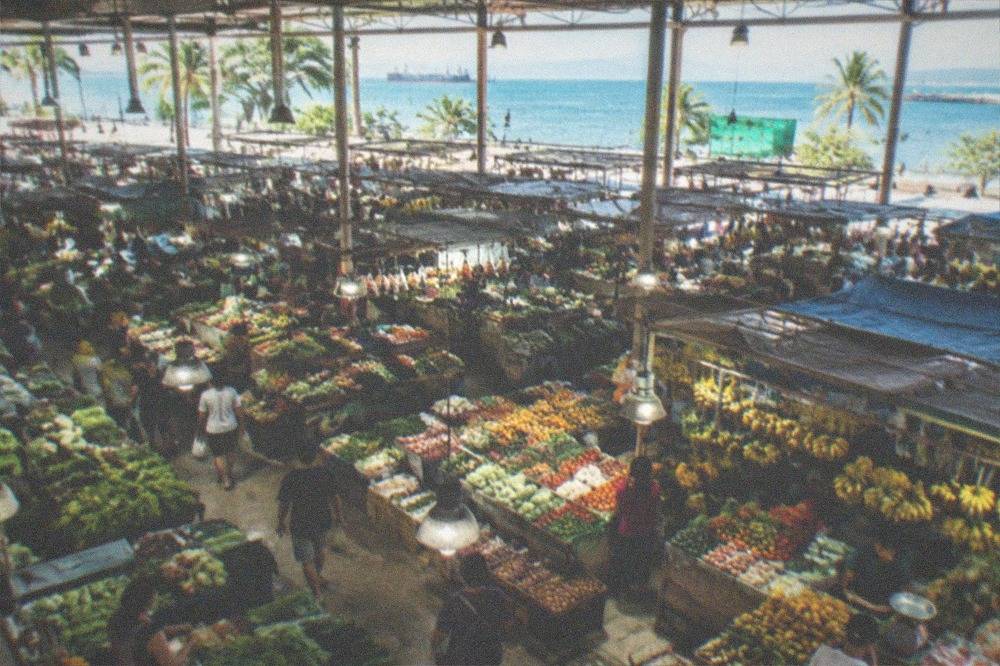
The value of a guided walk is not just translation, it is access. Public markets in the Philippines are loud, crowded and organised by a logic that takes years to learn: vegetables in one hall, fish in another, cooked food in a third. A guide knows which stall's ngohiong comes out crisp, which vendor's dried fish is the good batch, and what the unlabelled pots contain. For a first-time visitor to the country, that knowledge compresses a week of trial and error into a single morning.
If a walk is not your style, the same markets are entirely navigable alone, and the Cebu budget and costs guide covers what a food-focused day of eating costs at street level. Either way, go hungry, carry small bills, and treat the market hall as the island's real restaurant district.
What Other Dishes Should You Try In Cebu Beyond Lechon?
Beyond lechon, the dishes worth crossing Cebu for are puso, the woven hanging-rice pouches that accompany nearly every local meal; ngohiong, Cebu's crisp fried spring rolls; tuslob-buwa, a simmering pork-brain dip eaten with puso; sutukil, the grilled-soup-raw seafood style of the Mactan shore; and danggit, the island's dried rabbitfish, eaten at breakfast with garlic rice. Together they cover the range of Cebuano cooking: market food, seafood and festival food, none of it requiring a fancy venue.
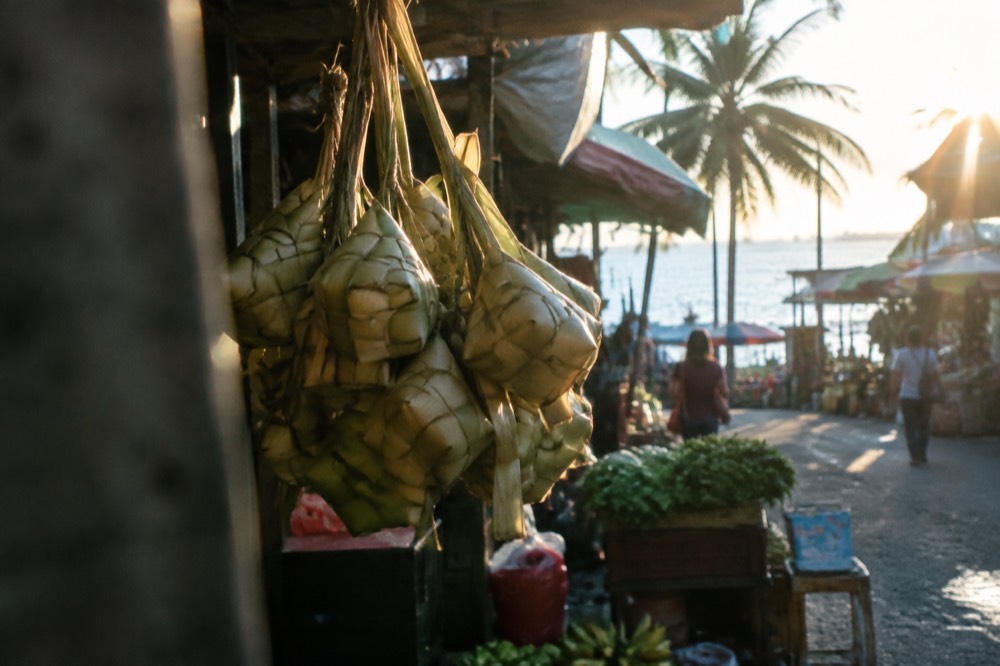
Puso deserves the first explanation because it appears beside everything. Rice is packed into woven coconut-leaf pouches, boiled in water, and the result is a compact diamond of rice you tear open by hand. The name means "hanging", from the way the pouches were traditionally strung up, and in Cebu they are the standard accompaniment to grilled food and lechon. Eating lechon with puso rather than plated rice is the local way.
The wider dish list is long, but this table covers the core:
| Dish | What it is | How it is eaten |
|---|---|---|
| Puso | Rice boiled inside woven coconut-leaf pouches | Torn open by hand, eaten with grilled food |
| Ngohiong | Spring rolls filled with vegetables and pork, fried crisp | Dipped in vinegar, bought by the piece at market stalls |
| Tuslob-buwa | Pork brain and liver simmered with soy and chilli | Puso dipped into the shared pot, street style |
| Sutukil | Seafood chosen live, then grilled, cooked in soup or served kinilaw raw | Pick your fish at the tank, choose the style |
| Danggit | Salted, split and dried rabbitfish | Fried crisp at breakfast with rice and vinegar |
| Batchoy | Noodle soup with pork organs, chicharron and egg | A filling one-bowl meal, Ilonggo in origin but everywhere in Cebu |
| Chicharron | Deep-fried pork skin, sold by weight in paper bags | Eaten as a snack, often with a vinegar dip |
| Torta, otap, rosquillos | Cebu's pastry traditions, from lard-rich cake to crisp wafer curls | Bought as pasalubong |
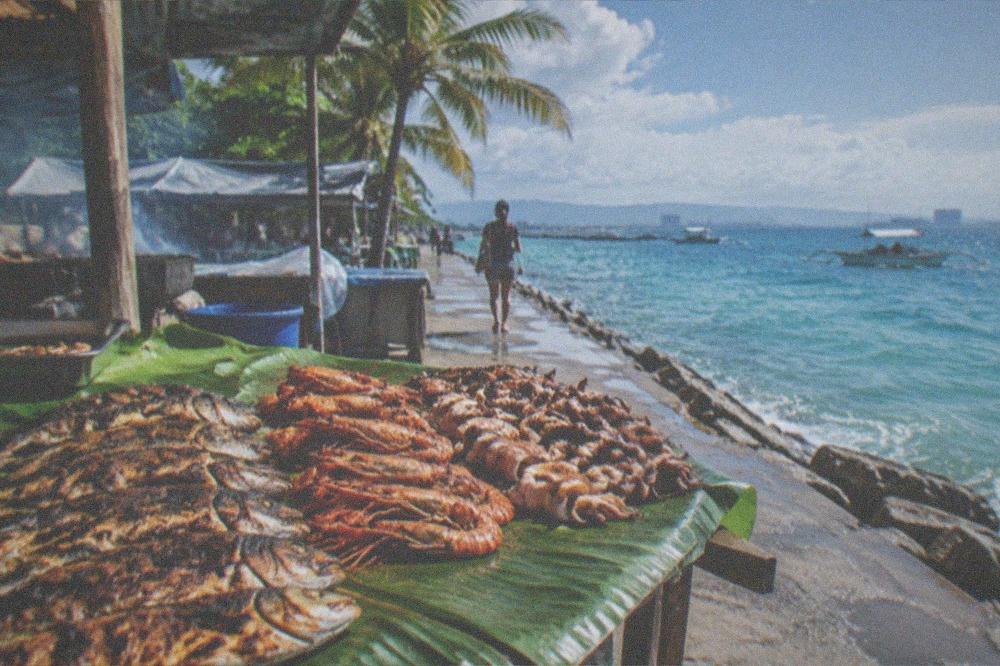
Kinilaw deserves a word of caution and praise at once: it is raw seafood cured in vinegar and calamansi juice, closer to a Philippine ceviche than to sushi, and the coastal towns serve it minutes after the fish comes off the boat. The seafood style of choice around Mactan is sutukil, whose name is a contraction of the Cebuano words for grilled, soup and raw. You point at the fish, prawns and shellfish, then choose your treatment.
The highlands add another layer entirely. The hills behind the city grow vegetables that reach the market in the morning, and the temple and garden route above the city is a half-day trip that pairs well with a late lunch back down at street level.
That tour's listing shows a half-day guided trip covering the temples, gardens and viewpoints above Cebu City, which pairs naturally with a food plan: hills in the morning, market food in the afternoon. Its current price and availability are shown on the operator's live listing.
For families, the same dishes work at street level without much adjustment; the family travel guide covers how market food fits into a trip with children, and which stops suit younger eaters.
What Food Souvenirs From Cebu Survive The Journey Home?
The food souvenirs that travel well from Cebu are the dry and packaged ones: otap, the crisp sugar-dusted pastry curls; dried mangoes, the province's best-known export; rosquillos, the flower-shaped shortbread cookies; masareal, the ground-peanut bars; and chicharron, which keeps for days in its paper bag. Lechon itself does not travel, its skin dies within hours, so the local custom is to buy these pasalubong items instead, and every market and bakery in the province sells them stacked in boxes.
Pasalubong is the Philippine custom of bringing food home for the people who stayed, and Cebu has one of the strongest pasalubong cultures in the country. The items above are chosen precisely because they survive a day of travel, and stalls sell them by the box with the wrapping already arranged for a suitcase.
| Souvenir | What it is | Travel durability |
|---|---|---|
| Otap | Flaky, sugar-crusted pastry curls | Excellent; days in a sealed box |
| Dried mangoes | Sweetened, sun-dried mango slices | Excellent; sealed packs |
| Rosquillos | Egg-rich flower-shaped cookies | Good; crushable, pack carefully |
| Masareal | Bars of ground peanut cooked with sugar | Good; individual wraps |
| Dried fish (danggit) | Salted dried rabbitfish | Days only, and fragrant; wrap well |
| Chicharron | Fried pork skin by weight | A few days; best eaten fresh |
| Tablea | Pure cacao discs for drinking chocolate | Excellent; long shelf life |
Tablea is the sleeper item on that list. Philippine drinking chocolate is made from discs of pure roasted cacao, whisked into hot water or milk, and Cebu's highland growers supply the city's cafes. It weighs little, keeps indefinitely and makes a genuinely local gift, unlike the mass-market items every airport sells.
When Is The Best Time Of Year To Eat Your Way Through Cebu?
The best time to eat your way through Cebu is the dry season, December to May, when PAGASA's national classification puts the island outside the rainy months of June to November, and the third Sunday of January brings Sinulog, the festival that fills the city with food stalls and family feasts. Sinulog 2027 falls on 17 January 2027, with the grand parade at the Cebu City Sports Center. The wettest months on the Mactan climate record are October and July.
The timing question is really a street-food question. Cebu's climate is tropical, with Mactan station's 1991-2020 normals showing an annual mean of 28.1 C and 1,685 mm of rain, and that rain falls mostly between June and November. Market halls keep trading whatever the weather, but the outdoor grill stalls, the tuslob-buwa pots and the evening food streets depend on dry pavements. The full picture is in the best time to visit Cebu and typhoon season guides.
Sinulog week deserves a special mention for food travellers. The festival honours the Santo Niño, the child Jesus image given to Queen Juana at her baptism in 1521, and the city's celebration in January is the largest in the Visayas. Food is central to it: families roast pigs, offices hold potluck feasts, and the streets around the parade route fill with vendors. The Sinulog festival guide covers the schedule and the parade route.
A food trip that runs beyond the city pairs naturally with the south: the road to Oslob and Moalboal passes through Carcar's lechon country, and a guided join-in day trip handles the early start and the driving.
That join-in tour's listing shows a full-day early-morning departure with a Tumalog Falls stop, and its price is not published by the operator, so check the live listing. The food logic of the route is simple: leave the city early, stop for lechon in Carcar on the way south, and eat seafood at the coast.
How Do You Eat Lechon Like A Local In Cebu?
Eating lechon like a local in Cebu means ordering by the kilo at a stall rather than a plate at a restaurant, eating with puso instead of plated rice, taking the skin first while it is still crisp, and using your hands rather than cutlery, which is the traditional way at celebrations. The meal is communal: one pig, banana leaves or paper, and everyone takes a share. Locals also treat lechon as an event food, the centrepiece of a handa, rather than a quick solo lunch.
Kamayan, eating with the hands, is the custom that surprises visitors, and it is genuinely the better method here. Fingers let you separate skin from meat and fat, and pick up puso rice without crushing it. No one will object to a fork, but at a fiesta table the hands are standard.
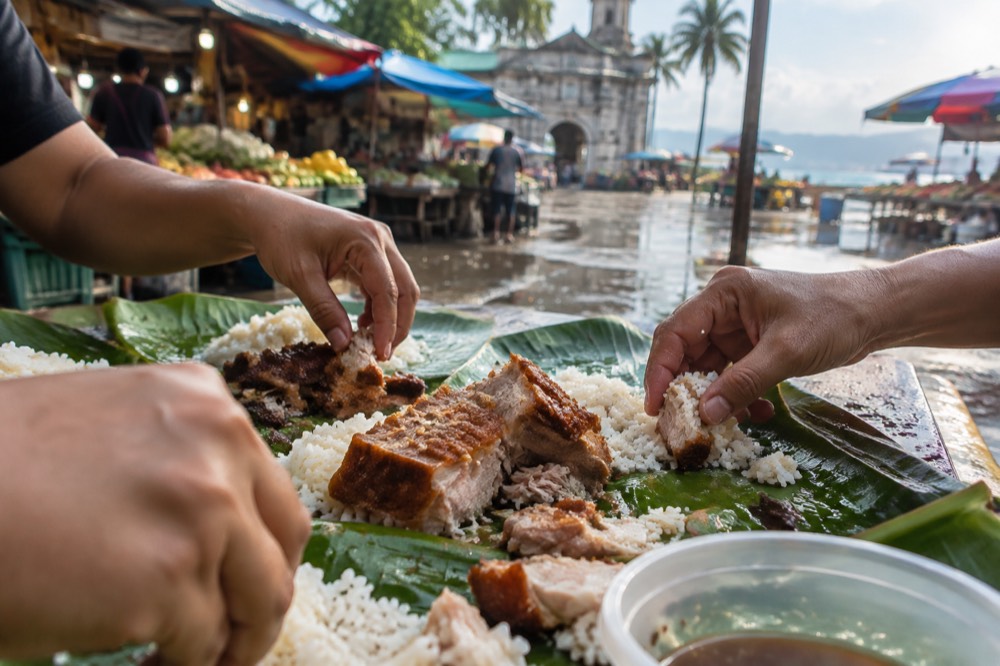
The order of eating matters more than it sounds. Skin first, always, because it is the only part with a shelf life measured in minutes. Then the rib and cavity meat, which carries the lemongrass flavour. The lean leg meat goes last, when it has cooled slightly and benefits from a bite of puso alongside.
| Local custom | What it means in practice |
|---|---|
| Ordering "by kilo" | Ask for a weight, not a plate; stalls carve to order |
| Skin first | The crisp layer is the prize; eat it before it softens |
| No sauce | Cebu lechon is seasoned inside; vinegar is for chicharron, not lechon |
| Puso on the side | Woven rice pouches replace plated rice |
| Kamayan | Hands, not cutlery, at celebrations |
| Handa | The feast spread that lechon anchors; expect it at fiestas and birthdays |
One honest note on the ethics of eating well in Cebu: the island's food culture is built on small vendors, and the money you spend at a stall goes to the family roasting the pig. This site's Cebu Travel Guide hub page collects the practical guides, from the airport guide to getting around, that help you reach the food in the first place. The most famous food in Cebu answer page covers the lechon question in short form, and the nightlife guide picks up where the food stalls close.
Common Questions About Cebu Food And Lechon
What is Cebu lechon and why is it famous?
Cebu lechon is a whole pig roasted over charcoal, stuffed with lemongrass, spring onions, salt and pepper, and eaten without sauce. It is famous because the stuffing seasons the meat from the inside, and the skin roasts to a crisp shell, which is why Filipinos across the country treat Cebu as the lechon capital.
Do you eat Cebu lechon with sauce?
No. In Cebu the roast is seasoned inside the pig, so no sauce is served and asking for one is considered bad form. Elsewhere in the Philippines lechon comes with a sweet liver sauce, but the Cebuano version is meant to be eaten plain, skin first.
What is puso and why does it come with lechon?
Puso is rice boiled inside a woven coconut-leaf pouch, named after the Cebuano word for hanging because the pouches were traditionally strung up. In Cebu it is the standard accompaniment to lechon and grilled food, torn open by hand and eaten in place of plated rice.
What food should you bring home from Cebu?
The travel-friendly pasalubong are otap pastry curls, dried mangoes, rosquillos cookies, masareal peanut bars and tablea cacao discs. Lechon does not travel; its skin softens within hours, so locals buy the packaged items instead, and every market sells them boxed.
When is the best month for a food trip to Cebu?
The dry season, December to May, suits street food best, and January adds Sinulog, whose feast culture fills the city with food stalls. The third Sunday of January is the festival's grand parade; Sinulog 2027 falls on 17 January 2027 at the Cebu City Sports Center.
Can you explore Cebu's food scene without speaking Cebuano?
Yes. Market vendors deal with visitors constantly, and pointing plus a smile covers most transactions. A guided market and food walk removes even that friction, since the guide orders, explains each dish and takes you to stalls you would not find alone.
Eat the skin first, order more puso than seems reasonable, and leave room in the suitcase for the otap.