5 Days In Cebu Itinerary
Five days is the sweet spot for Cebu, an island province in the Central Visayas region of the Philippines: enough for the heritage core of Cebu City, the whale sharks of Oslob, the sardine run at Moalboal, and a fast ferry across to Bohol.
Short answer
Spend Day 1 in Cebu City, Day 2 in Oslob with whale sharks and Tumalog Falls, Day 3 in Moalboal and Kawasan, Day 4 on a Bohol day trip, and Day 5 on the Mactan islands or the Busay highlands.
Five days is the sweet spot for Cebu, an island province in the Central Visayas region of the Philippines. The city alone holds a street often called the oldest in the country and the oldest fort, the south coast packs whale sharks, waterfalls and a million-strong sardine school into a single bus corridor, and a two-hour fast ferry opens Bohol as a day trip. This itinerary strings them together in an order that minimises backtracking, with verified fees, transport times and the rules that actually shape each stop.
Where Should A 5 Days In Cebu Itinerary Go?
The strongest five-day shape is one day in Cebu City, two days down the south coast split between Oslob and Moalboal with Kawasan Falls, one day trip to Bohol by fast ferry, and a final flexible day on the Mactan islands or in the Busay highlands above the city. This order works because the south-coach corridor from the Cebu South Bus Terminal carries you past Oslob and Moalboal on a single route, so nothing doubles back. It also front-loads the two early-morning commitments, the whale sharks and the sardine run, while the Bohol ferry and the island day stay flexible in case weather moves.
Cebu City, Lapu-Lapu and Mandaue are highly urbanized cities administratively independent of Cebu Province, so "Cebu" on this itinerary means the whole metro plus the south-coast municipalities of Oslob, Moalboal and Badian. Distances are real: the bus from the Cebu South Bus Terminal to Oslob takes roughly 3.5 to 4.5 hours, and to Moalboal roughly 2.5 to 3.5 hours, which is why this plan puts you to bed early on two nights rather than pretending the south is a suburb.
If you are working with less time, the 3 days in Cebu itinerary cuts this plan to the city, Oslob and Moalboal, and the 7 days in Cebu itinerary adds Bantayan or Malapascua in the north. For the question of whether five days is even the right number, see how many days in Cebu is enough.
Day 1: Cebu City Heritage And Street Food
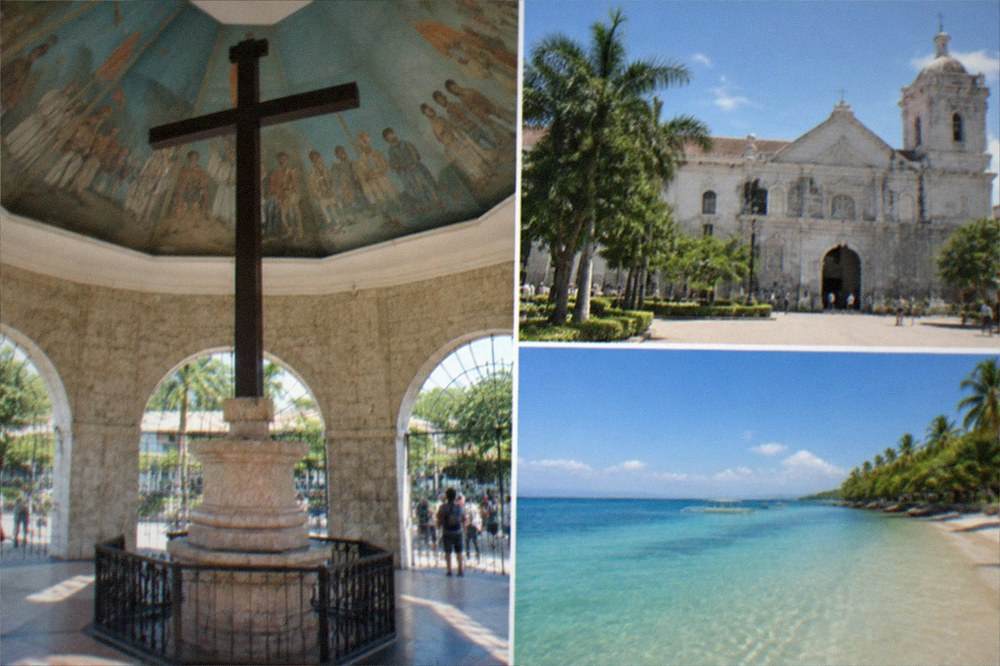
Day 1 stays inside Cebu City and covers the colonial core on foot: Magellan's Cross, the Basilica Minore del Santo Niño, Fort San Pedro, Colon Street and the Yap-Sandiego and Casa Gorordo houses, finishing with lechon for lunch and a food walk through the markets in the late afternoon. Every stop except the museums sits within a fifteen-minute walk of the next, which makes this the cheapest and easiest day of the five. The Basilica's mass schedule returned to its pre-pandemic timetable in December 2024, and the museum sits in the Pilgrim Center basement.
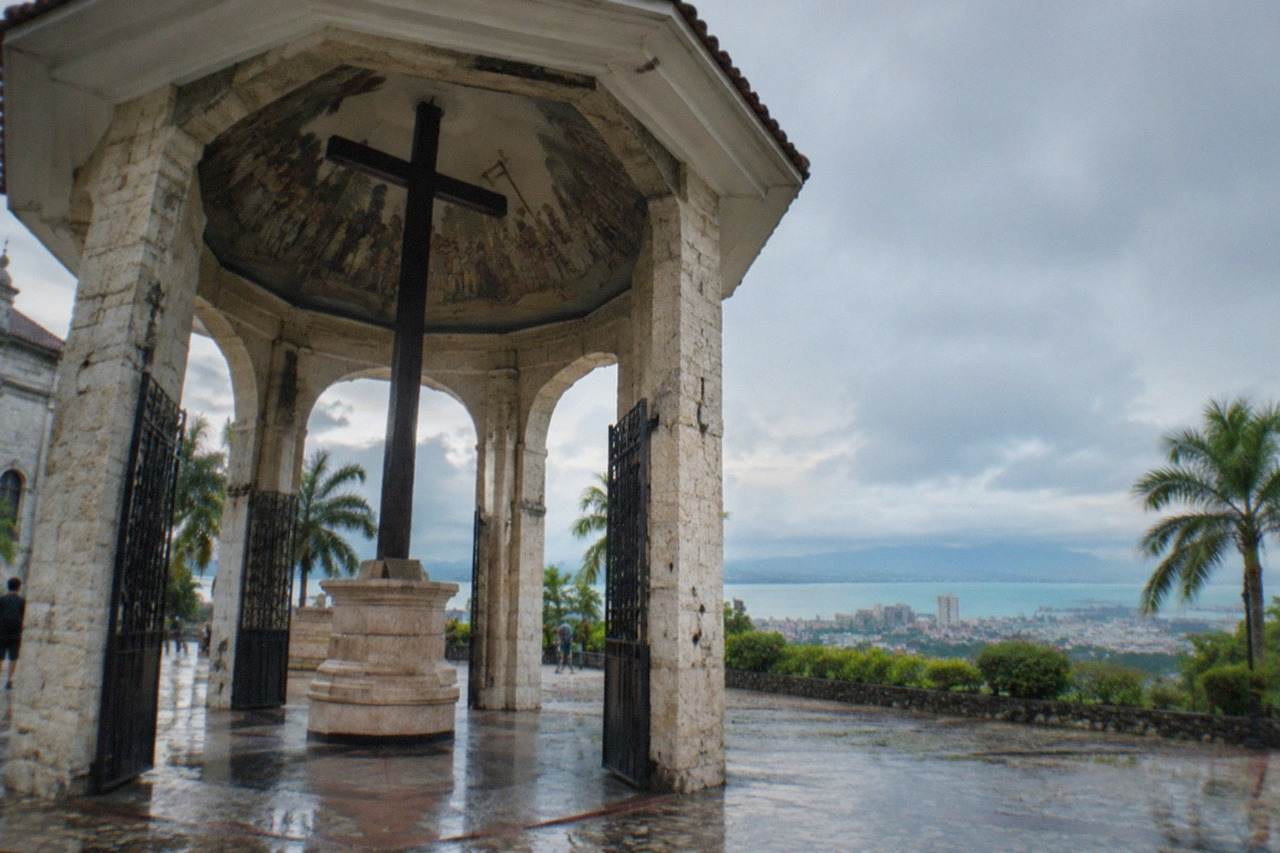
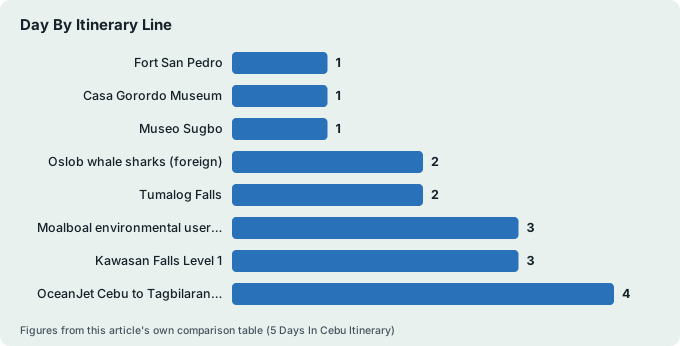
Start at Magellan's Cross, free to enter and open roughly 8 AM to 6 PM, where the pavilion dates to 1834 and houses the cross tradition associates with the April 1521 arrival of Magellan's fleet. Steps away, the Basilica del Santo Niño was founded on 28 April 1565 by Fr. Andres de Urdaneta on the day the Legazpi expedition landed and the Santo Niño image was found; the present structure was built between 1735 and 1740. Walk on to Fort San Pedro, the oldest triangular bastion fort in the country, started in wood in 1565 with the present stone form dating to 1738. Entry is P50 (about US$0.8) regular and P40 (about US$0.6) for students and seniors, and the fort keeps hours of roughly 8 AM to 7 PM.
Casa Gorordo Museum charges about P100 (about US$1.6) regular and P50 (about US$0.8) for students and seniors, and is open Monday to Saturday, closed Sundays. Museo Sugbo, the provincial museum, reopened on 29 August 2025 after nearly two years and charges P50 (about US$0.8) general admission, P25 (about US$0.4) for students and seniors, Monday to Friday only. Both Cebu City museums closed briefly for structural inspection after the September 2025 earthquake; if a closure matters to your plan, confirm on the day.
Lunch belongs to lechon, the spit-roasted pig Cebu is famous for; the city's lechon houses cluster around the Carbon Market area and the heritage district. For dinner, the IT Park and the Cebu Business Park hold most of the evening dining options, and the nightlife scene runs from rooftop bars to live-music venues along the waterfront.
| Day 1 stop | Entry fee | Notes |
|---|---|---|
| Magellan's Cross | Free | Open roughly 8 AM to 6 PM |
| Basilica del Santo Niño | Free | Masses restored to pre-pandemic schedule Dec 2024 |
| Fort San Pedro | P50 (about US$0.8) regular, P40 (about US$0.6) student/senior | Roughly 8 AM to 7 PM daily |
| Casa Gorordo Museum | About P100 (about US$1.6) regular, P50 (about US$0.8) student/senior | Monday to Saturday |
| Museo Sugbo | P50 (about US$0.8) general, P25 (about US$0.4) student/senior | Reopened 29 Aug 2025, Mon-Fri |
Day 2: Oslob Whale Sharks And Tumalog Falls
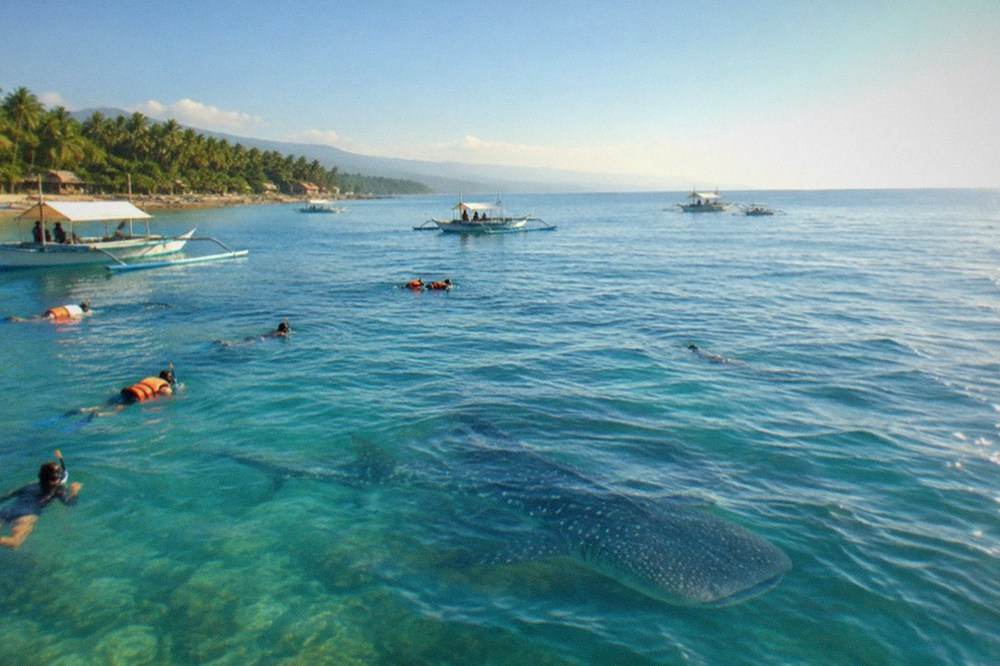
Day 2 is the earliest start of the trip: the whale shark interaction in Tan-awan, Oslob runs roughly 6 AM to 12 PM with registration cutting off around 11 AM, and the municipal fee is P1,000 (about US$15.9) for foreign tourists and P500 (about US$8.0) for Filipinos, boat and guide included. The session lasts about thirty minutes in the water. Tumalog Falls, a short habal-habal ride away at roughly P50 (about US$0.8) to P100 (about US$1.6) each way, fills the afternoon, and the same day can absorb Sumilon Island if you book its day pass in advance.
The rules are set by the Oslob municipal government and enforced at the briefing: stay about four metres from the body and five from the tail, no touching, no sunscreen, no flash photography, life jackets mandatory, and feeding is done only by licensed spotters. Sightings are not guaranteed. In late May 2026 the whale sharks were absent from the Tan-awan interaction area for about four days when seasonal plankton moved to a neighbouring barangay, and the local government clarified that operations pause with sightings rather than close. Build a flexible morning, not a guaranteed one.
Tumalog Falls charges about P50 (about US$0.8) entrance, though barangay management varies and some reports list free access, so carry small notes. If you have energy left, the Bluewater Sumilon Island resort sells day use from 8 AM to 3 PM with boat transfers included, with a 5+1 group offer at a net per guest rate Monday to Thursday valid to 15 October 2026. The full details live in the Oslob whale sharks guide.
Getting there independently means a Ceres bus from the Cebu South Bus Terminal on the Bato via Oslob route, roughly 3.5 to 4.5 hours, with fares around P145 (about US$2.3) to P250 (about US$4.0) depending on ordinary or air-conditioned class. Many visitors instead take a join-in day tour that bundles the Tumalog stop; a south Cebu itinerary comparison helps if you can only pick one base, and the Oslob versus Moalboal debate usually comes down to whether you want falls or sardines within walking distance of your bed.
| Oslob whale shark fact | Detail |
|---|---|
| Foreign tourist fee | P1,000 (about US$15.9), boat and guide included |
| Filipino resident fee | P500 (about US$8.0) |
| Hours | Roughly 6 AM to 12 PM, registration cutoff about 11 AM |
| Session length | About 30 minutes |
| Key rules | 4 m from body, no touching, no sunscreen, life jackets, licensed spotters only feed |
| Sightings | Not guaranteed; about 4-day absence in late May 2026 |
Day 3: Moalboal Sardines And Kawasan Canyoneering
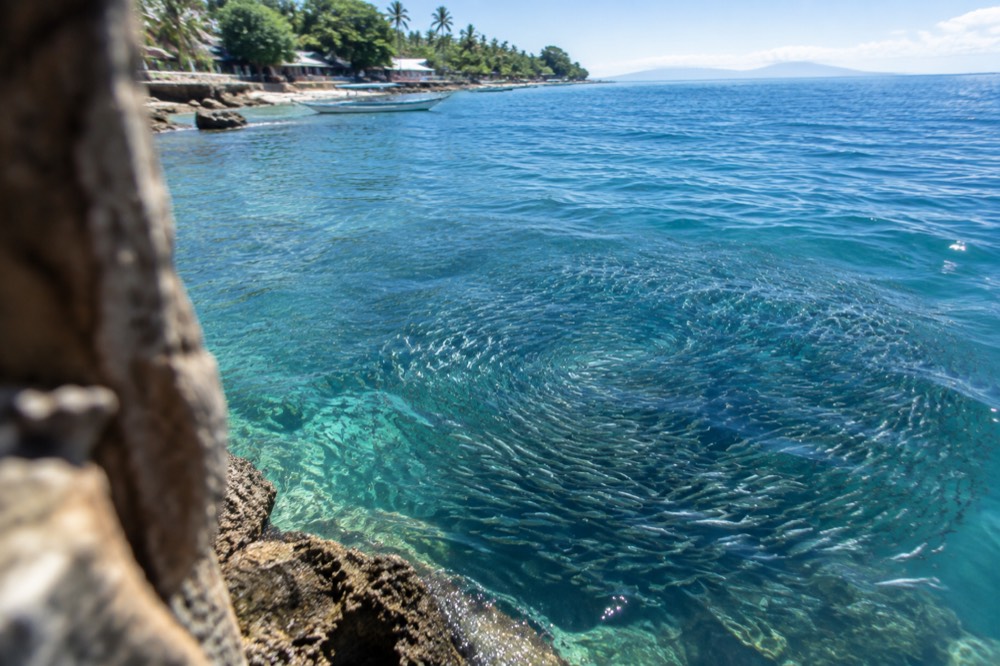
Day 3 moves the base to Moalboal, where the sardine run sits a few metres off Panagsama Beach and the municipal environmental user fee is P100 (about US$1.6) to swim or snorkel, with gear rental around P150 (about US$2.4) to P250 (about US$4.0) and the best visibility from 7 to 9 AM. The school is a permanent resident population at the reef wall about 20 to 30 metres offshore, present year-round, not a seasonal migration. In the afternoon, Kawasan Falls in Badian is the classic pairing, with Level 1 entrance at about P200 (about US$3.2) and canyoneering with a Badian-accredited guide running roughly P1,500 (about US$24) to P2,000 (about US$32) all-in.
The sardine run is the rare Cebu highlight that needs no boat, no tour and no booking: walk into the water at Panagsama and the school is there, weather and visibility permitting. Pescador Island, the marine sanctuary offshore, adds about P100 (about US$1.6) per dive or per activity and requires guide accompaniment in the sanctuary zones, with anchoring prohibited and mooring buoys in use. The Moalboal sardine run guide covers the practical details.
For Kawasan, decide in advance between swimming and canyoneering. Swimming only costs the Level 1 entrance of about P200 (about US$3.2). Canyoneering descends the river gorge above the falls and is LGU-regulated: the price with a Badian-accredited guide runs roughly P1,500 (about US$24) to P2,000 (about US$32), including guide, fees, gear, habal-habal transfer and lunch. Cliff jumping is banned at the main Level 1 basin, life jackets are mandatory, there is a limit on visiting time, and only Level 1 is open to independent visitors, with the upper levels canyoneering-only. The Alegria route has been suspended through 2025 and 2026, so only the Badian route runs. The falls began a P110 (about US$1.8) million rehabilitation in June 2026 and stayed open throughout. The Kawasan Falls guide has the full rulebook.
Buses from the Cebu South Bus Terminal to Moalboal run roughly every 30 to 45 minutes and take 2.5 to 3.5 hours, with fares around P120 (about US$1.9) to P210 (about US$3.3). If you would rather not move hotels twice, a south Cebu day tour compresses Oslob and Moalboal into one long day, at the cost of two very early mornings.
| South Cebu activity | Fee | Notes |
|---|---|---|
| Moalboal sardine run swim | P100 (about US$1.6) | Environmental user fee, Ord. 165-2021 |
| Gear rental at Panagsama | About P150 (about US$2.4) to P250 (about US$4.0) | Mask, snorkel, fins |
| Pescador Island sanctuary | About P100 (about US$1.6) per dive or activity | Guide required in sanctuary zones |
| Kawasan Falls Level 1 entrance | About P200 (about US$3.2) | Swimming only |
| Kawasan canyoneering | Roughly P1,500 (about US$24) to P2,000 (about US$32) | Badian-accredited guide, gear and lunch included |
| Tumalog Falls entrance | About P50 (about US$0.8) | Habal-habal about P50 (about US$0.8) to P100 (about US$1.6) each way |
Day 4: Bohol Day Trip From Cebu
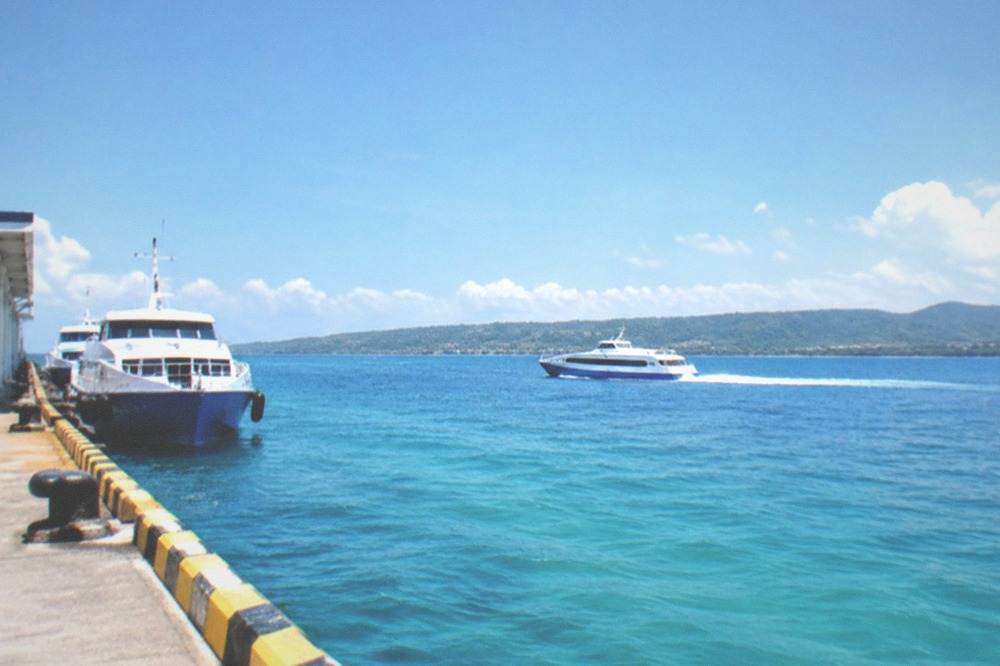
Day 4 crosses to Bohol on the OceanJet fastcraft from Pier 1 in Cebu City, a journey of about two hours with around thirteen sailings a day, at P960 (about US$15.3) tourist class and P1,440 (about US$23) business class since the 21 September 2026 fuel surcharge. A countryside tour from Tagbilaran covers the Loboc River cruise with lunch, the Chocolate Hills and the tarsier sanctuary, returning on a late afternoon or early evening sailing. The whole day runs about fourteen hours door to door.
Check in at the fastcraft terminal at least 45 minutes before sailing; the terminal fee is about P25 (about US$0.4). Slower options exist if the fastcrafts are full: Lite Ferries runs a RORO in roughly four hours at about P400 (about US$6.4) to P520 (about US$8.3), and 2GO sails weekly. SuperCat is not operating the Cebu to Tagbilaran route as of September 2026, despite still appearing in some schedules, so do not plan around it. The Cebu to Bohol ferry guide carries the full timetable comparison, and the Bohol day trip itinerary times the countryside circuit.
The ferry fares are the one figure on this day that keeps moving: the 10 percent fuel surcharge took effect on 21 September 2026, and some evening sailings were cancelled in mid-September for fuel reasons. Book the first sailing out and a late one back, and treat the printed timetable as a floor, not a promise.
If a full Bohol day feels like too much on top of two south-coast days, swap it for a Camotes Islands full-day tour of caves, lake and beach, or simply fold day 4 into a slower city-and-highlands rhythm.
Day 5: Mactan Islands Or The Busay Highlands
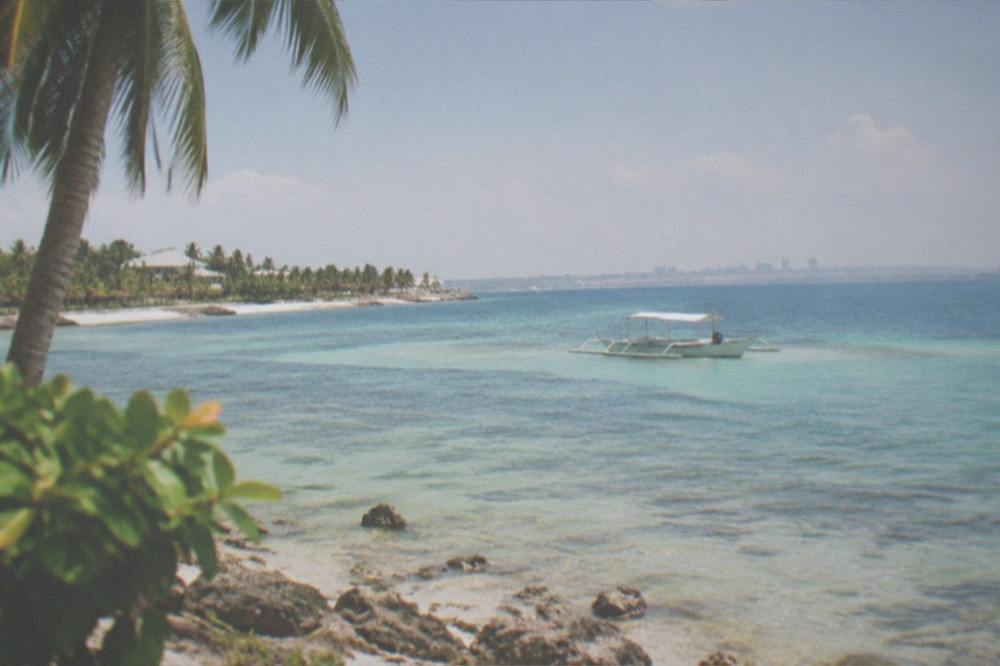
Day 5 splits by taste: either an island-hopping boat from Mactan across the Hilutungan, Caohagan and Nalusuan marine sanctuaries, or a half-day drive up to the Busay highlands for the Temple of Leah, Sirao Flower Garden and Tops Lookout, which is open 24 hours at P100 (about US$1.6) entry. The island day carries a Lapu-Lapu environmental fee of P100 (about US$1.6) for foreign tourists, unchanged since the July 2025 amendment that cut the local rate to P20 (about US$0.3), plus sanctuary entrance fees of roughly P150 (about US$2.4) to P300 (about US$4.8) per island. The highlands day costs a fraction of that and ends with the best sunset view on the island.
Tops Lookout, run by the operator of the same name, is the only highlands stop with a confirmed official price list: P100 (about US$1.6) regular, P70 (about US$1.1) for seniors and persons with disability, free under age two, and a shuttle-plus-entry bundle at P200 (about US$3.2) from IT Park. The Tops Lookout guide has the detail. The Temple of Leah charges about P120 (about US$1.9) weekday and P150 (about US$2.4) weekend with no official published price list, and its opening hours were shortened from April 2026, so confirm before the drive up. Sirao Flower Garden charges about P100 (about US$1.6) per person.
For the island day, the sanctuary fees stack: Hilutungan runs about P150 (about US$2.4) to P200 (about US$3.2) per person and Nalusuan about P100 (about US$1.6) to P300 (about US$4.8), on top of the Lapu-Lapu environmental fee and the boat charter. A packaged boat trip with lunch is usually the cheaper route once fees are counted. A Mactan versus Cebu City stay comparison helps if you are deciding where to sleep the last night to be near the airport.
Mactan-Cebu International Airport sits about 13 to 15 km from Cebu City, typically 25 to 60 minutes by road depending on bridge traffic, so an evening flight out on day 5 is realistic from either base. The MyBus runs between the airport and SM City Cebu at P30 (about US$0.5) to P50 (about US$0.8), alongside yellow airport taxis with their higher flag-down and Grab pickup zones at both terminals.
| Day 5 option | Entry cost per person | Notes |
|---|---|---|
| Tops Lookout | P100 (about US$1.6) | Open 24 hours, senior/PWD P70 (about US$1.1) |
| Temple of Leah | About P120 (about US$1.9) weekday, P150 (about US$2.4) weekend | Hours shortened from April 2026 |
| Sirao Flower Garden | About P100 (about US$1.6) | Two adjacent gardens, confirm on site |
| Lapu-Lapu island-hopping environmental fee | P100 (about US$1.6) foreign | Local rate cut to P20 (about US$0.3) in July 2025 |
| Hilutungan sanctuary | About P150 (about US$2.4) to P200 (about US$3.2) | Paid at the island |
| Nalusuan sanctuary | About P100 (about US$1.6) to P300 (about US$4.8) | Paid at the island |
How Much Does 5 Days In Cebu Cost?
A five-day Cebu trip on a mid-range budget runs on entrance fees of roughly P2,000 (about US$32) to P3,000 (about US$48) per person across all the stops in this itinerary, plus transport, rooms and food, with the whale shark fee at P1,000 (about US$15.9) the single largest line item for foreign visitors. The fee stack is genuinely knowable in advance because almost every entrance price is municipal or LGU-set and published. What is not knowable in advance is hotel pricing, which this page does not quote, and product prices, which render from live listings rather than from prose.
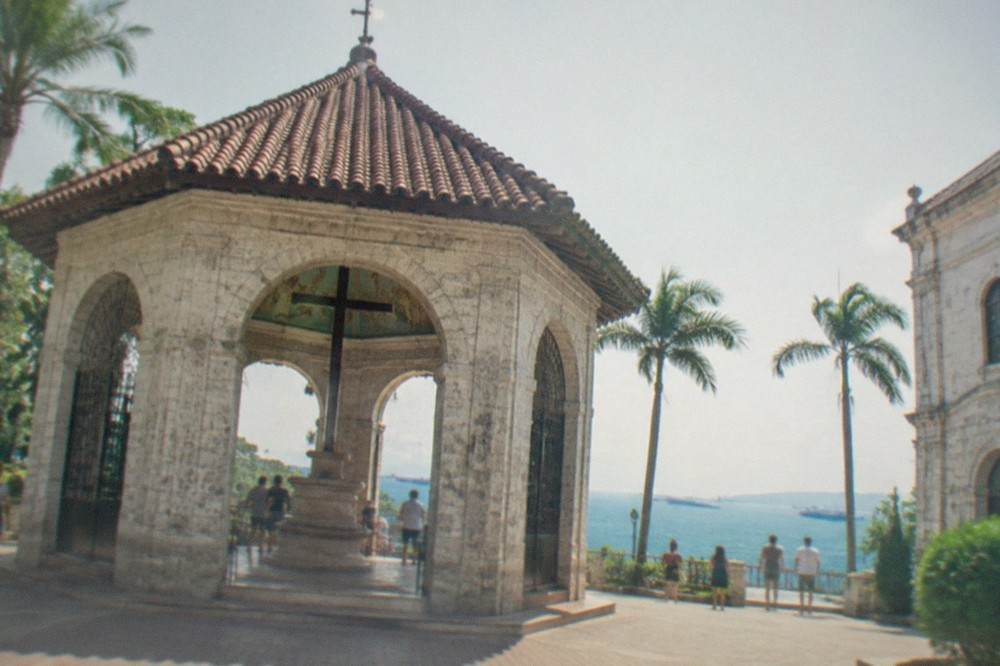
The table below lists every fee this itinerary actually touches, in the order you meet them. Where a figure is a range, the range comes from conflicting local reports rather than an official schedule, and the honest move is to carry cash slightly above the top end. The Cebu budget and costs guide builds this into a full daily budget including rooms and meals, and Cebu Travel Guide keeps every fee on this page current with its sourced figures.
| Itinerary line | Fee | Day |
|---|---|---|
| Fort San Pedro | P50 (about US$0.8) regular, P40 (about US$0.6) student/senior | 1 |
| Casa Gorordo Museum | About P100 (about US$1.6) | 1 |
| Museo Sugbo | P50 (about US$0.8) general, P25 (about US$0.4) student | 1 |
| Oslob whale sharks (foreign) | P1,000 (about US$15.9) | 2 |
| Tumalog Falls | About P50 (about US$0.8) | 2 |
| Moalboal environmental user fee | P100 (about US$1.6) | 3 |
| Kawasan Falls Level 1 | About P200 (about US$3.2) | 3 |
| OceanJet Cebu to Tagbilaran, tourist | P960 (about US$15.3) each way | 4 |
| Tops Lookout or island fees | P100 (about US$1.6) plus sanctuary fees | 5 |
Booked products are the other cost layer, and their prices move with the operator, so this page never types them. The city food walk, the small-group city tour and the private Bohol countryside tour above all render their live prices from their listings; the same applies to the whale shark day tours and canyoneering packages. A useful rule: if a fee is municipal, it is printed above; if a price is a product, it renders from the listing.
When Is The Best Time Of Year For A 5 Day Cebu Trip?
The best window for this itinerary is December to May, Cebu's dry season under PAGASA's national classification, with April the driest month at 48.1 mm of rain at the Mactan station and October the wettest at 194.8 mm; the rainy season runs June to November with typhoon peak roughly July to October. The Mactan station's 1991-2020 normals put annual rainfall at 1,685.0 mm across 138 rain days, with a mean temperature of 28.1 C. Five days is short enough that one washed-out whale shark morning hurts, so the seasonal math matters more here than on longer trips.
Two recent events shape the honest version of this advice. Typhoon Tino (international name Kalmaegi) brought severe flooding to Cebu in early November 2025, with the province placed under a state of calamity, though the DOT confirmed the core tourism zones of Cebu City and Mactan were largely unaffected and open by 11 November. The 30 September 2025 magnitude 6.9 earthquake off Bogo damaged heritage churches in northern Cebu, which this itinerary does not touch, and the DOT confirmed on 28 October 2025 that Bantayan and Malapascua, the northern stops on longer itineraries, remained open with ports operational. The best time to visit Cebu guide carries the month-by-month detail.
One date can outweigh all the weather math: Sinulog, held on the third Sunday of January, with the 2027 Grand Parade set for 17 January 2027 at the Cebu City Sports Center, the venue confirmed for 2026 and 2027 after the SRP years of 2023 and 2024. If your five days include that weekend, the city legs of this plan need rewriting around the festival, and the parade route and schedule deserve a dedicated read before you commit.
How Do You Get Between The Stops In Cebu?
The Cebu South Bus Terminal is the backbone of days 2 and 3, with Ceres buses to Oslob taking roughly 3.5 to 4.5 hours at about P145 (about US$2.3) to P250 (about US$4.0) and to Moalboal roughly 2.5 to 3.5 hours at about P120 (about US$1.9) to P210 (about US$3.3), while Pier 1 handles the Bohol fastcraft and the airport sits 25 to 60 minutes from the city by road. Within Cebu City, the heritage stops of day 1 are walkable, and Grab covers the metro including Mandaue and Lapu-Lapu. The Cebu Bus Rapid Transit began partial operations on 13 March 2026 on a single Il Corso to IT Park route, but it does not serve any stop on this itinerary, so treat it as a curiosity rather than a tool.
Jeepneys remain the cheapest city transport, with the traditional minimum fare at P13 (about US$0.2) to P14 (about US$0.2) for the first four kilometres under the fare adjustment approved in late September 2026, though the coverage of that adjustment for Region 7 is not confirmed. The getting around Cebu guide covers the rest, including the CCLEX tolls of P107 (about US$1.7) for a car one way if you drive yourself to Mactan.
For the two early mornings, note that both the whale sharks and the sardine run reward being in the water before mid-morning, and both are weather-sensitive. A join-in tour solves the 3 AM bus problem by picking you up; independent travel solves it by sleeping in Oslob or Moalboal, which is what this itinerary assumes. Basing in one south-coast town for both days is the compromise most five-day visitors land on.
| Journey | Mode | Time | Fare |
|---|---|---|---|
| Cebu City to Oslob | Ceres bus | About 3.5 to 4.5 hours | About P145 (about US$2.3) to P250 (about US$4.0) |
| Cebu City to Moalboal | Ceres bus | About 2.5 to 3.5 hours | About P120 (about US$1.9) to P210 (about US$3.3) |
| Cebu City to Tagbilaran | OceanJet fastcraft | About 2 hours | P960 (about US$15.3) tourist, P1,440 (about US$23) business |
| Cebu City to Tagbilaran | Lite Ferries RORO | About 4 hours | About P400 (about US$6.4) to P520 (about US$8.3) |
| Airport to Cebu City | Road via bridge | About 25 to 60 minutes | MyBus P30 (about US$0.5) to P50 (about US$0.8) |
| Cebu City to Cordova | CCLEX toll road | 8.9 km | P107 (about US$1.7) Class 1 one way |
Common Questions About A 5 Day Cebu Itinerary
Is 5 days in Cebu enough?
Five days is enough for Cebu City, Oslob, Moalboal with Kawasan Falls, and a Bohol day trip, which is exactly this itinerary. It is not enough to add Bantayan or Malapascua in the north without cutting a south-coast day; those belong on the 7 days in Cebu itinerary.
What is the best order for a 5 days in Cebu itinerary?
City first, then south, then Bohol, then a flexible Mactan or highlands day. The order matters because the south-coast bus corridor from the Cebu South Bus Terminal passes Oslob and Moalboal on one route, so the plan never backtracks, and the Bohol ferry leaves from Pier 1 back in the city.
How much does the Oslob whale shark stop cost?
The municipal fee is P1,000 (about US$15.9) for foreign tourists and P500 (about US$8.0) for Filipinos, boat and guide included, for a session of about thirty minutes. Sightings are not guaranteed; the sharks were absent for about four days in late May 2026 when plankton moved.
Can you do Kawasan Falls and the Moalboal sardine run in one day?
Yes, if you sleep in Moalboal. The sardine run is a few metres off Panagsama Beach with a P100 (about US$1.6) environmental user fee, and Kawasan Falls in Badian is a habal-habal and jeepney ride away, with Level 1 entrance at about P200 (about US$3.2). Canyoneering, at roughly P1,500 (about US$24) to P2,000 (about US$32) with a guide, needs the whole day on its own.
Is Bohol worth a day trip from Cebu?
Yes. The OceanJet fastcraft crosses in about two hours at P960 (about US$15.3) tourist class each way, and a countryside tour from Tagbilaran covers the Loboc River lunch cruise, the Chocolate Hills and the tarsier sanctuary with a same-day return. The full day runs about fourteen hours.
What is the single biggest cost on a 5 day Cebu itinerary?
For foreign visitors it is the Oslob whale shark fee at P1,000 (about US$15.9), followed by the Bohol ferry at P960 (about US$15.3) each way. Everything else on this itinerary, from Fort San Pedro at P50 (about US$0.8) to Tops Lookout at P100 (about US$1.6), is priced in the low hundreds of pesos or less.
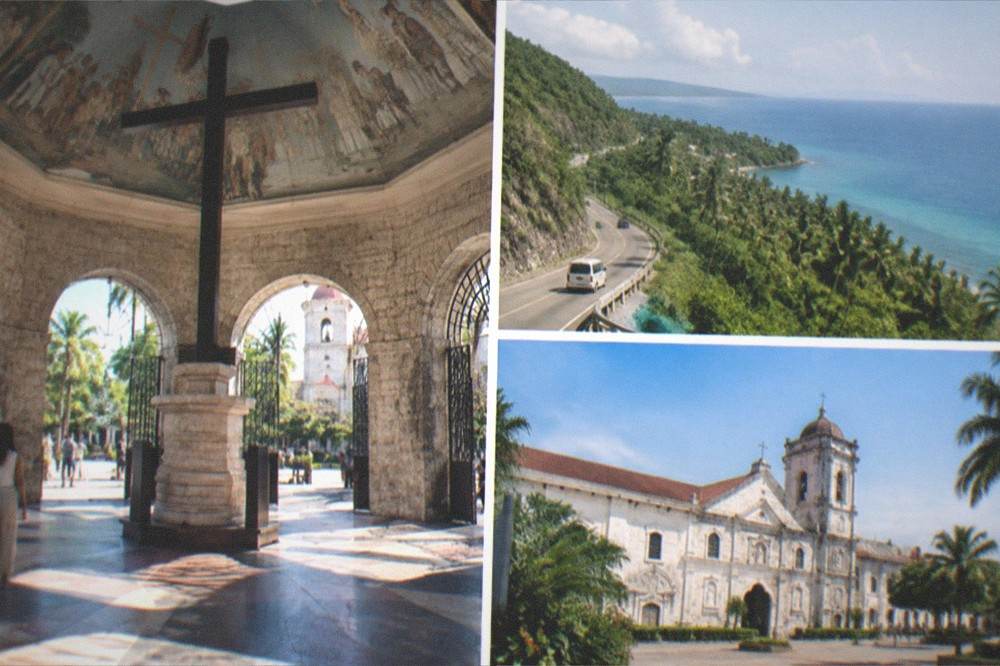
A five-day Cebu plan works because the island stacks its highlights along two simple axes, a south bus corridor and a two-hour ferry, and because almost every fee is printed and municipal. Lock the two early mornings, book the Bohol ferry for the first sailing, and let the last day choose itself between the water and the hills.