7 Days In Cebu Itinerary
Seven days is the sweet spot for Cebu, the island province in the Central Visayas region of the Philippines: long enough for the heritage sites of Cebu City, the whale sharks of Oslob, the canyoneering at Kawasan Falls and the sardine run at Moalboal, without rushing any of them.
Short answer
Spend Days 1 and 2 in Cebu City and the Busay highlands, Days 3 and 4 in south Cebu for Oslob whale sharks and Kawasan canyoneering, Day 5 in Moalboal for the sardine run and Pescador Island, Day 6 back through Mactan's beaches, and Day 7 on a Bohol day trip or a relaxed city wind-down.
Seven days in Cebu, the island province in the Central Visayas region of the Philippines, is enough to see the country's oldest city, swim with whale sharks, jump off waterfalls and snorkel a sardine run the size of a building, all without changing hotels more than twice. The island is long and thin, roughly 220 km from tip to tip, and almost everything a first-time visitor wants sits either in Metro Cebu or along the southern coast, which makes a week the natural shape for the trip. This itinerary strings those pieces together in an order that minimises backtracking, with the costs, entry fees and transport decisions spelled out for each day.
Is Seven Days In Cebu The Right Trip Length?
Seven days is the right length for Cebu if you want the island's four signature experiences, the heritage core of Cebu City, the whale sharks at Oslob, canyoneering at Kawasan Falls and the sardine run at Moalboal, plus recovery time, and it is the shortest trip on which all four feel comfortable rather than rushed. Five days works if you drop either the far south or a Bohol day trip; ten days only makes sense if you add Malapascua or Bantayan in the north. The honest answer is that a week hits the ceiling of what Cebu rewards well.
The reason is geography. Cebu City sits in the middle of the east coast; Oslob, Kawasan and Moalboal are all three to four hours south by road. Doing them as separate day trips from the city means six to eight hours of driving on some days, which is why this itinerary moves you south for two nights instead. The question of how many days is enough in Cebu is one travellers ask constantly, and the short version is that three days covers the city and one headline day trip, while seven covers the whole southern coast properly.
A week also gives you slack for the two things that most reliably disrupt Cebu plans: weather and whale sharks. The Oslob interaction area runs only in the morning, roughly 6 AM to noon, and in late May 2026 the whale sharks were absent from Tan-awan for about four days when the plankton they follow moved to a neighbouring barangay. Operations resumed when the sharks returned, but a tight three-day itinerary has no room for that kind of pause. A seven-day one does. For a shorter alternative, see the 3 days in Cebu itinerary or the 5 days in Cebu itinerary.
What Does A 7 Days In Cebu Itinerary Look Like Day By Day?
The shape of the week is two days in Cebu City and the Busay highlands, two days in far south Cebu for Oslob whale sharks and Tumalog Falls, one day in Moalboal for the sardine run and Pescador Island, one day returning north with a Mactan beach stop, and one final day for a Bohol day trip or a slow city wind-down. Bases are Cebu City for four nights and Moalboal for two, which keeps every drive under four hours. Here is the day-by-day version.
| Day | Base | Plan for the day |
|---|---|---|
| 1 | Cebu City | Heritage walk: Magellan's Cross, Basilica del Santo Niño, Fort San Pedro, Colon Street, evening at IT Park |
| 2 | Cebu City | Busay highlands loop: Temple of Leah, Sirao Flower Garden, Tops Lookout at sunset |
| 3 | Oslob or Moalboal | Dawn whale shark interaction in Oslob, Tumalog Falls, transfer to Moalboal |
| 4 | Moalboal | Kawasan Falls canyoneering day trip from Moalboal |
| 5 | Moalboal | Sardine run snorkel at Panagsama, Pescador Island boat trip, return to Cebu City |
| 6 | Mactan | Island hopping off Mactan or a resort beach day |
| 7 | Cebu City | Bohol day trip by fastcraft, or city museums and souvenir shopping |
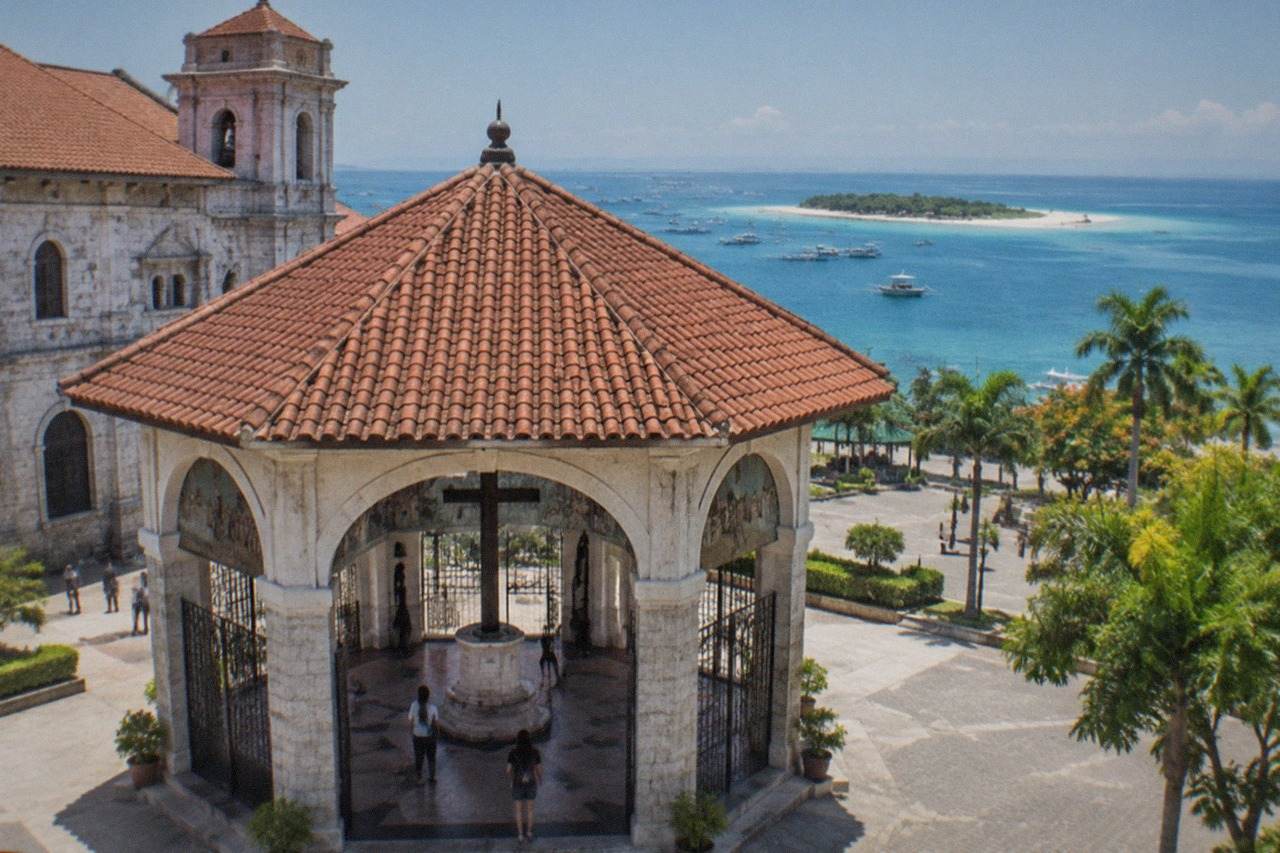
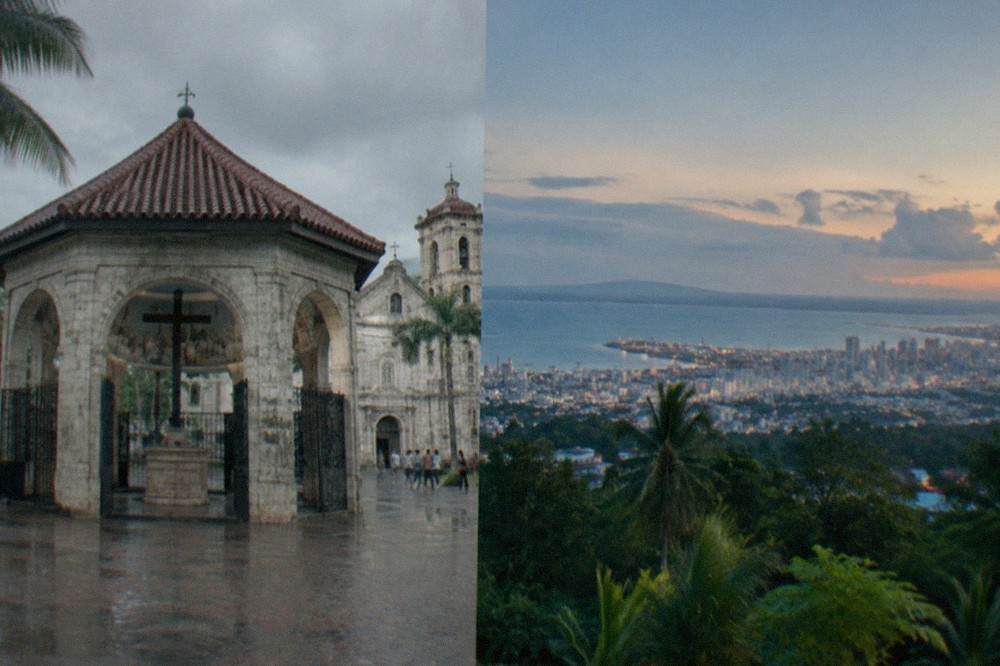
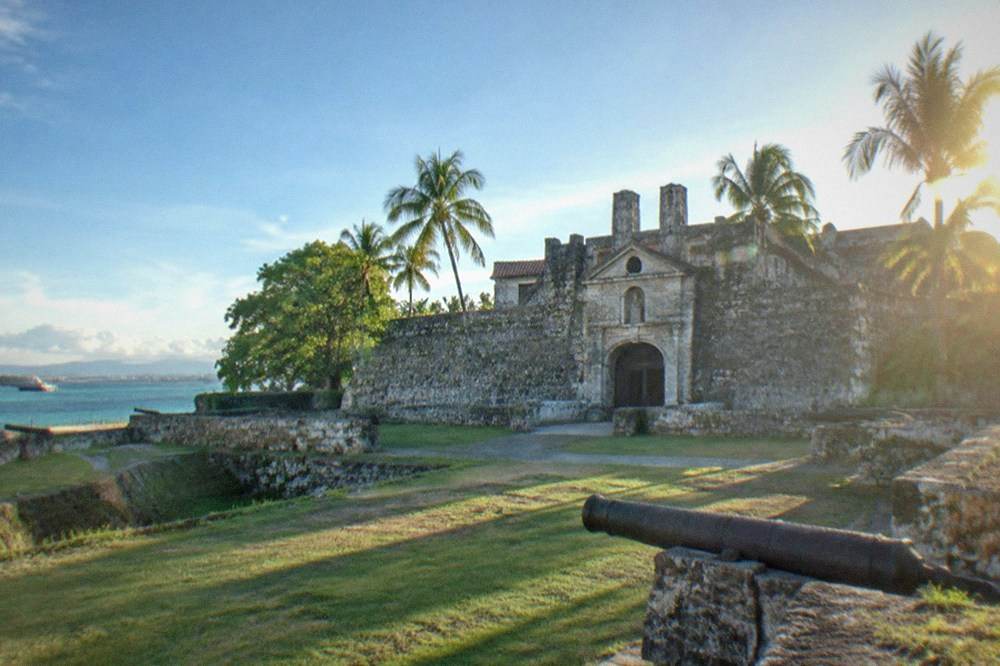
Day 1, Cebu City heritage. Start at the core where the Spanish story of the Philippines begins. Magellan's Cross, the pavilion housing the cross planted in 1521, is free to enter, and the Basilica del Santo Niño next door holds the image given to Queen Juana at her baptism that same year; the present basilica structure dates from 1735 to 1740. Fort San Pedro, the oldest triangular bastion fort in the country, charges P50 (about US$0.8) regular admission and P40 (about US$0.6) for students and seniors, and is open 8 AM to 7 PM. Spend the afternoon on Colon Street, often called the oldest street in the Philippines, and the evening eating; the city's signature roast pork dish is the thing to order. If you would rather have the market side of the city handled by a guide, the Carbon market walk below is the strongest option.
Day 2, the Busay highlands. The mountains directly above Cebu City hold three of its most-visited sights, all reachable in one loop by hired car or habal-habal motorbike taxi. The Temple of Leah, a grand stone shrine built as an act of devotion, charges roughly P120 (about US$1.9) on weekdays and P150 (about US$2.4) on weekends. Sirao Flower Garden, the so-called Little Amsterdam, is about P100 (about US$1.6) per person. Tops Lookout is open 24 hours and charges P100 (about US$1.6) regular entry, with a shuttle-plus-entry combination from IT Park at P200 (about US$3.2); sunset is the moment everyone times the visit for. Full detail on each site lives in the Temple of Leah guide and the Tops Lookout guide.
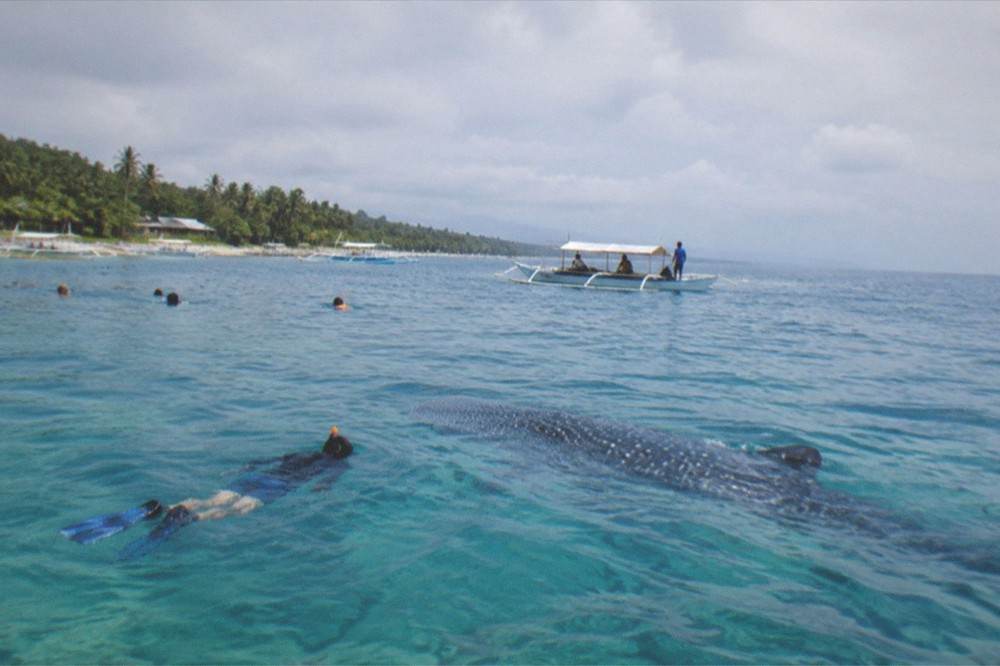
Day 3, Oslob and the move south. This is the early start of the week: the whale shark interaction in Tan-awan runs from about 6 AM to noon, and the earlier you register the better the light and the calmer the water. The municipal fee is P1,000 (about US$15.9) for foreign tourists and P500 (about US$8.0) for Filipino locals, boat and guide included, and the rules are strict: a minimum distance of about four metres, no touching, no sunscreen in the water, no flash photography, and roughly thirty minutes in the water per session. After the interaction, Tumalog Falls is a short habal-habal ride away, entry about P50 (about US$0.8), before the drive on to Moalboal, two to three hours west. The Oslob whale sharks guide covers logistics in depth, and the ethics of the feeding programme are worth reading about before you decide to go.
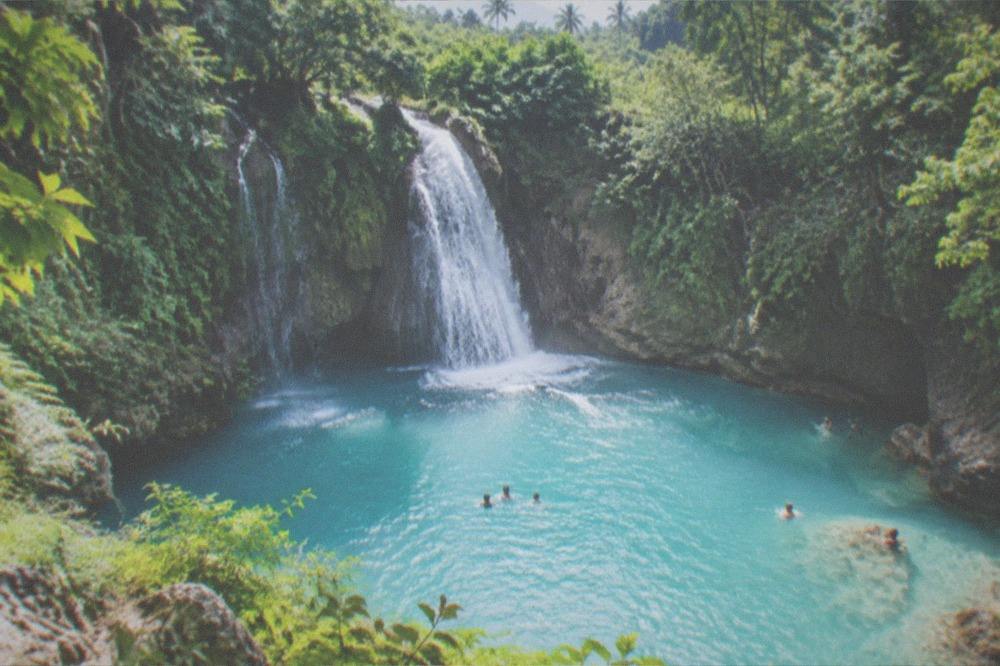
Day 4, Kawasan canyoneering. From Moalboal, the Badian canyoneering route through the Kawasan river gorge is the island's most famous adventure activity. Level 1 entrance to the falls alone is about P200 (about US$3.2); the full canyoneering package with a Badian-accredited guide runs roughly P1,500 (about US$24) to P2,000 (about US$32) including gear, fees, transfers and lunch. Two rules matter in 2026: the Alegria route is suspended and only the Badian route operates, and cliff jumping is banned at the main Level 1 basin. The falls stayed open through a phased rehabilitation programme that began in June 2026, and a guided package is the safest way to run the gorge. The Kawasan Falls guide has the full breakdown.
Day 5, Moalboal water and the return north. The sardine run at Panagsama Beach is the reason Moalboal is on the map: a permanent, resident school of sardines, present year-round, swirling a few metres from shore. The environmental user fee to swim or snorkel is P100 (about US$1.6) per person under the local ordinance, collected at the beach. Boat trips out to Pescador Island, the marine sanctuary with its cathedral-like reef wall, are the standard second half of the day, with a sanctuary fee of about P100 (about US$1.6) per dive or activity. The Moalboal sardine run guide covers the shore side. Return to Cebu City in the late afternoon, two and a half to three and a half hours by bus.
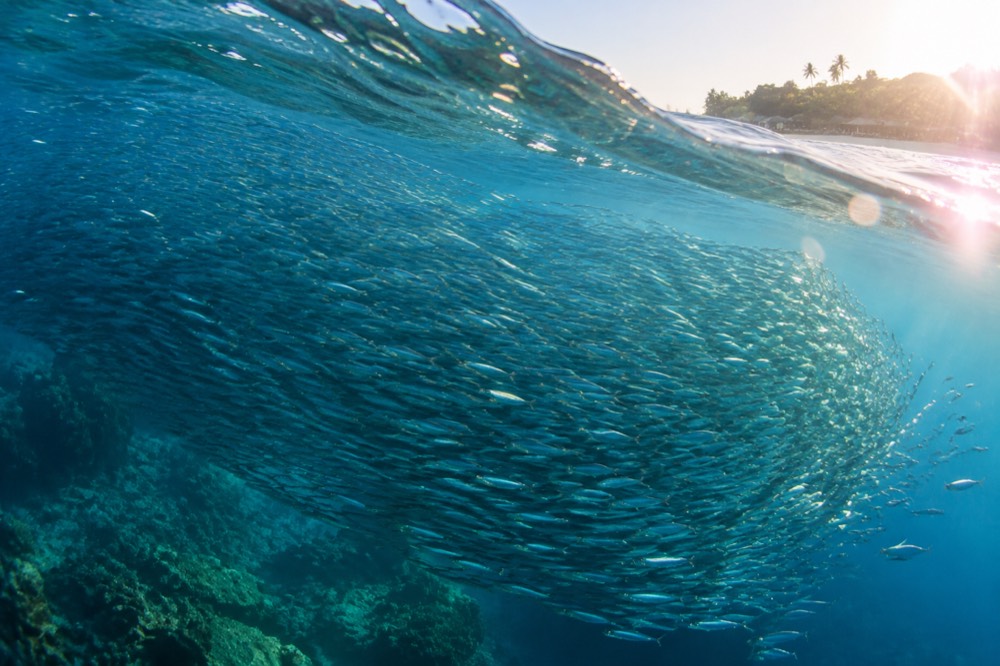
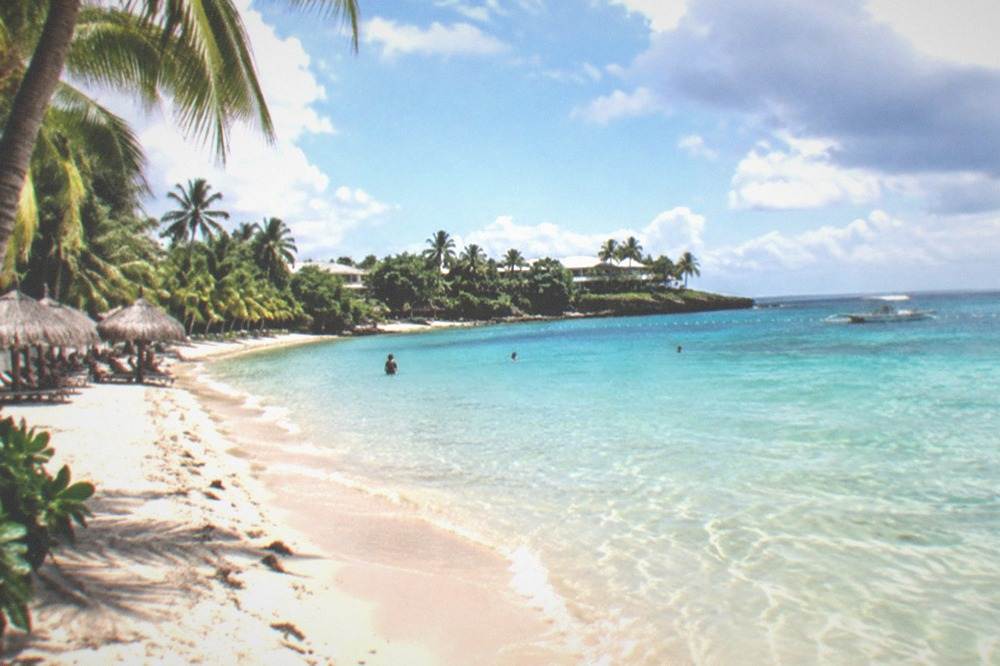
Day 6, Mactan. A recovery day on the resort island across the bridge. Mactan's east coast holds the main beach resorts, and island-hopping boats run daily to the marine sanctuaries of Hilutungan, Nalusuan, Caohagan and Pandanon. Foreign tourists pay a P100 (about US$1.6) Lapu-Lapu environmental fee for island hopping, with sanctuary entrance fees at the islands themselves typically another P150 (about US$2.4) to P300 (about US$4.8) each. A resort day pass is the low-effort alternative if the week has caught up with you.
Day 7, Bohol or a slow finish. Two good endings exist. The first is a Bohol day trip: the fastcraft from Cebu City's Pier 1 to Tagbilaran takes about two hours, OceanJet's fare is P960 (about US$15.3) tourist class and P1,440 (about US$23) business class following the September 2026 fuel surcharge, and a countryside tour takes in the Chocolate Hills, a Loboc River lunch cruise and the tarsiers before the same-day ferry back. The Bohol day trip itinerary and the Cebu to Bohol ferry guide cover it fully. The second ending is a slow city day: Casa Gorordo Museum (about P100 (about US$1.6), Monday to Saturday), the reopened Museo Sugbo (P50 (about US$0.8) general admission, weekdays only), and souvenir shopping before the flight home.
For the food, boat and canyoneering days handled end to end, these three picks are the ones that map most cleanly onto the week above.
How Much Does Seven Days In Cebu Cost?
A seven-day Cebu trip is inexpensive once the international flight is paid for, because the costs that shape the week are a string of small local entry and activity fees rather than big-ticket items, with accommodation the line that swings the total most. Budget travellers keep the week cheap with guesthouses and buses; a run of Mactan resort nights can double it on their own. Every peso figure below carries its dollar equivalent at the pinned exchange rate.
| Item | Typical cost (PHP) | Notes |
|---|---|---|
| Fort San Pedro entry | P50 (about US$0.8) | Students and seniors P40 (about US$0.6) |
| Oslob whale sharks (foreign) | P1,000 (about US$15.9) | Locals P500 (about US$8.0), boat and guide included |
| Tumalog Falls entry | P50 (about US$0.8) | Habal-habal from Tan-awan P50 (about US$0.8) to P100 (about US$1.6) each way |
| Kawasan canyoneering package | P1,500 (about US$24) to P2,000 (about US$32) | Badian route only, gear and lunch included |
| Moalboal sardine run fee | P100 (about US$1.6) | Environmental user fee, swim or snorkel |
| Tops Lookout entry | P100 (about US$1.6) | Open 24 hours; shuttle and entry from IT Park P200 (about US$3.2) |
| OceanJet ferry to Bohol | P960 (about US$15.3) | Tourist class; business class P1,440 (about US$23) |
| MyBus airport to SM City Cebu | P50 (about US$0.8) | Regular fare on the airport route |
Accommodation is the line item that swings the budget most. A guesthouse room in Cebu City or a Panagsama dive resort in Moalboal sits at the affordable end; a beachfront resort on Mactan sits at the other. The where to stay in Cebu guide compares the neighbourhoods. Food is inexpensive everywhere: a market or carinderia meal costs a fraction of a restaurant dinner, and the lechon the city is famous for is priced by weight at the source.
Two entry rules save money and hassle. First, foreign tourists staying less than one year are exempt from the Philippine travel tax, so ignore any blog telling you to budget for it at the airport. Second, the airport passenger service charge is bundled into your airline ticket, so there is no terminal fee counter to find at Mactan-Cebu International. The Philippines visa and eTravel guide covers the 30-day visa-free stay that applies to US, UK, EU and Australian nationals.
Where Should You Stay During Seven Days In Cebu?
The cleanest base structure for seven days is four nights in Cebu City and two or three nights in Moalboal, because Cebu City is the transport hub for the highlands, the airport and the Bohol ferry, while staying overnight in Moalboal turns the Oslob, Kawasan and sardine run days into short drives instead of punishing round trips. A single Cebu City base for all seven nights is possible but adds three to four hours of driving on each south Cebu day. Mactan works as a base only if beaches matter more than the south.
| Base | Best for | Trade-off |
|---|---|---|
| Cebu City (IT Park or Fuente area) | Heritage sites, highlands day trips, ferry access, nightlife | No beach; south day trips are long |
| Moalboal (Panagsama) | Sardine run, Pescador Island, Kawasan day trips | 2.5 to 3.5 hours from the airport |
| Mactan (resort strip) | Beach resorts, island hopping, airport proximity | Far from Cebu City heritage and the south |
| Oslob | Whale sharks at dawn | Limited dining; for most visitors it works better as a day trip |
Within Cebu City, the IT Park area is the modern, walkable option with the best restaurants, while the Fuente Osmeña area puts you between the heritage sites and the Busay road. In Moalboal, Panagsama Beach is where the dive shops and the sardine run access are, and it is the natural base for the two water-heavy days of this itinerary.
If you would rather not negotiate a shared boat on the Pescador morning, a private island-hopping package from Moalboal is the calmer version of Day 5, and it pairs well with a canyoneering pickup from the same base.
Couples planning the same route as a honeymoon usually swap one city night for a Mactan resort night, and families tend to drop the canyoneering day in favour of a second beach day. Either way, the four-plus-two split holds: hub first, coast second, and never more than one hotel change mid-week.
When Is The Best Time For A Seven-Day Cebu Trip?
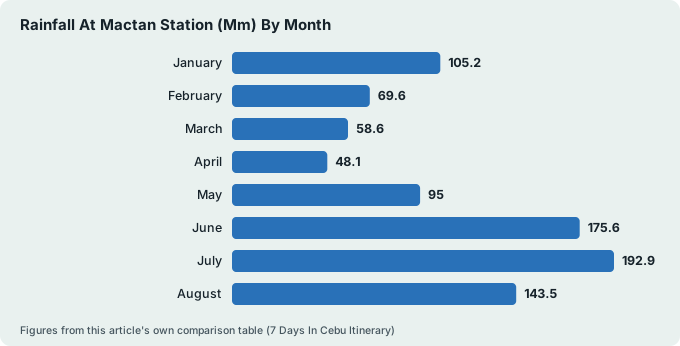
The best window for a seven-day Cebu trip is the dry season from December to May, with January to March the strongest months overall: rainfall at PAGASA's Mactan station bottoms out at 48.1 mm in April against 194.8 mm in October, and the sea conditions for whale sharks, canyoneering and Pescador Island are at their most reliable. January brings Sinulog, the island's huge festival, on the third Sunday of the month, which is a reason to come or to avoid depending on your tolerance for crowds. June to November is the rainy season and carries typhoon risk.
| Month | Rainfall at Mactan station (mm) | Season |
|---|---|---|
| January | 105.2 | Dry season; Sinulog month |
| February | 69.6 | Dry season |
| March | 58.6 | Dry season |
| April | 48.1 | Driest month |
| May | 95.0 | Dry season, hot |
| June | 175.6 | Rainy season begins |
| July | 192.9 | Rainy season |
| August | 143.5 | Rainy season |
| September | 179.6 | Rainy season |
| October | 194.8 | Wettest month |
| November | 161.9 | Rainy season, typhoon risk |
| December | 139.7 | Transition to dry |
Those numbers are the 1991-2020 climatological normals for PAGASA's Mactan station, and they tell the honest story: even the "wet" months are not a washout, but the sea activities this itinerary depends on get cancelled when the swell or the rain arrives. Typhoon season runs June to November with peak activity roughly July to October, and Typhoon Tino in early November 2025 brought severe flooding to Cebu, though the Department of Tourism reported the core tourism zones of Cebu City and Mactan largely unaffected and open within a week. The best time to visit Cebu guide goes deeper, and the 2027 Sinulog Grand Parade is already set for 17 January at the Cebu City Sports Center.
One seasonal note specific to the whale shark day: sightings are not guaranteed. In late May 2026 the sharks were absent from the Tan-awan interaction area for about four days when the plankton moved, and the local government confirmed operations pause and resume with the sightings. Build slack into the south Cebu days rather than treating Day 3 as fixed. Everything else covered here is indexed on Cebu Travel Guide.
What Should You Not Miss In South Cebu On This Itinerary?
The four unmissable stops in south Cebu are the Oslob whale shark interaction at Tan-awan, Tumalog Falls, the Kawasan Falls canyoneering route in Badian and the sardine run at Moalboal's Panagsama Beach, and the reason this itinerary gives them two nights is that they sit three to four hours from Cebu City and from each other in a line down the coast. Osmeña Peak, the highest point on the island at the head of that same coast, is the worthwhile fifth stop if you have energy left. Done as day trips from the city, these four consume a week on their own.
The south coast is Cebu's scenic engine, and slowing this leg down further is always an option if the week allows it. The practical order matters: whale sharks run only in the morning, so Oslob is always the first stop of a southbound day; Kawasan canyoneering is a half-day to full-day commitment with a 07:00 start typical; and the sardine run is best in the morning too, with the municipal tourism site recommending 7 to 9 AM for the calmest water. Stacking all three into two days is possible from a Moalboal base, which is exactly what Days 3 to 5 of this itinerary do.
For the canyoneering day, a guided package is the practical route: the municipal ordinance requires an accredited guide on the Badian route, and the package below covers the guide, gear and lunch in one booking.
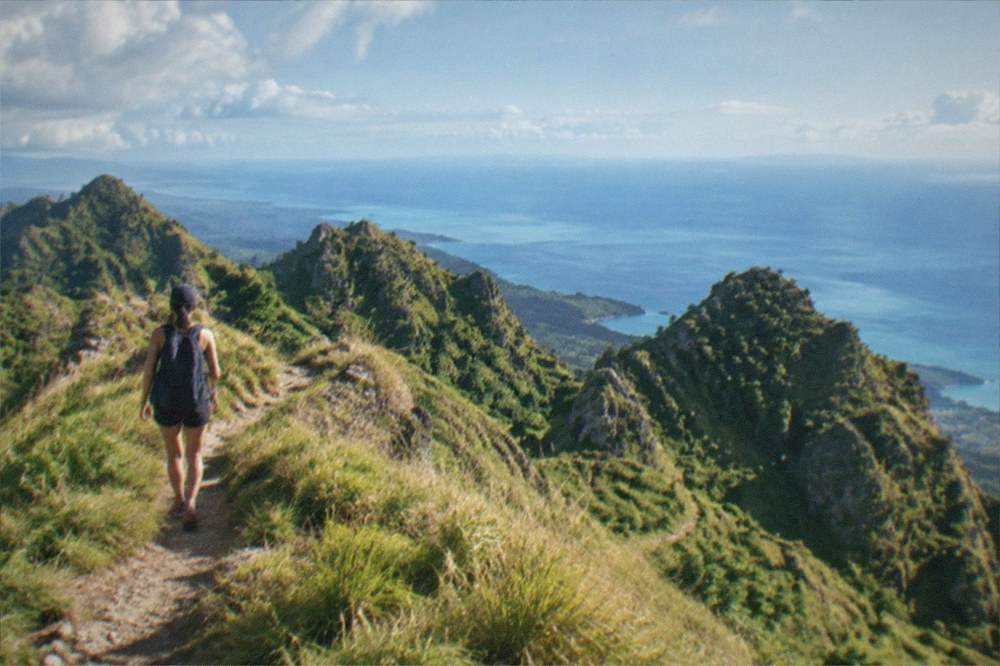
Osmeña Peak, near Dalaguete, deserves the spare half-day if your whale shark morning finishes early. Registration is about P50 (about US$0.8) to P100 (about US$1.6) depending on how the local fees are consolidated, and a guide is recommended at roughly P200 (about US$3.2) to P300 (about US$4.8). The trail is short enough that it pairs naturally with the southbound drive on Day 3, and the ridge views down both coasts are the best panorama on the island.
How Do You Get Around Cebu During Seven Days?
The practical answer is a mix: jeepneys and the MyBus airport service for city hops, Grab ride-hailing for door-to-door trips in Metro Cebu, Ceres buses from the Cebu South Bus Terminal for the Oslob and Moalboal legs, and a hired car or guided package for the days that stack multiple stops. Nobody needs to rent a car for the whole week, and for most travellers, renting one only means regretting parking it in the city. The fares on each leg are small; the planning is what matters.
| Leg | Best option | Cost (PHP) |
|---|---|---|
| Airport to Cebu City | MyBus to SM City Cebu, then jeepney or Grab | P50 (about US$0.8) bus fare |
| Cebu City to Oslob | Ceres bus from Cebu South Bus Terminal | P145 (about US$2.3) to P250 (about US$4.0) |
| Cebu City to Moalboal | Ceres bus, every 30-45 minutes | P120 (about US$1.9) to P210 (about US$3.3) |
| Cebu City to Busay highlands | Hired car or habal-habal for the loop | Negotiated per stop |
| Cebu City to Tagbilaran (Bohol) | OceanJet fastcraft from Pier 1, about 2 hours | P960 (about US$15.3) tourist, P1,440 (about US$23) business |
| Within Cebu City | Jeepney or Grab | Jeepney minimum fare from P13 (about US$0.2) |
A few 2026 realities shape the choices. The Cebu Bus Rapid Transit began only partial operations on 13 March 2026, running a single Il Corso to IT Park route with free rides offered at launch, so it is a curiosity rather than a backbone; check the current fare and schedule rather than planning around it. The jeepney minimum fare was the subject of a national adjustment approved in late September 2026, though coverage of Cebu specifically was not confirmed in the announcement, so expect the first-four-kilometre fare to sit in the low teens of pesos and confirm onboard. If you drive yourself across to Mactan, the CCLEX bridge toll for a car is P107 (about US$1.7) one way. The getting around Cebu guide covers every leg in detail.
The one leg worth pre-booking rather than improvising is the Bohol ferry on Day 7. OceanJet runs around thirteen sailings a day from Pier 1, but the September 2026 fuel surcharge raised fares and trimmed some departures, so buying the return leg in advance through the operator's live listing is the safe move on a fixed flight day.
What Should You Prepare Before Seven Days In Cebu?
Before a seven-day Cebu trip you need four things sorted: an eTravel registration filed within 72 hours of arrival, a passport valid at least six months beyond your stay, an onward ticket, and reef-safe sun protection plus a dry bag for the south Cebu days, because standard sunscreen is banned in the Oslob interaction area and the canyoneering day soaks everything you carry. None of the four is difficult, and all of them are the difference between a smooth day and a lost one.
The entry side is simple for US, UK, EU and Australian nationals: thirty days visa-free for tourism, extendable with the Bureau of Immigration, with the first extension adding twenty-nine days. The eTravel registration is free at the official government site and the Bureau of Immigration repeatedly warns about fake lookalike sites that charge a fee; the only cost is the time it takes to fill in.
Packing is dictated by the itinerary itself. Bring water shoes for the canyoneering day, a rash guard instead of sunscreen for the whale shark session, a dry bag for the boat days, and a light layer for the highlands, where the Busay viewpoints sit high enough that the evenings cool off. Cash matters more than cards outside the malls: every entry fee on this itinerary, from the P50 (about US$0.8) Tumalog entrance to the P100 (about US$1.6) Moalboal environmental fee, is collected in pesos, often at a kiosk with no card reader.
Safety-wise, Cebu sits under the standard country-level travel advisories, a Level 2 exercise-increased-caution notice from the US State Department and an equivalent high-degree-of-caution notice from Australia, with nothing Cebu-specific in either; the higher-risk areas named in both are in Mindanao and the Sulu archipelago, hundreds of kilometres away. The 30 September 2025 magnitude 6.9 earthquake off Bogo damaged heritage churches in northern Cebu, but the Department of Tourism confirmed Bantayan and Malapascua open and the core tourism zones unaffected, so nothing on this southern-focused week touches the damaged area.
If you would rather lock the three bookable days of the week, the market walk, the Moalboal boat and the canyoneering run, before you fly, these are the same three picks again, gathered in one place for a final decision.
Common Questions About A Seven-Day Cebu Itinerary
Is 7 days in Cebu enough?
Yes. Seven days covers Cebu City's heritage core, the Busay highlands, the Oslob whale sharks, Kawasan canyoneering, the Moalboal sardine run, a Mactan beach day and a Bohol day trip, which is essentially the complete first-visitor list. It is not enough to also add Malapascua or Bantayan in the north without cutting something; those need ten days.
What is the best 7 days in Cebu itinerary order?
City first, south second, beach last: two days in Cebu City and the highlands, two to three days down the south coast for Oslob and Moalboal, then Mactan and a Bohol day trip at the end when you want the schedule to be flexible. This order front-loads the fixed-time items, the whale sharks only run in the morning, and leaves the cancellable beach days at the tail.
How many days do you need in Cebu?
Three days for the city plus one headline day trip, five days to add the south coast as a rushed loop, seven days to do the south properly with a Moalboal overnight, and ten or more to add northern Cebu. The jump from five to seven days is the one that changes the trip most, because it converts the punishing south day trips into a comfortable overnight route.
Should you stay in Cebu City or Moalboal during a 7-day trip?
Both. Four nights in Cebu City and two or three in Moalboal is the standard split, because the whale shark session, the canyoneering route and the sardine run all sit far closer to Moalboal than to the city. A single Cebu City base for the whole week is workable but means three-to-four-hour drives on each south day.
How much does a 7-day Cebu itinerary cost?
The local costs are a string of small fees rather than big-ticket items: the Oslob whale shark fee is P1,000 (about US$15.9) for foreign tourists, Kawasan canyoneering runs roughly P1,500 (about US$24) to P2,000 (about US$32) with a Badian-accredited guide, and the Moalboal environmental fee is P100 (about US$1.6). Accommodation is the line that swings the total, from guesthouse budgets to Mactan resort rates.
Is Cebu safe for tourists right now?
Yes, under the standard country-level advisories. The US State Department's Level 2 notice for the Philippines names no Cebu-specific risk, and the areas flagged as higher risk are in Mindanao and the Sulu archipelago, far from Cebu. The 2025 earthquake damage was concentrated in northern Cebu's heritage churches, not on the tourist south coast or in Metro Cebu.
The week above is the version of Cebu that first-time visitors almost always mean when they say they are going: the oldest city, the biggest fish in the sea, the bluest water and a lechon lunch somewhere in between. Book the whale shark morning and the canyoneering day before you fly, keep the last day loose, and the island does the rest.