Sim Card And Internet In Cebu
Cebu, the island province in the Central Visayas region of the Philippines, is one of the country's most connected destinations, and a little preparation with a SIM card or eSIM makes almost every part of a trip here easier, from Grab rides to ferry bookings.
Short answer
Buy a local SIM or eSIM when you land at Mactan-Cebu International Airport, register for the free eTravel pass before your flight, and download offline maps for South Cebu and the islands, where coverage thins out and signal can drop between towns.
Cebu, an island province in the Central Visayas region of the Philippines, is the sort of place where a working phone quietly runs the whole trip. The free eTravel registration has to happen online before you land, the dominant ride-hailing app quotes its fares in the app, ferry schedules shift with fuel prices, and half the best viewpoints in the hills sit a jeepney ride from anything resembling a signal bar. This guide covers what to sort out before departure, what to do in the arrivals hall, and where on the island a downloaded offline map earns its keep. Nothing here needs a technical background: it is planning, not engineering.
Do You Need A Sim Card In Cebu?
Visitors to Cebu can get more out of the trip with local mobile data than without it, because the island's daily logistics run through apps and online forms: the eTravel QR code, ride-hailing, ferry schedules and map navigation all assume a connected phone. A SIM or eSIM is not strictly required, since hotels and cafes provide Wi-Fi, but a local data connection removes the scramble of hunting for a hotspot before every small task.
The single clearest example is arrival itself. The Philippine eTravel system asks every arriving passenger, Filipino or foreign, to register within seventy-two hours before the flight, and the official site states the service is absolutely free of charge. That registration happens before departure, so it does not need Philippine data, but the QR code it produces lives on your phone, and you will show it at boarding and again at the airport.
Once you are on the ground, connectivity keeps paying for itself. Grab, the dominant ride-hailing app in the Philippines, lists Cebu among its service areas and shows you the fare before you confirm the ride, which removes the negotiation that comes with hailing a taxi off the street. Mactan-Cebu International Airport's own transport guide describes the MyBus airport service, its schedules and its fares, and a phone lets you check those details while you stand at arrivals with luggage.
There is also the simple matter of where Cebu's attractions sit. The highlands viewpoints, the southern waterfalls and the island-hopping departure points are spread across a long island, and the journeys between them pass through stretches where a live map is more useful than a paper one. If your phone is connected, the day flows. If it is not, you will spend part of it guessing.
Where To Buy A Sim Card Or eSIM In Cebu?
The practical answer is the arrivals area of Mactan-Cebu International Airport, where counters sell local SIMs to arriving visitors, with eSIM purchase possible before departure through an online provider, and additional retail outlets in Cebu City's malls for anyone who skips the airport stop. Airport counters cost a little more than city outlets but remove every step between the plane and a working phone.
The airport has two passenger terminals, Terminal 1 for domestic flights and Terminal 2 for international flights, connected by a walkway, so whichever one you arrive into, the SIM counters sit a short distance from baggage claim. Staff at these counters handle the activation for you, which matters because a foreign visitor registering a Philippine SIM needs to present identification at the point of sale, and the counter staff process that paperwork as part of the purchase.

An eSIM is the alternative if your phone supports it. You buy and install it before you fly, and it connects to a Philippine network the moment you land, skipping the counter queue entirely. The trade-off is that eSIMs purchased online are usually data-only, so if you want a local Philippine number for calls and texts, a physical SIM from a counter is the route that gives you one.
For travelers who prefer to sort things out in town, Cebu City's large malls carry the same network retailers, usually at slightly lower prices than the airport. The catch is timing: many counters keep mall hours, and if you land in the evening with a morning tour booked, the airport premium buys you a working phone that same night. Our Cebu airport guide walks through the full arrivals process, terminal by terminal.
Whichever route you take, keep your passport handy for the registration step, and keep the SIM packaging until you have confirmed the connection works. A quick test is loading a map of your hotel's neighborhood before you leave the terminal.
Once the phone works, the island opens up, and the day tours are where that matters most.
How Much Mobile Data Do You Need For A Cebu Trip?
A short Cebu trip of three to five days runs comfortably on a modest tourist data package, because the heaviest uses, map navigation and messaging, consume far less than video streaming, and hotel Wi-Fi carries the overnight heavy lifting. The visitors who burn through data are the ones streaming on long bus rides, so if that is your habit, size the package up rather than rationing mid-trip.
Think about what the data actually does on this island. Navigation from Cebu City to Oslob is a three-and-a-half to four-and-a-half hour bus journey, and a live map running that whole stretch uses a fraction of what a single streamed video consumes. Messaging apps, translation apps and booking confirmations barely register. The realistic pattern is bursts of use, at the airport, before a ferry, during a ride, then long stretches where the phone sits in a dry bag while you swim.

The table below reframes the question: it is not how many gigabytes you buy, it is what each part of the trip demands from the phone. These are the island's signature journeys and what connectivity means on each one.
| Journey | Rough time | What your phone does en route |
|---|---|---|
| Airport to Cebu City | 25 to 60 minutes by road | Live traffic check for the Grab or taxi ride |
| Cebu City to Oslob by bus | 3.5 to 4.5 hours | Offline map navigation, music, messaging |
| Cebu City to Moalboal by bus | 2.5 to 3.5 hours | Offline map, downloadable podcast before departure |
| Cebu to Tagbilaran, Bohol by fastcraft | About 2 hours | Boarding pass and eTravel QR on screen |
| Cebu City to Tops Lookout | Under an hour by road | Photo upload at the viewpoint, navigation up the hill road |
A useful habit is to download what you can on hotel Wi-Fi the night before: the offline map for the next day's region, any entertainment for the bus, and the confirmation emails for booked tours. This site's Cebu itinerary pages are built around exactly these journeys, and reading one the night before on free Wi-Fi beats loading it mid-bus on a fading signal.
If your data budget runs low mid-trip, most network retailers in the malls sell top-ups over the counter, and the process takes minutes. The one situation to avoid is arriving at a ferry terminal with no data and a booking confirmation trapped in the cloud.
For travelers heading to Kawasan Falls, the canyoneering descent through the Badian gorge is a full-morning commitment where the phone stays in a dry bag, which makes the ride there the natural window for last-minute downloads.
Is There Good Wi-Fi In Cebu Hotels And Cafes?
Hotels in Cebu City, Mactan and the main tourist strips generally provide usable Wi-Fi, and the province's urban core is one of the more connected corners of the Philippines, but quality drops with distance from the cities, so beach resorts in the south and island accommodations should be treated as places to disconnect at least part of the day.
In Cebu City itself, the range runs from budget guesthouses to full-service hotels, and even the modest end usually offers Wi-Fi as a standard amenity, because the city is a business hub with a large outsourcing industry that demands reliable connectivity. Mactan's resort strip, which faces the Camotes Sea and hosts most of the island's international visitors, follows suit, since its clientele expects to work and stream from the beach.
The change comes at the edges. Moalboal's Panagsama Beach, Oslob's Tan-awan village and the islands of Malapascua and Bantayan have accommodations whose connections arrive by the same imperfect routes as everything else on a small island, and evening speeds reflect how many guests are sharing the line. The sardine run at Moalboal sits a few metres from shore at Panagsama Beach, per the municipal tourism site, and visitors spend their mornings in the water, not on a video call, which is the honest rhythm of these places anyway.

Cafes follow the same geography. In the cities, coffee shops with serious connections cluster around the business districts and the IT Park area, where a laptop-and-latte morning is a local institution. In the south, a cafe's Wi-Fi is a bonus rather than a guarantee, and this is where the local SIM data from earlier in this guide becomes the backbone of the trip rather than a convenience.
The practical rule: treat hotel and cafe Wi-Fi as the place for heavy downloads, and treat mobile data as the thing that works everywhere else. Visitors planning longer stays can compare neighborhoods in where to stay in Cebu, though note that individual property connection speeds go unverified, so choose accommodation for location and price first and assume Wi-Fi varies.
How Does eTravel Registration Work, And Does It Need Data?
eTravel registration is free, mandatory for arriving passengers, and must be completed within seventy-two hours before arrival, producing a QR code you show at boarding and at the airport, so it needs internet before you fly but not Philippine data specifically: hotel Wi-Fi abroad or your home mobile plan both work fine.
The official eTravel site states plainly that the service is free of charge, and the Bureau of Immigration has repeatedly warned about fake lookalike sites that charge fees, so the only safe route is the official government domain. The form covers health, immigration and customs information in one place, and the QR code it generates is the document you present.
Two details catch travelers out. First, the seventy-two-hour window means you cannot register a month early and forget about it; the timing is part of the requirement. Second, departing Filipino passengers also use the system, but foreign tourists arriving in Cebu only need the arrival registration, plus their passport, their onward ticket and the standard entry requirements.
The reason this belongs in a connectivity guide is simple: the QR code lives on your phone. A phone that dies at the checkpoint is a problem, which is why the power section later in this article matters as much as the SIM section. A screenshot of the QR code, taken while you still have internet, is the belt-and-braces move.
Visa-free nationals from the United States, the United Kingdom, Australia and every EU state receive an initial thirty-day stay, per the official e-visa policy page, with passport validity of at least six months and an onward ticket required. Our full Philippines visa and eTravel guide covers the entry process end to end.
Which Apps Are Worth Downloading Before A Cebu Trip?
The short list is a ride-hailing app, an offline map covering Cebu and Bohol, your ferry operator's booking channel, and your bank's app, all downloaded and logged in before departure, because every one of them is more painful to set up on a patchy arrival-day connection than on reliable Wi-Fi at home.
Grab is the ride-hailing app that matters. It operates across Cebu City, Mandaue and the Mactan side, shows fares in the app before you ride, and has designated pickup zones at the airport terminals. Setting up the account with your home number and a payment method before you fly means the first thing you do in Cebu is open the app, not create an account.
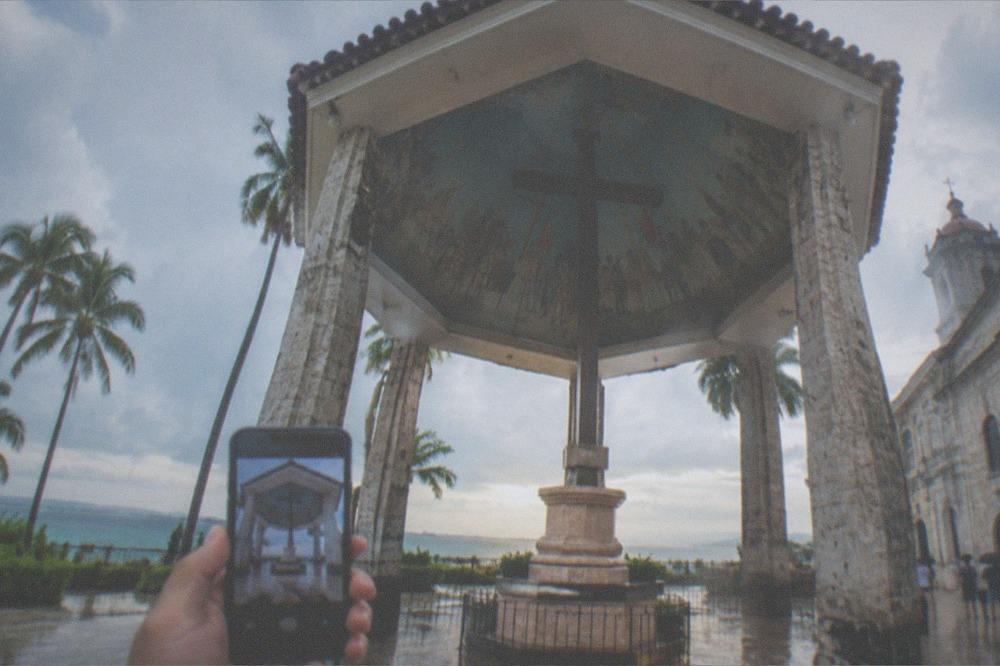
Maps deserve the offline treatment. Downloading the Cebu region, plus Bohol if a day trip is on the cards, turns your phone into a navigation device that works when the signal does not, which happens on the hill roads above the city and on boat crossings. Offline maps also cut data use on the long south-bound bus rides to almost nothing.
The table below pairs each journey with the transport fact worth having in the phone before you leave Wi-Fi, all figures from the island's current transport picture.
| Connection | Key figures to save offline | Why it matters |
|---|---|---|
| MyBus, airport to SM City Cebu | Fare P30 (about US$0.5) to P50 (about US$0.8) depending on destination; airport to SM runs 7 AM to 10 PM | The budget arrivals route, confirmed on the airport's own transport guide |
| Ceres bus to Oslob | 3.5 to 4.5 hours, roughly P145 (about US$2.3) to P250 (about US$4.0) depending on class | Whale shark mornings start early; the bus is the no-tour option |
| Ceres bus to Moalboal | 2.5 to 3.5 hours, roughly P120 (about US$1.9) to P210 (about US$3.3) | Frequent departures from the South Bus Terminal |
| OceanJet fastcraft to Bohol | About 2 hours; tourist class P960 (about US$15.3), business P1,440 (about US$23) from 21 Sept 2026 | The standard Cebu to Bohol crossing, fares include a recent fuel surcharge |
| Lite Ferries RORO to Bohol | About 4 hours, from roughly P400 (about US$6.4) | The slower, cheaper alternative |
One caution that belongs here: ferry schedules and fares moved in September 2026, with a fuel surcharge lifting OceanJet fares and some sailings cut mid-month, so a screenshot of a schedule taken in August may already be stale. Our ferries from Cebu and Cebu to Bohol ferry guides carry the current picture, and checking them on hotel Wi-Fi the night before travel is the reliable pattern.
For getting around more broadly, including the jeepney system and the new partial bus rapid transit line, see getting around Cebu.
Does Signal Hold Up In South Cebu And On The Islands?
Signal in South Cebu is generally present in the towns and patchy between them, and the islands of Malapascua, Bantayan and Camotes have coverage that concentrates around settlements rather than beaches, so the workable strategy is to treat town stops as sync points and download everything for the day before leaving Cebu City.
The geography explains it. The highway south to Oslob and Moalboal threads between hills and coastline, and the bus passes through stretches where the phone searches for a network. Town centers like Oslob's Tan-awan, where the whale shark operations run from about 6 AM to noon, have connectivity for the cafes and booking offices that serve visitors. The same pattern holds on Moalboal's beach strips, where dive shops and tour desks need connections to operate.
The islands are honest about their limits. Malapascua, the thresher shark diving base, sits off Cebu's north tip beyond a boat hop from Maya port. Bantayan requires a ferry from Hagnaya, with its terminal fee of P25 (about US$0.4) and Santa Fe's ecological fee of P30 (about US$0.5) on arrival. Both islands host visitors year-round, and both have accommodations whose Wi-Fi is best described as variable. Travelers who need to work remotely should plan calls for Cebu City or Mactan days, not island days.
What this means for planning is that the island's most spectacular content, the sardine run, the waterfalls, the dive sites, is exactly where you will take the most photos and have the least bandwidth to back them up. Upload in the evenings on hotel Wi-Fi, or accept that the phone's storage does the work until you return to the city. The day-trip guides, like Moalboal day trip, assume this rhythm.
For anyone combining the south's canyoneering with the city's comforts, this half-day descent is the region's signature activity, and it keeps the phone safely bagged while the water does the talking.
What About Power, Plugs And Keeping Devices Charged?
The Philippines runs on 230 volts at 60 hertz with plug types A, B and C, so most US and European travelers need at least a simple adapter, and a power bank matters more than the plug: long bus days, boat hops and island nights all separate you from a wall socket at some point.
Type A, the two flat parallel pins, is the primary socket across the country, with type B, the grounded three-pin version, and type C, the Europlug, also common. Many Philippine sockets are hybrid designs that accept more than one pin shape, but relying on that is a gamble, and a universal adapter costs less than a morning of hunting for one in a provincial town.
The charging strategy matters as much as the plug. A day that starts with a 3 AM alarm for whale sharks in Oslob, continues through a boat ride and ends at a waterfall does not include a wall socket until evening. A power bank that can fully recharge a phone once or twice covers the gap, and the humid tropical climate means keeping it out of the sun in the dry bag rather than a hot pocket.
The reference table for the practical essentials:
| Item | Standard in Cebu | Traveler's move |
|---|---|---|
| Voltage | 230 V | Check device ratings; most modern chargers are dual voltage |
| Frequency | 60 Hz | Universal for phones and laptops |
| Plug types | A, B and C | Pack a compact universal adapter |
| Charging access | Reliable in city hotels, variable in the south and on islands | Carry a power bank rated for one or two full recharges |
| Climate consideration | Tropical; mean temperature 28.1 C at Mactan, 138 rain days a year | Keep electronics in dry bags on boats and waterfall days |
Note that no individual pharmacy, shop or service point for adapter purchases has been verified, so pack the adapter before departure rather than planning to buy one on arrival.
When Is The Best Time To Visit Cebu For Reliable Connectivity?
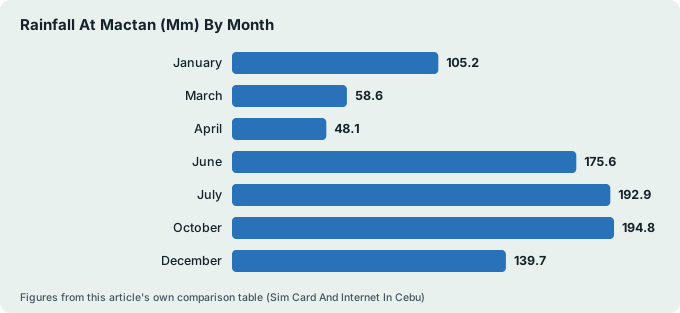
The dry season from December to May is the period when connectivity-dependent travel in Cebu is simplest, because typhoon season from June to November brings the storms that suspend ferries, close canyoneering routes and knock out power, and PAGASA's own rainfall normals show October as the wettest month at Mactan with 194.8 mm against April's 48.1 mm.
The national weather service classifies the Philippine year into a rainy season from June to November and a dry season from December to May, and the Mactan station's 1991-2020 normals back that up month by month. Rain itself does not break mobile networks, but the typhoons that ride the rainy season do, and the disruption cascades: boats stop sailing, tours pause, and the plans that live on your phone all shift at once.
| Month | Rainfall at Mactan (mm) | What it means for a connected trip |
|---|---|---|
| January | 105.2 | Dry season, Sinulog month, peak visitor traffic |
| March | 58.6 | Approaching the driest stretch |
| April | 48.1 | Driest month of the year |
| June | 175.6 | Rainy season begins |
| July | 192.9 | Peak typhoon season begins |
| October | 194.8 | Wettest month in the monthly series |
| December | 139.7 | Rain easing, dry season returning |
Recent history underlines the point. Typhoon Tino in early November 2025 brought severe flooding to Cebu and a provincial state of calamity, though the tourism department reported the core zones of Cebu City and Mactan largely unaffected and open. The 30 September 2025 magnitude 6.9 earthquake off Bogo damaged heritage churches in the north, and the tourism department later confirmed Bantayan and Malapascua open with ports operational. In each case, the travelers who fared best were the ones whose phones worked and whose plans could flex.
The full picture, including the typhoon season month by month, sits in our best time to visit Cebu and Cebu weather and typhoon season guides, and both are worth loading offline before a rainy-season trip.
Whenever the plans need to flex, a booked tour with a live listing is easier to adjust than a self-arranged day, and the operators below let you check availability on the spot.
For a first taste of the island that stays close to the city and its full-strength signal, a smile-hopping day trip around the Mactan side is the gentlest introduction, with the operator's live listing carrying the current price and departure details.
Common Questions About Sim Cards And Internet In Cebu
Do I need to buy a SIM card in Cebu, or is Wi-Fi enough?
Wi-Fi alone works if your trip stays inside city hotels and cafes, but the eTravel QR code, ride-hailing, ferry schedules and island navigation all assume a connected phone. A local SIM or eSIM removes the dependency on finding a hotspot for every small task, and airport counters make the setup a ten-minute stop after baggage claim.
Can I buy a SIM card at Cebu airport?
Yes. Mactan-Cebu International Airport has SIM counters in the arrivals areas of both terminals, which are connected by a walkway. Bring your passport, since identification is part of the registration at the point of sale, and the counter staff handle the activation.
Does an eSIM work in Cebu?
eSIMs purchased from online providers before departure connect to Philippine networks on arrival and skip the counter queue. The trade-off is that most travel eSIMs are data-only, so travelers who want a local number for calls and texts should choose a physical SIM instead.
Is the internet good in Cebu?
Cebu City and the Mactan resort strip are among the more connected parts of the Philippines, with business-district cafes and hotels offering solid Wi-Fi. Coverage thins toward the south and on the islands, where signal concentrates in towns and settlements rather than beaches, so offline maps remain essential there.
Does eTravel registration cost money or need Philippine data?
eTravel registration is absolutely free of charge on the official government site, and it must be completed within seventy-two hours before arrival. It needs internet, but not Philippine internet: register from home on Wi-Fi, screenshot the QR code, and show it at boarding and at the airport.
Will my phone charger work in Cebu?
The Philippines uses 230 volts at 60 hertz with plug types A, B and C. Most modern phone and laptop chargers handle the voltage, but pack a universal adapter for the pin shapes, and carry a power bank for the long bus days and boat hops where wall sockets are scarce.
A connected phone in Cebu is not about scrolling, it is about the eTravel QR code at boarding, the Grab fare before you commit, the ferry schedule that changed last month, and the offline map that carries you through the hills where the signal drops. Sort the SIM or eSIM at arrivals, download the maps on hotel Wi-Fi, keep the power bank charged, and the island handles the rest. For the wider picture of what to do once you are connected, start from Cebu Travel Guide and the Cebu travel guide hub.