Cebu Vs Palawan
Cebu and Palawan are the two names that come up first when travellers plan a Philippine island trip, and they reward completely different styles of traveller. Cebu, an island province in the Central Visayas region of the Philippines, mixes a real working city with whale sharks, canyoneering and ferry-linked islands; Palawan is the long, quiet, coral-fringed wilderness to the west. Here is how the two stack up, with every Cebu figure drawn from verified sources.
Short answer
Choose Cebu if you want city comforts, heritage sites, festivals and a dense cluster of day trips you can reach by road and ferry; choose Palawan if your whole trip is about remote beaches, lagoons and slow island time. All figures on this page are Cebu's verified numbers; Palawan is compared on character, not statistics.
Cebu and Palawan sit at opposite ends of what a Philippine holiday can be. Cebu, an island province in the Central Visayas region of the Philippines, is a functioning metro area of nearly a million people in Cebu City alone, ringed by ferry-linked islands and mountain villages, with direct flights from across Asia arriving at Mactan-Cebu International Airport. Palawan is the country's long western frontier, a chain of limestone islands and quiet towns where the trip itself, long boat rides and small-plane hops, is half the experience. This guide compares them honestly: every Cebu number quoted below is a stated figure, and where Palawan has no such figure, it is described in plain qualitative terms instead of invented statistics.
Is Cebu Or Palawan Better For A First Trip To The Philippines?
For a first trip, Cebu is the safer and more forgiving choice, because it concentrates city infrastructure, heritage, beaches and marquee wildlife encounters within one reachable island, while Palawan rewards travellers who are comfortable with long transfers and thinner tourist infrastructure. Cebu City alone counts 964,169 residents in the 2020 census, and the island's airport takes direct international flights, so the first day of a Cebu trip can already be a full sightseeing day rather than a travel day.
The practical difference is density. From a single base in Cebu you can watch whale sharks at Oslob in the morning, swim under Kawasan Falls by afternoon and be back in a city restaurant the same evening, because the south of the island is stitched together by Ceres buses running several times daily from the Cebu South Bus Terminal. Palawan's headline destinations are spread along hundreds of kilometres of coastline, and moving between them means scheduling your whole itinerary around boats and vans.
That said, "easier" is not the same as "better." Palawan's defining quality is remoteness: its famous lagoons and reef systems feel genuinely far from everything, which is exactly what some travellers are paying for. Cebu's defining quality is variety. Neither is a worse version of the other, they are different products, and the rest of this page breaks the choice into decisions you can actually make.
What Does Each Island Do Best?
Cebu does density and contrast best: a Spanish-era heritage core, a nine-day festival, canyoneering, whale sharks and sardine runs all reachable from one island, while Palawan does wilderness best: long empty coastlines, limestone lagoons and reef systems that sit far from any city. Cebu's strengths are verified in specifics, from Fort San Pedro's 1565 origins to the year-round sardine school at Moalboal, and Palawan's strength is the simple, checkable fact that its famous sites are remote and thinly developed.
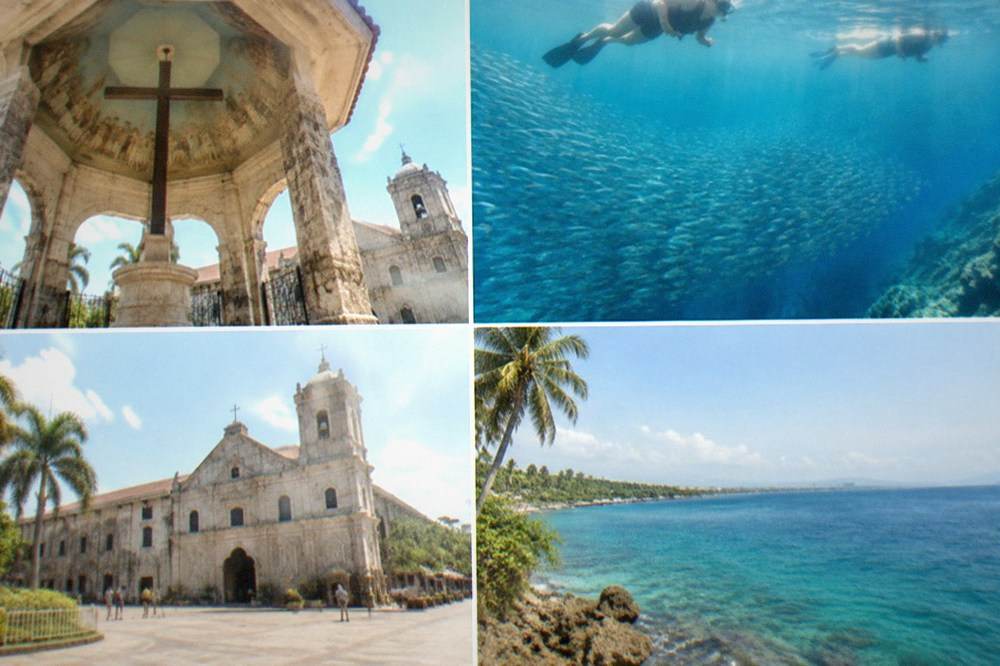
Cebu's best day trips cluster in three zones. The south holds Oslob's whale shark interactions, Tumalog Falls, the Moalboal sardine run and Kawasan Falls canyoneering. The north holds Bantayan Island and the thresher shark dives off Malapascua. The Mactan side holds island hopping across the Hilutungan and Nalusuan marine sanctuaries, plus the Olango Island Wildlife Sanctuary, a Ramsar site since 1 July 1994 and the first in the Philippines. A good starting point for mapping these is the Cebu travel guide hub, and the Cebu itinerary page turns them into day-by-day plans.
Palawan's map works differently. Its famous destinations are boat journeys and island chains, known for lagoons, limestone cliffs and reef diving rather than cities or festivals. Travellers who want a single base and a packed day list will feel that as friction; travellers who want to unplug will feel it as the whole point.
The tours below show Cebu's day-trip range at its most varied: a full-day Camotes Islands trip, a bird-watching and snorkelling trip to Olango, and the whale shark, falls and Sumilon combination that covers Oslob's three headline stops in one booking.
How Do The Beaches And Islands Compare?
Cebu's beaches are distributed rather than dominant: the best swimming and sand sits on offshore islands like Bantayan, Sumilon, the Camotes and the Mactan sanctuary islets, while Palawan's coastline itself is the headline, with long stretches of white sand and lagoons that need no boat to impress. Cebu's beach-side facts are specific and verified, from Bantayan's arrival fees to Sumilon's day-use hours, and Palawan's edge is scenery you can check for yourself.
Neither island is a "lie on the sand" destination in the way some travellers imagine. Cebu City itself is a working port city, and the nearest good beaches are on Mactan or across the channel, which is why the Cebu beaches guide sorts them by travel time. What Cebu offers instead is beach-plus-something: Sumilon pairs its sandbar with a marine sanctuary, Moalboal pairs White Beach with the sardine run a few metres off Panagsama, and Bantayan pairs quiet sand with a laid-back island town.
Palawan's beaches are the destination rather than the add-on. Its famous stretches are photographed precisely because the landscape around them, cliffs, lagoons, karst islands, is dramatic in a way Cebu's mostly calm shorelines are not. If your holiday is judged by the beach itself, Palawan wins on scenery; if it is judged by how many different things you did before dinner, Cebu wins on range.
| Cebu beach or island zone | What the verified facts say | Best for |
|---|---|---|
| Mactan and the sanctuary islets | Lapu-Lapu environmental fee P100 (about US$1.6) for foreign tourists on island hopping, cut to P20 (about US$0.3) for locals in July 2025; Hilutungan and Nalusuan sanctuary fees roughly P150 (about US$2.4) to P300 (about US$4.8) each | Easy half-day trips from a city or Mactan hotel |
| Moalboal | Environmental user fee P100 (about US$1.6) to swim or snorkel; sardine school present year-round a few metres from shore | Snorkelling and diving bases |
| Sumilon Island | Bluewater day use 8:00 AM-3:00 PM with transfers; guided snorkel add-ons available | A polished beach day near Oslob |
| Bantayan Island | Hagnaya terminal fee P25 (about US$0.4); Santa Fe ecological fee P30 (about US$0.5) | Quiet sand and slow island time |
| Camotes Islands | Full-day tours cover caves, a lake and beach stops | A less-crowded island loop |
If the table makes you lean toward Cebu's island-hopping side, this is the natural point to lock in a booking, since the popular Oslob and Mactan boat trips fill first on dry-season weekends.
How Do The Costs Compare?
On verified Cebu figures, a day of sightseeing in Cebu is cheap: Fort San Pedro costs a few dollars, Magellan's Cross and the Taoist Temple are free, Tops Lookout is modest, and the Oslob whale shark fee is the single big-ticket item with boat and guide included. Palawan cannot be priced on this page because this site has verified no Palawan figures, so only Cebu's costs are shown, and budget travellers should plan from Cebu's numbers.
The honest framing matters here. A comparison table with invented Palawan prices would be easy to write and worthless, so this one lists only what Cebu's sources confirm. The pattern those figures show is that Cebu's costs split into a very cheap city layer and a mid-priced adventure layer, and the Cebu budget costs guide breaks that down across accommodation, food and transport.
| Cebu cost item | Verified figure | Notes |
|---|---|---|
| Fort San Pedro entry | P50 (about US$0.8) regular, P40 (about US$0.6) students and seniors | Fee update in 2026 left entry prices unchanged |
| Magellan's Cross | Free | Open roughly 8 AM to 6 PM |
| Tops Lookout | P100 (about US$1.6) regular, P70 (about US$1.1) senior/PWD | Open 24 hours |
| Museo Sugbo | P50 (about US$0.8) general, P25 (about US$0.4) students | Reopened 29 August 2025, Monday to Friday |
| Oslob whale sharks | P1,000 (about US$15.9) foreign, P500 (about US$8.0) local | Boat and guide included, sightings not guaranteed |
| Kawasan Falls Level 1 | About P200 (about US$3.2) | Canyoneering roughly P1,500 (about US$24) to P2,000 (about US$32) with a Badian-accredited guide |
| Moalboal sardine run | P100 (about US$1.6) environmental user fee | Shore access, gear rental extra |
| Jeepney first 4 km | From P13 (about US$0.2) traditional, P17 (about US$0.3) modern | DOTr-approved adjustment from 28 September 2026 |
Two Cebu cost realities deserve emphasis. First, the whale shark fee is the single biggest line, and it is non-negotiable, set by the Oslob municipal ordinance rather than by tour operators. Second, the whale sharks are wild animals: in late May 2026 they were absent from the Tan-awan interaction area for about four days, and the local government clarified that operations pause and resume with the sightings. Budget for the experience, not for a guarantee.
Which Island Is Easier To Reach And Get Around?
Cebu is decisively easier to reach and get around: Mactan-Cebu International Airport has two terminals, a second runway opened 30 January 2025, and an airport bus service runs to SM City Cebu roughly every 20 minutes through the day, while Palawan's airports are smaller, its destinations are linked mainly by van and boat, and this site has verified no Palawan transport figures, so its side of the comparison is qualitative only. In Cebu you can land and be downtown within the hour.
Cebu's access facts are unusually strong for a regional destination. The airport's Terminal 1 handles domestic flights and Terminal 2, opened in 2018, handles international, with a walkway between them. Since 16 January 2025 the terminals have been operated by Aboitiz InfraCapital Cebu Airport Corporation under a public-private partnership. New routes kept arriving through 2025 and 2026, including Jetstar to Brisbane, Vietnam Airlines to Hanoi and AirAsia to Kuala Lumpur. The Cebu airport guide covers arrivals in detail.
Getting around Cebu is equally documented. Jeepneys remain the workhorse, Grab covers the metro area, and the Cebu Bus Rapid Transit began partial operations on 13 March 2026 on a single Il Corso to IT Park route, with free rides offered at launch and distance-based fares under discussion since, so check the current fare before boarding. Full details live in getting around Cebu. Ferries fan out from the city too: OceanJet runs around 13 fastcraft crossings a day to Tagbilaran in Bohol, covered in the ferries from Cebu guide, which matters because Cebu works as a hub for trips beyond the island itself.
Palawan inverts that logic. Its famous destinations are reached through smaller airports followed by long road and boat legs, and first-time visitors with a fixed week should understand that Palawan eats travel days in a way Cebu does not. The wider set of guides lives on Cebu Travel Guide.
When Is The Best Time To Visit Cebu Versus Palawan?
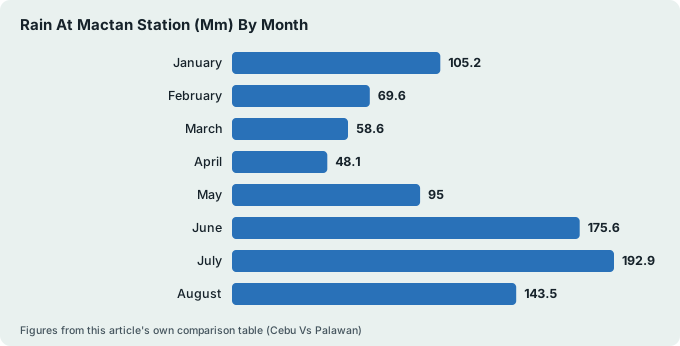
The best time to visit Cebu is the dry season from December to May, with the driest verified month at the Mactan station being April at 48.1 mm of rain and the wettest October at 194.8 mm, and typhoon risk concentrated in June to November. Palawan's calendar is compared here only qualitatively, as this site has verified no Palawan rainfall figures, though the same June-to-November monsoon pattern broadly governs the western side of the country.
The Cebu numbers come from PAGASA's 1991-2020 climatological normals for the Mactan station: 1,685.0 mm of annual rain across 138 rain days, a mean temperature of 28.1 degrees, and a monthly curve that bottoms out from February to April and peaks from July to October. The best time to visit Cebu and the Cebu weather and typhoon season guides turn that into month-by-month advice.
| Month | Rain at Mactan station (mm) | Season note for Cebu |
|---|---|---|
| January | 105.2 | Dry season; Sinulog month, grand parade on the third Sunday |
| February | 69.6 | Cool dry, good for highlands and hiking |
| March | 58.6 | Hot dry begins |
| April | 48.1 | Driest verified month |
| May | 95.0 | Hot dry tail, sea at its calmest |
| June | 175.6 | Rainy season starts |
| July | 192.9 | Peak typhoon months begin |
| August | 143.5 | Rainy season |
| September | 179.6 | Rainy season |
| October | 194.8 | Wettest verified month |
| November | 161.9 | Typhoon season tail; Typhoon Tino hit Cebu in November 2025 |
| December | 139.7 | Dry season returns |
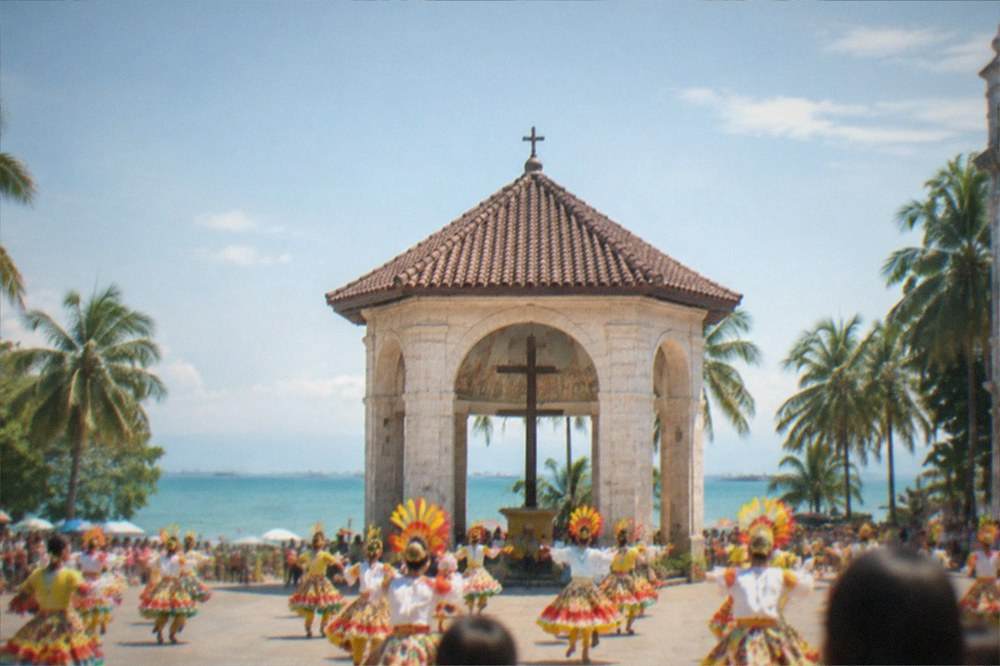
One calendar event belongs only to Cebu. Sinulog, the festival honouring the Santo Niño, holds its grand parade on the third Sunday of January at the Cebu City Sports Center, confirmed for 17 January 2027. There is no Palawan equivalent on anything like that scale, and if festival culture is on your list, that weekend alone can decide the comparison. The Sinulog festival guide covers it.
Cebu Or Palawan For Diving, Food And Families?
For diving, Cebu offers verified, distinct marquee experiences, thresher sharks at Malapascua, the year-round sardine school at Moalboal and the whale shark interactions at Oslob, while Palawan is famous for its reef and lagoon diving, described here only qualitatively. For food and families, Cebu wins on verified city infrastructure, from lechon's national reputation to museums and resort beaches on Mactan, whereas Palawan's smaller towns suit travellers who want quiet over convenience.
The diving comparison deserves honesty on both sides. Cebu's underwater selling points are unusual in kind, not just quality: the thresher sharks off Malapascua are now seen mostly at Kimud Shoal on early-morning dives, the Moalboal sardine run is a permanent resident school reachable from shore, and Oslob offers a managed whale shark interaction with a strict rule set, minimum distance, no sunscreen, no touching, licensed feeding only. The Cebu diving guide covers certifications and sites. Palawan's diving reputation rests on its reef systems and lagoons, which many divers rank among the country's best; this site has verified no Palawan dive figures, so the comparison there is a matter of what you want in the water, Cebu for specific animal encounters, Palawan for reef scenery.
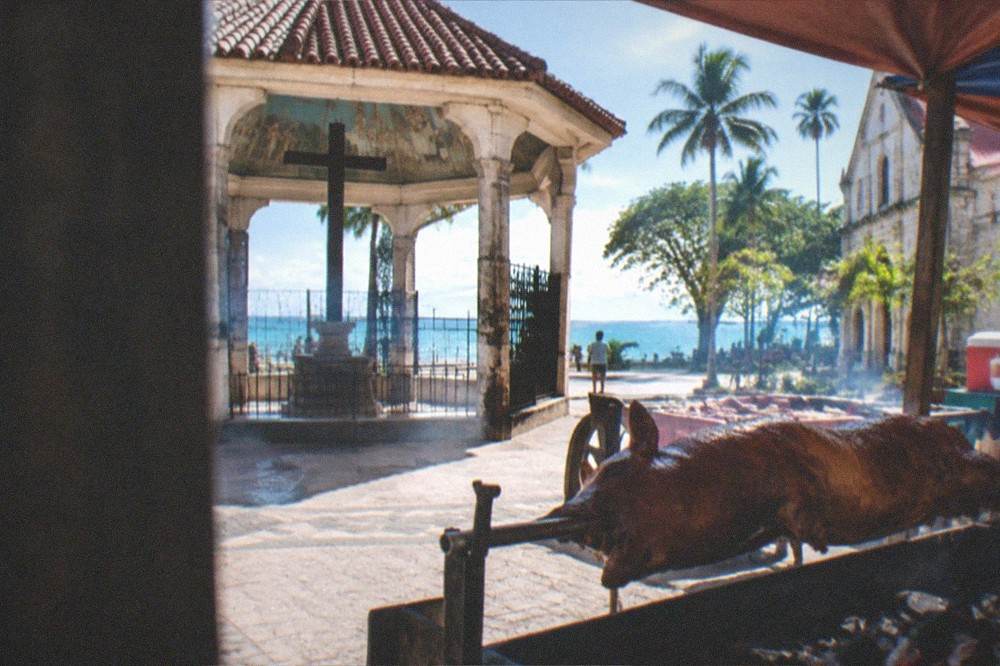
Food is a clearer Cebu win on verifiable ground. Cebu is the acknowledged home of lechon, the slow-roasted pig that the Cebu food and lechon guide traces through the city's best-known roasteries, and a metro area of nearly a million people sustains everything from night markets to international kitchens. Palawan's food scene is built around fresh seafood in smaller towns, which is enjoyable but thinner.
For families, Cebu's advantages are concrete: short transfers, walkable heritage stops like Magellan's Cross and Fort San Pedro, and Mactan's resort beaches with waterpark day passes. The Cebu family travel and family friendly resorts guides plan it out. Palawan suits families with older children who tolerate long boat rides well.
For a different pace, the whale shark day trips from the city are the single most requested Cebu experience, and the round-trip version below keeps the whole morning free for the encounter.
So Which Should You Choose, Cebu Or Palawan?
Choose Cebu if you want one trip that stacks a city, Spanish-era heritage, a major festival, waterfalls, whale sharks and island hopping within reach of a single hotel, all on low verified entry fees and an international airport 13 to 15 km from downtown. Choose Palawan if you want remoteness, dramatic limestone scenery and slow boat-based days, accepting longer transfers and thinner infrastructure as the price of it. Travellers with two weeks can realistically do both.
Cebu works as the hub for that two-week version, since Palawan is reachable by air from Cebu's own airport, and the island's fee structure keeps a packed itinerary affordable.
The decision usually comes down to what a holiday means to you. If "a great day" means you did four different things and ate well in a city afterwards, Cebu's density is unmatched among the big Philippine islands, and its verified fee structure, from free heritage sites to the whale shark ticket, keeps a packed itinerary affordable. If "a great day" means one beautiful boat journey and nowhere to be, Palawan's character fits better than any statistic could express.
For a fuller sense of Cebu's range before committing, the things to do in Cebu overview lists the island's headline experiences, and the sibling comparisons against Bohol and Boracay cover two more destinations that often sit on the same shortlist as Palawan. Safety-wise, both islands sit under the same national advisories: the US State Department's Level 2 "exercise increased caution" for the Philippines carries no Cebu-specific restriction, and the UK's Foreign Office names no Cebu advice at all, as the Cebu safety guide explains.
If you have already leaned Cebu's way, the south-coast combination of canyoneering and falls is the booking that best shows off what the island does that Palawan does not.
And for a final look at the three Cebu day tours that most often anchor a first visit, here they are side by side.
Common Questions About Cebu Vs Palawan
Is Cebu or Palawan better for first-time visitors to the Philippines?
Cebu is usually the easier first trip: an international airport sits about 13 to 15 km from downtown, city infrastructure is strong, and the island's headline day trips are reachable by road and short ferry hops. Palawan suits travellers already comfortable with long transfers and remote settings.
Which is cheaper, Cebu or Palawan?
This page quotes only verified Cebu figures, such as Fort San Pedro at P50 (about US$0.8) and the Oslob whale shark fee at P1,000 (about US$15.9) for foreign visitors, and publishes no Palawan prices. In general, remoteness tends to raise per-day costs, which favours Cebu for budget travellers.
Are the beaches better in Cebu or Palawan?
Palawan's coastline is the more dramatic of the two on pure scenery. Cebu's best sand sits on offshore islands like Bantayan, Sumilon and the Camotes, and the island compensates with variety, pairing its beaches with sanctuaries, waterfalls and the sardine run.
Can you visit both Cebu and Palawan on one trip?
Yes, and it is a common plan. Cebu works well as the hub because Mactan-Cebu International Airport handles both international arrivals and domestic connections, so a two-week trip can split time between the two islands without backtracking through Manila.
Is Cebu safe compared with Palawan?
Both fall under the same national travel advisories, which carry no Cebu-specific or Palawan-specific restriction. The US advisory for the Philippines is Level 2, exercise increased caution, and the UK Foreign Office names neither island in its warnings.
Which island has better diving, Cebu or Palawan?
They offer different things. Cebu's verified marquee dives are the thresher sharks at Malapascua, the year-round sardine school at Moalboal and the whale shark interactions at Oslob; Palawan is best known for reef and lagoon diving. Choose Cebu for specific animal encounters, Palawan for reef scenery.