Cebu Diving Guide (Moalboal, Malapascua)
Cebu, the island province in the Central Visayas region of the Philippines, holds two of the country's signature underwater experiences: the year-round sardine run at Moalboal and the dawn thresher shark dives off Malapascua. This guide covers both, plus Pescador Island, Sumilon, Olango and the practical details, fees and seasons that decide which base suits your trip.
Short answer
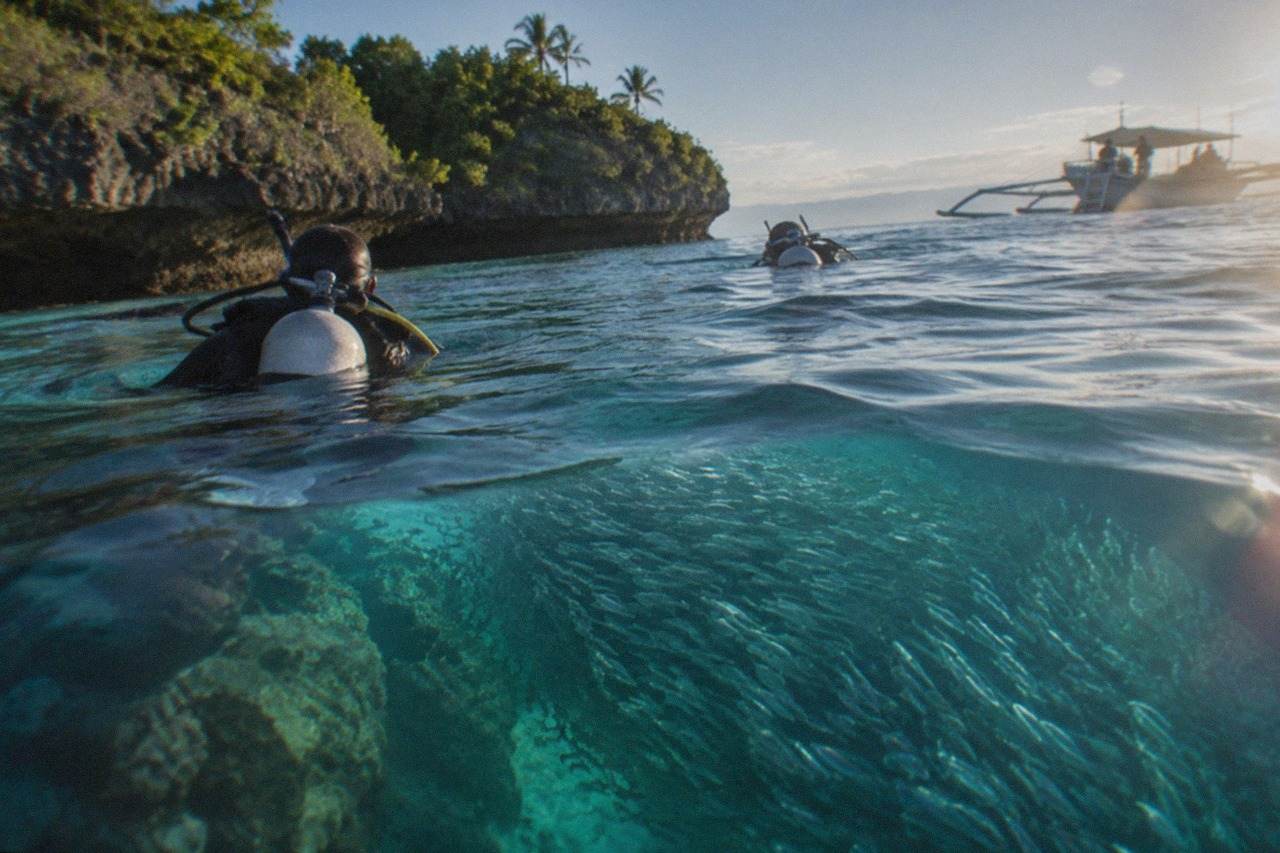
Diving in Cebu splits into two headline towns: Moalboal in the south, where millions of sardines school metres from Panagsama Beach, and Malapascua in the north, the only place with reliable daily thresher shark encounters at Kimud Shoal. Both are reachable from Cebu City by road and short boat hops, and both work for snorkelers as well as certified divers.
Cebu, the island province in the Central Visayas region of the Philippines, is one of the few places on earth where two completely different bucket-list underwater sightings sit a few hours apart by road. In the south, Moalboal's sardine run is a permanent resident school that hangs a few metres off Panagsama Beach, close enough that a snorkeler can reach it. In the north, Malapascua island's dive boats leave before dawn for Kimud Shoal, where thresher sharks rise from deep water in the early morning light. Between the two sit Pescador Island's coral walls, Sumilon's marine sanctuary, and Olango's bird-filled wetlands across the channel from Mactan. This guide walks through each of them, with the verified fees, seasons and logistics that shape a dive trip here.
Where Are The Best Dive Sites In Cebu?
The best diving in Cebu concentrates in three areas: Moalboal and Pescador Island on the southwest coast, Malapascua and Kimud Shoal at the northern tip, and the Mactan and Olango stretch near the airport, which suits short trips and training dives. Each area has a different headline attraction, so the right base depends on which animal or reef you came for rather than on a single ranking.
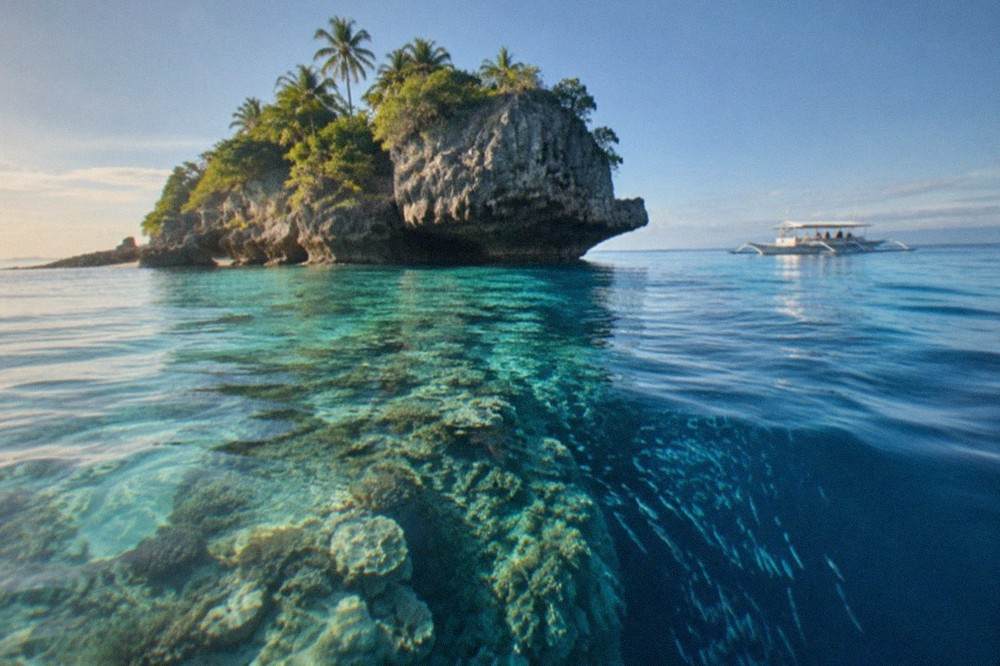
Moalboal, a coastal town about three hours south of Cebu City by bus, is the most famous of the three. Its sardine run is the draw that fills the town's dive shops, and the municipal tourism office confirms the school sits at Panagsama Beach, a few metres from shore. Pescador Island, a short boat ride out, adds steep coral walls and reef fish to the mix. Malapascua, off the northern tip of Cebu past Daanbantayan, is the thresher shark capital. The Mactan area, closest to the airport, has sanctuary dives around Hilutungan and Nalusuan that work well for a first dive or a family day.
The choice between the two main towns comes down to what you want to see and how much travel you can absorb. Moalboal is easier to reach on public transport and pairs well with canyoneering at Kawasan Falls and a stop at Oslob. Malapascua is a longer haul, usually a bus to Maya port and a short bangka crossing, but it is the only reliable place in the world for daily thresher shark sightings. Many divers with a week split the trip: three or four nights in Moalboal, then the long transfer north.
| Area | Headline underwater sight | Best for | Typical base |
|---|---|---|---|
| Moalboal (Panagsama) | Sardine run, metres from shore | Snorkelers and divers alike | Panagsama Beach |
| Pescador Island | Coral walls, reef fish, sardine baitballs | Certified divers | Moalboal |
| Malapascua / Kimud Shoal | Thresher sharks at dawn | Advanced and open-water divers | Malapascua island |
| Sumilon Island | Marine sanctuary, lagoon, white sandbar | Day visitors and snorkelers | Oslob or Sumilon resort |
| Mactan sanctuaries (Hilutungan, Nalusuan) | Shallow reefs, turtle sightings | Beginners, training dives | Lapu-Lapu City |
| Olango Island | Migratory shorebirds, shallow reef flats | Birdwatchers, relaxed snorkeling | Mactan |
What Can You See Diving In Moalboal?
Moalboal's signature sight is the sardine run: a permanent, year-round school of millions of sardines that holds just off Panagsama Beach, a few metres from shore, with the best light and calmest conditions between 7 and 9 in the morning. A P100 (about US$1.6) environmental user fee applies to swim or snorkel under Moalboal's ordinance, and Pescador Island dives carry roughly P100 (about US$1.6) in marine park fees collected through the dive shops.
The sardine run is what makes Moalboal unusual. The school does not migrate: it lives on the reef wall off Panagsama year-round, shifting position with conditions but always within swimming distance of the beach. That means a snorkeler with a mask and the environmental user fee paid at the beach kiosk can see the same spectacle a certified diver travels halfway around the world for. The municipal site notes the best window is early morning, before wind picks up the surface. Predator action, when jacks or trevally hit the school and the ball collapses into shapes, happens unpredictably at any hour.
Pescador Island, twenty minutes out by boat, is the day dive. Its walls drop fast, and the sardines sometimes form baitballs here in deeper water than the shore school. Gear rental on Panagsama runs roughly P150 (about US$2.4) to P250 (about US$4.0) a day according to local guides, and dive shops handle the Pescador fees. For the full picture of the shore-side spectacle, see the Moalboal sardine run page, and for the town itself, the Moalboal town guide.
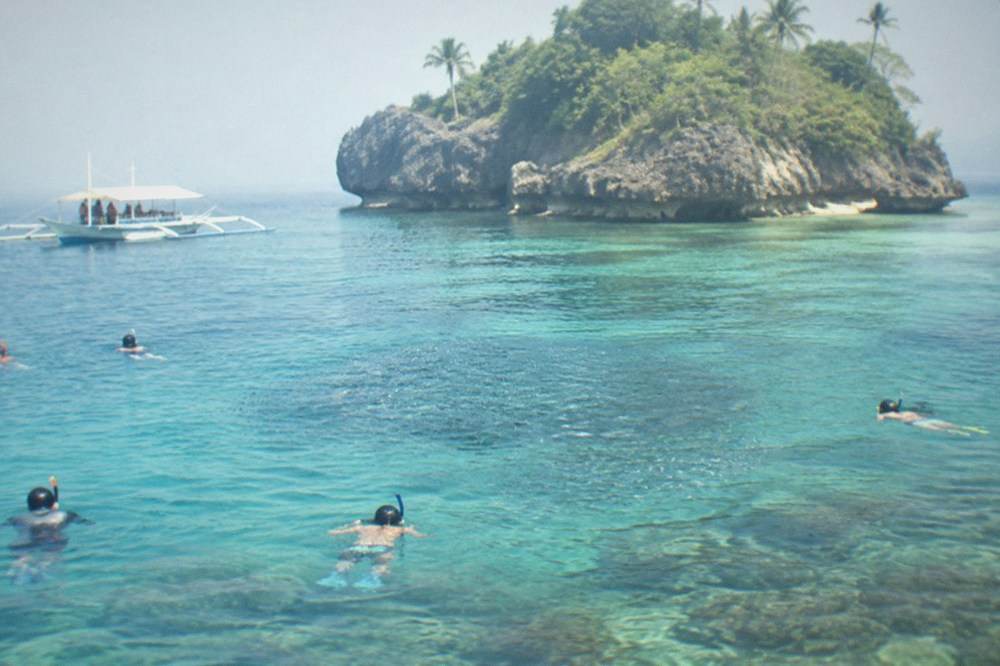
Moalboal also works as a base for combining water activities. The full-day small-group tour that links the islands with Kawasan Falls is one way to cover both in a single trip if your days are limited:
If you are weighing the two southern towns against each other, the Oslob vs Moalboal comparison breaks down the travel times and what each does better, and the answers page on where to stay, Cebu or Moalboal, covers the overnight question.
Malapascua: How Do You Dive With Thresher Sharks In Cebu?
Malapascua, a small island off Cebu's northern tip, is the only place where thresher sharks are seen reliably almost every day, and the sightings now happen mostly at Kimud Shoal, a deep cleaning station reached by an early-morning boat ride that leaves before dawn. Dives at the shoal run roughly P1,800 (about US$29) to P2,000 (about US$32) through Malapascua's dive centers, with marine park and environmental fees on top.
The threshers are the whole reason Malapascua exists as a dive destination. These sharks, with their whip-like tails and enormous eyes, live in deep water and rise to shallow cleaning stations where small fish remove parasites from their skin. The encounter window is the early morning, so dive boats leave in the dark and the first dive is at sunrise. Monad Shoal was the traditional site, but recent years have shifted most sightings to Kimud Shoal, and some operators now run tiger shark dives as a secondary option. The Malapascua thresher sharks page has the full background.
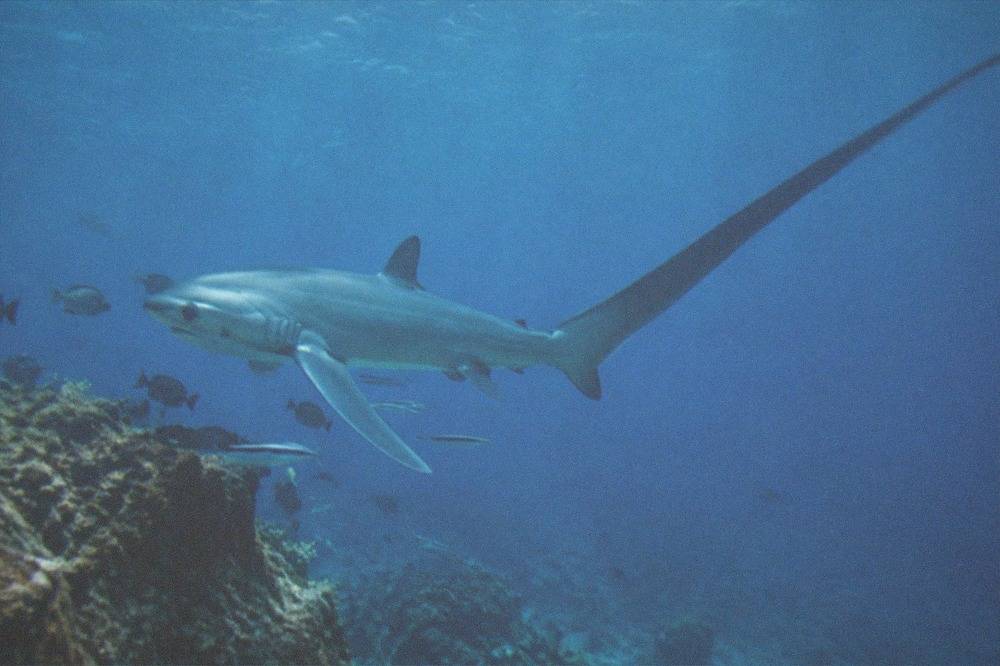
Reaching Malapascua takes commitment: a bus or van from Cebu City to Maya port, then a short bangka crossing to the island. The payoff is that everything on the island, from the beachfront dive shops to the evening restaurants, exists to serve divers. The Malapascua island guide covers accommodation areas and the Malapascua day trip page covers the logistics, though most shark divers stay at least two nights so the dawn dive is not a one-shot gamble.
The dedicated thresher shark trip is run by a PADI CDC dive center, and the operator's live listing carries the current price and availability:
Booking the dawn trip directly through the operator's listing is the way most visiting divers secure a spot, since the boats are small and the early departure leaves little room for same-day sign-ups.
When Is The Best Time To Dive In Cebu?
The best months for diving in Cebu are December to May, the dry season under PAGASA's national classification, with the calmest seas and best visibility typically from March to May; the rainy season from June to November brings rougher surface conditions and a small chance of typhoon disruption, though Moalboal's shore sardine run runs year-round and Malapascua's shark dives operate in every month.
Cebu's climate is tropical, not temperate. PAGASA, the national weather service, splits the Philippine year into a rainy season from June to November and a dry season from December to May, and its Mactan station normals for 1991 to 2020 record 1,685.0 mm of rain across 138 rain days, with a mean temperature of 28.1 C. October is the wettest month in the monthly series at 194.8 mm and April the driest at 48.1 mm. For diving, what matters most is surface conditions: the Visayan Sea gets choppy in the rainy months, and boats to Pescador or Kimud Shoal can be bumpy or occasionally cancelled.
| Period | Season | Diving conditions in Cebu |
|---|---|---|
| December to February | Cool dry | Calm seas, good visibility, comfortable air temps |
| March to May | Hot dry | Best visibility, warmest water, peak for combined trips |
| June to August | Rainy, typhoon season starts | Plankton blooms, some sites murkier, boats still run |
| September to November | Rainy, typhoon peak | Highest rain and swell risk, flexible plans advised |
Typhoons are the one wildcard. The season runs June to November with peak activity roughly July to October, and the Visayas carry a real landfall risk in November and December. Typhoon Tino in early November 2025 brought severe flooding to Cebu, though the Department of Tourism confirmed the core tourism zones of Cebu City and Mactan stayed open. The Cebu weather and typhoon season guide goes deeper, and the general best time to visit Cebu page balances diving weather against crowds and prices.
How Much Does Diving In Cebu Cost?
The fixed fees are small: P100 (about US$1.6) to swim or snorkel at Moalboal's Panagsama Beach under Ordinance 165-2021, roughly P100 (about US$1.6) in marine park fees for Pescador Island dives, about P1,800 (about US$29) to P2,000 (about US$32) per dive at Malapascua's thresher sites, and about P100 (about US$1.6) for foreign visitors or P30 (about US$0.5) for Filipino adults at Olango Wildlife Sanctuary. Dive packages and courses are priced by the operator, so check the live listing rather than a blog figure.
Local fees are the part of a Cebu dive trip you pay in pesos, on the beach or at the site, and they are modest. The table below gathers the verified ones. Product prices, the organized tours and courses sold through operators, are deliberately left to the live listings, because those change and the listing is the source of truth.
| Fee | Amount | Where it applies |
|---|---|---|
| Moalboal environmental user fee | P100 (about US$1.6) per person | Swim or snorkel at Panagsama (Ord. 165-2021) |
| Pescador Island marine park fee | about P100 (about US$1.6) per dive | Collected via dive shops |
| Malapascua thresher dive | about P1,800 (about US$29) to P2,000 (about US$32) per dive | Kimud Shoal dawn trips |
| Olango Wildlife Sanctuary entrance | about P100 (about US$1.6) foreigner, P30 (about US$0.5) Filipino adult | Bird sanctuary visit |
| Sumilon Bluewater day pass | about P1,600 (about US$25) to P2,000 (about US$32) net per person | Day use 8:00 AM to 3:00 PM with transfers |
| Kawasan Falls Level 1 entrance | about P200 (about US$3.2) per person | If pairing Moalboal with the falls |
Budget travelers should read the Cebu budget and costs guide for the wider picture, including food and transport, and the getting around Cebu page explains the bus and ferry systems that connect the dive towns.
Do You Need Certification To Dive In Cebu?
No, certification is not required to get in the water in Cebu: Moalboal's sardine run is a snorkeling experience open to anyone who can swim, and every major dive center on Panagsama and Malapascua offers discover scuba introductory dives with an instructor, no license needed. For the deeper signature dives, Pescador's walls and the Kimud Shoal shark dive, open-water certification or higher is the practical standard operators apply.
The discover scuba route is how most first-timers experience Moalboal. A briefing, some shallow-water skills and a guided reef dive with an instructor, all in one morning. It costs less than a certification course and, at Panagsama, the sardine school is shallow enough that an introductory dive can include it. Malapascua's shark dive is different: Kimud Shoal sits deep enough that operators want certified divers, and the dawn schedule assumes comfort in open water. The PADI 5 Star CDC center running the thresher trip is one of the island's established operators.
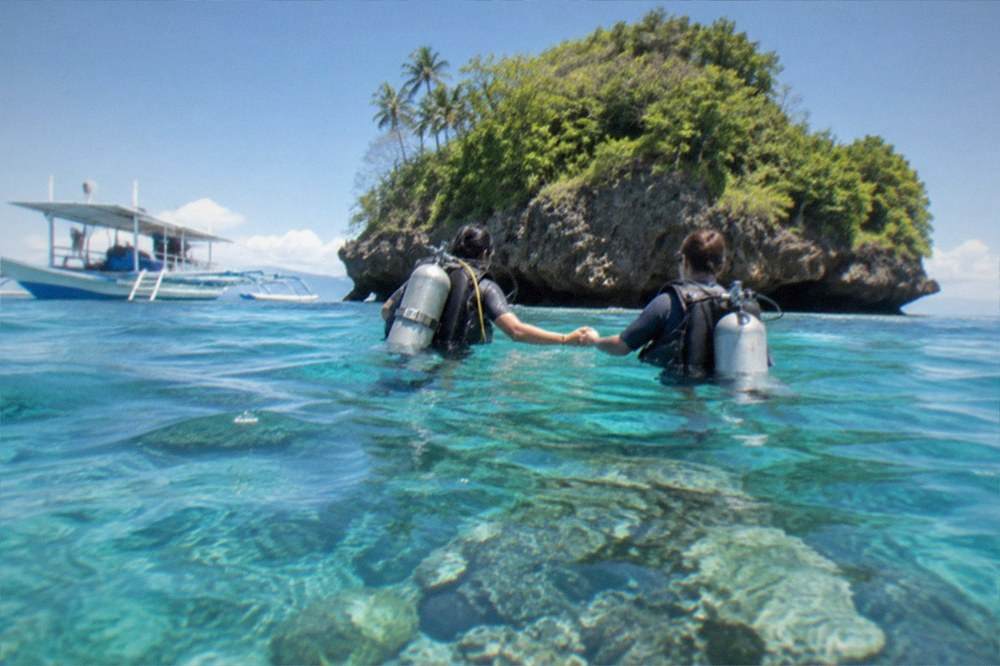
For a full certification, Cebu is a good place to learn. Warm water, cheap accommodation and plenty of shallow training sites around Mactan mean the open-water course can be done comfortably in three or four days. Snorkelers should not feel shortchanged either: the sardine run, Sumilon's lagoon and Olango's flats are all surface-level experiences.
What About Snorkeling And Island Sites Around Cebu?
Beyond the two dive towns, Cebu's best surface-level underwater experiences are Sumilon Island's marine sanctuary off Oslob, the Hilutungan and Nalusuan sanctuaries off Mactan with fees of roughly P150 (about US$2.4) to P300 (about US$4.8) per person, and Olango Island's wildlife sanctuary, a Ramsar wetland of 5,800 hectares designated in July 1994 where over 60 migratory bird species rest and feed from September to March.
Sumilon is the easiest add-on to an Oslob whale shark morning. The Bluewater resort's day pass covers boat transfers, sanctuary access and the famous sandbar, with day use running 8:00 AM to 3:00 PM. The Mactan sanctuaries are the airport-adjacent option, a short boat ride from Lapu-Lapu City, and they suit families and nervous snorkelers because the reefs are shallow and sheltered. Olango flips the script: the attraction is above the water, tens of thousands of shorebirds on the flats, but the boat trip and the shallow crossing make it a half-day of easy, flat-water snorkeling and birdwatching combined.
| Site | Experience level needed | Main draw | Access point |
|---|---|---|---|
| Sumilon Island | Snorkeler, any level | Sanctuary reef, lagoon, sandbar | Oslob / Sumilon |
| Hilutungan sanctuary | Snorkeler, any level | Shallow reef, fish clouds | Lapu-Lapu City |
| Nalusuan sanctuary | Snorkeler, any level | Small island reef, stilt decks | Lapu-Lapu City |
| Olango flats | Walker, any level | Migratory shorebirds, Ramsar site | Mactan pump boat |
| Panagsama sardine run | Snorkeler, any level | Year-round sardine school | Moalboal |
If you are pairing a diving day with the whale sharks at Oslob, the Oslob whale sharks guide covers the fees and the ethics debate. For the boat-hopping side of the Mactan scene, the Mactan guide lists the resort beaches and jump-off points.
Moalboal Or Malapascua: Which Cebu Dive Base Should You Choose?
Choose Moalboal if you want the easiest logistics, snorkeling access to the sardine run, and the option to combine diving with Kawasan Falls canyoneering in one trip; choose Malapascua if thresher sharks are the goal and you can commit two or more nights to a longer northern transfer. Moalboal suits mixed groups and short stays, while Malapascua rewards divers who plan the trip around the dawn shark dive.
The two towns serve different travelers. Moalboal is three hours from Cebu City on frequent buses, and its headline sight does not require a tank. A group where one person dives and three snorkel works perfectly there, and the canyoneering at Kawasan Falls is close enough to fill a non-diving day. Malapascua is a commitment: the transfer north takes most of a day door to door, and the shark dive means early starts. But nowhere else offers the threshers daily, and the island's pace, quiet beaches and dive-centric culture is a large part of its charm.
| Question | Moalboal | Malapascua |
|---|---|---|
| Headline sight | Sardine run from shore | Thresher sharks at Kimud Shoal |
| Best for | Snorkelers, mixed groups, short trips | Shark-focused divers |
| Travel from Cebu City | About 2.5 to 3.5 hours by bus | Long transfer plus boat crossing |
| Certification needed for the headline sight | No, snorkeling works | Yes, for the dawn dive |
| Nearby add-ons | Kawasan Falls, Oslob, Sumilon | Daanbantayan coast, Bantayan Island |
The reader debate on Oslob or Moalboal covers the southern pairing, and the Moalboal day trip page helps if you are fitting it into a tighter itinerary. For a first-time visitor building the whole route, the Cebu itinerary guide sequences the dive towns sensibly against the city and the south.
A practical note on the 2025 earthquake: the magnitude 6.9 event on 30 September 2025 struck offshore of Bogo in northern Cebu, and the Department of Tourism confirmed by late October that Bantayan and Malapascua were open with ports fully operational. Dive operations on Malapascua were running normally through the recovery period, though some San Remigio establishments awaited clearance. Check current conditions before the northern leg of a trip.
Between the two towns, most divers with a week do both, and the pairing is the point: Cebu is small enough that the sardine run and the thresher sharks fit in a single trip, which is exactly why this province, as Cebu Travel Guide covers throughout, has become the Philippines' default dive destination. For the non-diving days in between, the things to do in Cebu hub lists the full range of activities, from heritage sites in the city to the waterfalls of the south.
Common Questions About Diving In Cebu
Where is the best diving in Cebu?
The best diving in Cebu splits between Moalboal in the south, home of the year-round sardine run at Panagsama Beach and the coral walls of Pescador Island, and Malapascua in the north, the only place with reliable daily thresher shark encounters at Kimud Shoal. The Mactan sanctuaries near the airport suit beginners and short stays.
Can you snorkel the Moalboal sardine run without diving?
Yes. The sardine school sits a few metres from shore at Panagsama Beach, and the municipal tourism office confirms it is reachable by swimming. A P100 (about US$1.6) environmental user fee applies under the local ordinance, paid at the beach kiosk, and the best conditions are early morning between 7 and 9.
Where do you see thresher sharks in Cebu?
Thresher sharks are seen off Malapascua island at the northern tip of Cebu, mostly at Kimud Shoal in recent years. Dive boats leave before dawn because the sharks visit the cleaning stations in the early morning, and dives run roughly P1,800 (about US$29) to P2,000 (about US$32) through the island's dive centers.
When is diving season in Cebu?
Diving runs year-round in Cebu, but the dry season from December to May brings the calmest seas and best visibility, with March to May the peak. The rainy season from June to November carries a typhoon risk, highest roughly July to October, so keep plans flexible in those months.
Do you need a dive certification for Cebu's dive sites?
Not for the headline snorkeling experiences: the sardine run and the Mactan sanctuaries need nothing but a mask and the local fee. For Pescador's walls and the Kimud Shoal shark dive, open-water certification or higher is the practical standard operators apply.
How many days do you need for diving in Cebu?
Two to three days per town is the comfortable minimum: two nights in Moalboal covers the sardine run and a Pescador dive, and two or three nights in Malapascua gives more than one shot at the dawn shark dive, since sightings are very likely but weather can cancel a single morning.