Accessible Travel In Cebu
Cebu, the island province in the Central Visayas region of the Philippines, rewards slow, planned travel, and this guide sets out what is verified about getting around it comfortably with mobility, sensory or medical considerations.
Short answer
Cebu is easiest to travel with accessibility needs when you base yourself in Cebu City or Mactan, use Grab and private transfers instead of jeepneys, book tours that name their support level on the live listing, and travel in the dry season, December to May.
Cebu, the island province in the Central Visayas region of the Philippines, is a destination of two very different textures: a dense, busy metro core spread across Cebu City, Mandaue and Lapu-Lapu on Mactan Island, and a ring of small towns, waterfalls and islands where surfaces, boats and stairs set the pace. This guide is for travelers who plan around mobility limits, chronic illness, sensory needs or medical equipment, and it sticks to what the official and operator sources actually say. Nothing here pretends the province is fully accessible; the point is to show where planning buys you the most comfort per hour of effort.
The honest starting point is that the Philippines has no equivalent of the ADA, and Cebu's public realm reflects that. Sidewalks in the cities are narrow, frequently interrupted and rarely level. That does not make the trip impossible; it changes the toolkit. Ride-hailing, private transfers, carefully chosen hotel locations and tours that spell out their physical demands on the live listing do most of the heavy lifting. The rest is timing: the dry season, December to May, means fewer flooded streets and fewer cancelled boat crossings.
Is Cebu Realistic For Travelers With Limited Mobility?
Yes, with a clear strategy: stay in Cebu City or on Mactan, use Grab or private cars for essentially every city journey, and treat the heritage core, the highlands and the island trips as separate, individually planned excursions rather than a continuous route. Cebu City, Lapu-Lapu and Mandaue are highly urbanized cities independent of the province, and they hold most of the region's modern hotels, malls and medical facilities, which is where an accessible trip is built.
The distinction between the metro core and the rest of the island matters more here than in most destinations. Within Metro Cebu, a traveler who never steps into a jeepney can still reach malls, museums, restaurants and the airport smoothly. Outside it, the transport layer thins out fast: southbound buses from the Cebu South Bus Terminal run to Oslob in roughly 3.5 to 4.5 hours and to Moalboal in roughly 2.5 to 3.5 hours, and the last leg to a waterfall or a whale shark briefing site is usually a habal-habal, a motorcycle taxi, which is not a realistic option for anyone with serious mobility limits.
That last-mile problem is the single biggest accessibility filter in Cebu, and the fix is almost always the same: book a door-to-door private tour or a private transfer rather than assembling the trip from public pieces. A tour with hotel pickup converts a five-leg journey into one leg. The trade-off is cost, and the comfort is worth budgeting for; the Cebu budget and costs guide covers the price structure of the province in detail.
For the city itself, the getting around Cebu guide maps the full transport stack. This page focuses on the subset that works for restricted mobility.
How Accessible Is Arrival At Mactan-Cebu International Airport?
Arrival at Mactan-Cebu International Airport is one of the more manageable parts of an accessible Cebu trip: the airport has two passenger terminals, T1 for domestic flights and T2, opened in 2018, for international flights, and the terminals are adjacent and connected by a walkway, so connections do not involve a shuttle between buildings. Grab operates with designated pickup zones outside arrivals at both terminals, and MyBus links the airport with SM City Cebu in the city center.
The airport's own transport guide confirms the MyBus service pattern: from the airport to SM City Cebu roughly 7 AM to 10 PM, and in the reverse direction roughly 6 AM to 9 PM, with fares in the P30 (about US$0.5) to P50 (about US$0.8) range depending on destination, and the SM City Cebu leg priced at P50 (about US$0.8). For a traveler with luggage, a wheelchair or fatigue, the bus is a mixed proposition: it is air-conditioned and cheap, but boarding is step-entry and stops are not always close to a hotel door. Grab is the practical default, with the app showing an upfront price before you commit.
Taxis queue at arrivals in two tiers: yellow airport-accredited cars with a flag-down around P70 (about US$1.1) plus P4 (about US$0.1) per 300 meters, and white metered city taxis with a flag-down around P40 (about US$0.6) plus roughly P14 (about US$0.2) per kilometer. Neither tier guarantees a wheelchair-accessible vehicle, and if you travel with a folding wheelchair, state it in the ride notes or have the hotel arrange the car.
| Airport-to-city option | Verified fare or rate | Notes for accessible travel |
|---|---|---|
| MyBus to SM City Cebu | P50 (about US$0.8) | Air-conditioned, step-entry boarding, runs roughly every 20 minutes on the main route |
| Yellow airport taxi | Flag-down P70 (about US$1.1), then P4 (about US$0.1) per 300 m | Airport-accredited queue at arrivals |
| White metered taxi | Flag-down P40 (about US$0.6), about P14 (about US$0.2) per km | Meter required; confirm the meter starts |
| Grab | App shows upfront pricing before booking | Designated pickup zones outside arrivals at both terminals |
One airport detail worth knowing: the passenger service charge is bundled into the airline ticket, so there is no separate terminal-fee queue to negotiate at Cebu's privately operated airport. The Cebu airport guide covers terminals, transfers and the CEB Connects connection program in full.
Which Cebu City Transport Works Best For Restricted Mobility?
For city travel with mobility limits, Grab and hotel-arranged private cars are the only modes that consistently deliver door-to-door comfort; jeepneys are step-entry, crowded and unsuitable, while the new Cebu Bus Rapid Transit, running partial operations since 13 March 2026 on a single Il Corso to IT Park route, offers air-conditioned buses but stops short of a full accessible network.
The jeepney is the emblem of Cebu street life and, for this reader, mostly a spectator sport. Boarding is a high step up from the road, seating is a tight bench, and the traditional fare structure, a minimum of P14 (about US$0.2) for the first 4 kilometers on traditional units after the September 2026 fare adjustment, with modern units at P17 (about US$0.3), tells you nothing about comfort. The Department of Transportation approved that adjustment; whether the new rates apply in Region 7 was not confirmed in the source, so check the posted fare on the vehicle.
The CBRT is the interesting middle case. Partial operations began on 13 March 2026 with 17 buses on a route linking Il Corso on the South Road Properties to Cebu IT Park, using a short dedicated corridor near the Capitol and ordinary traffic elsewhere. Free rides were offered at launch, with reports of a distance-based fare structure, a P18 (about US$0.3) minimum for the first 5 kilometers, being introduced alongside. For an accessible traveler it is worth trying with a companion on a non-critical journey, but it is not yet a network you can build a day around; the full Phase 1 system is not expected before 2027.
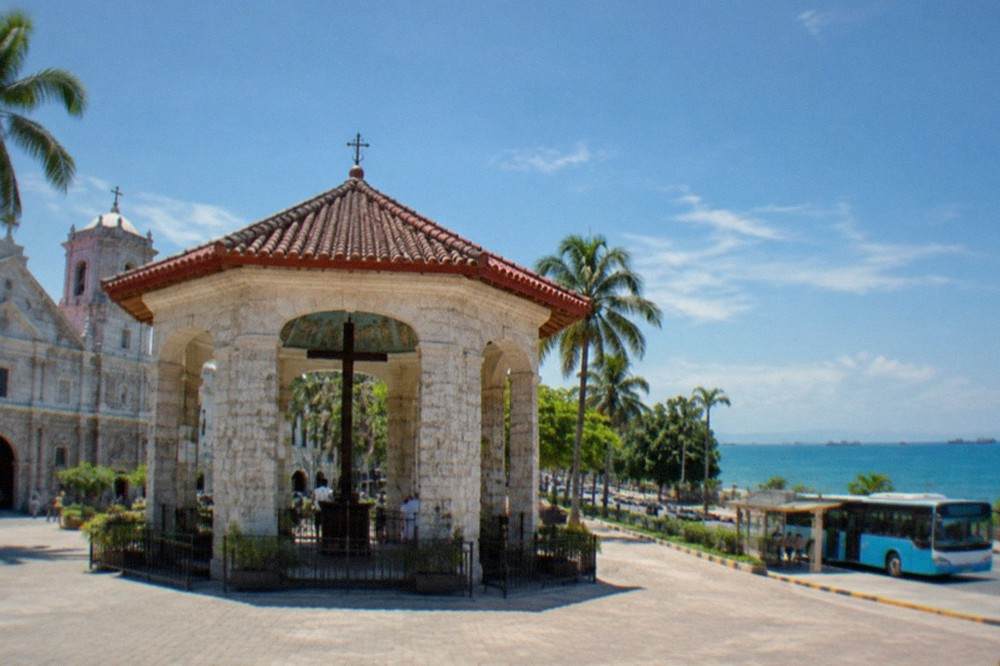
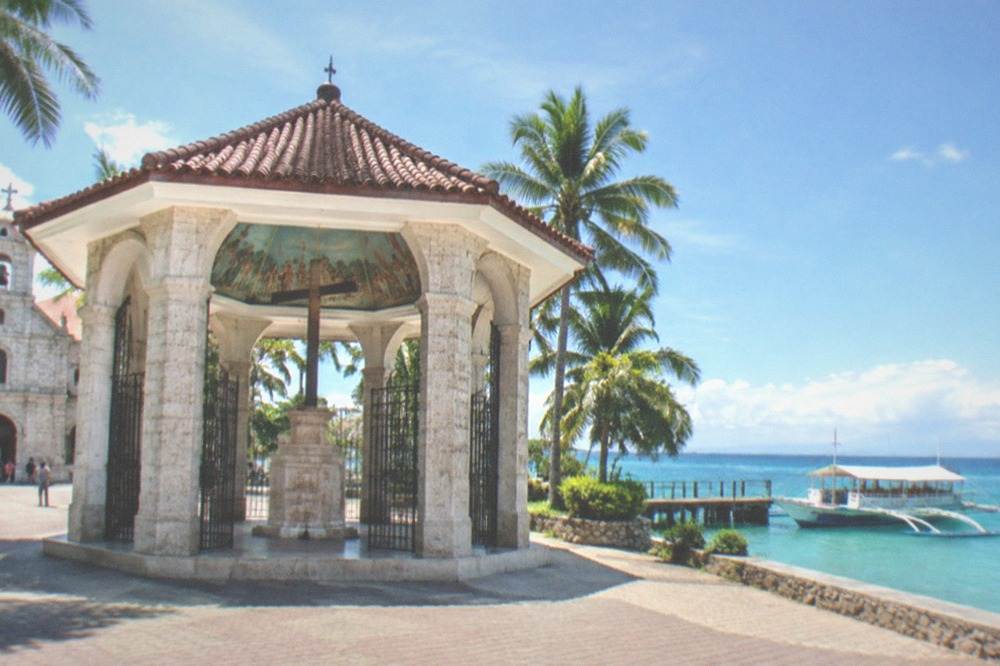
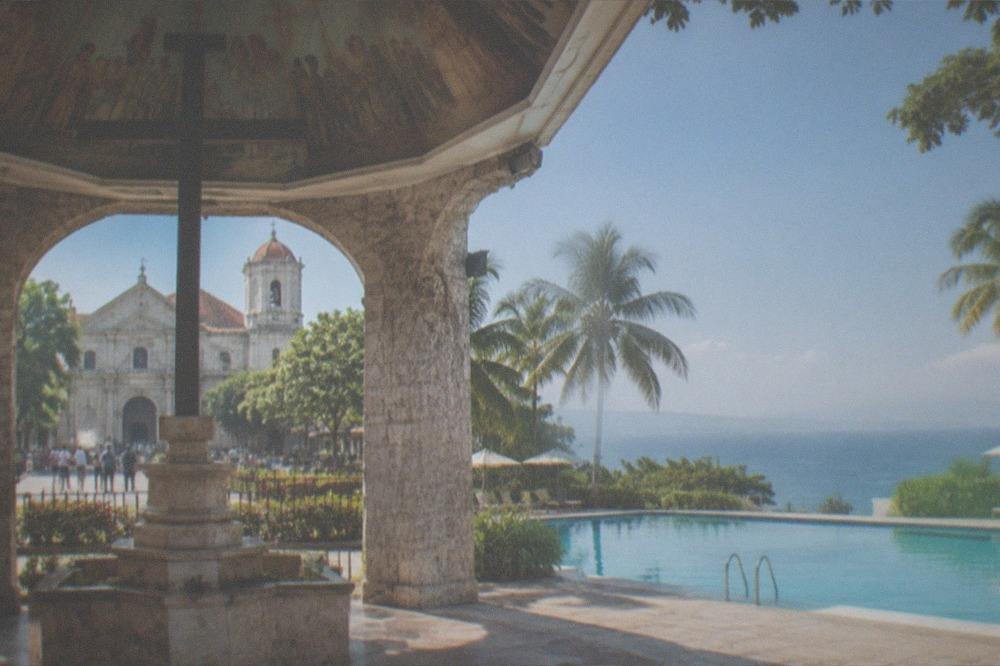
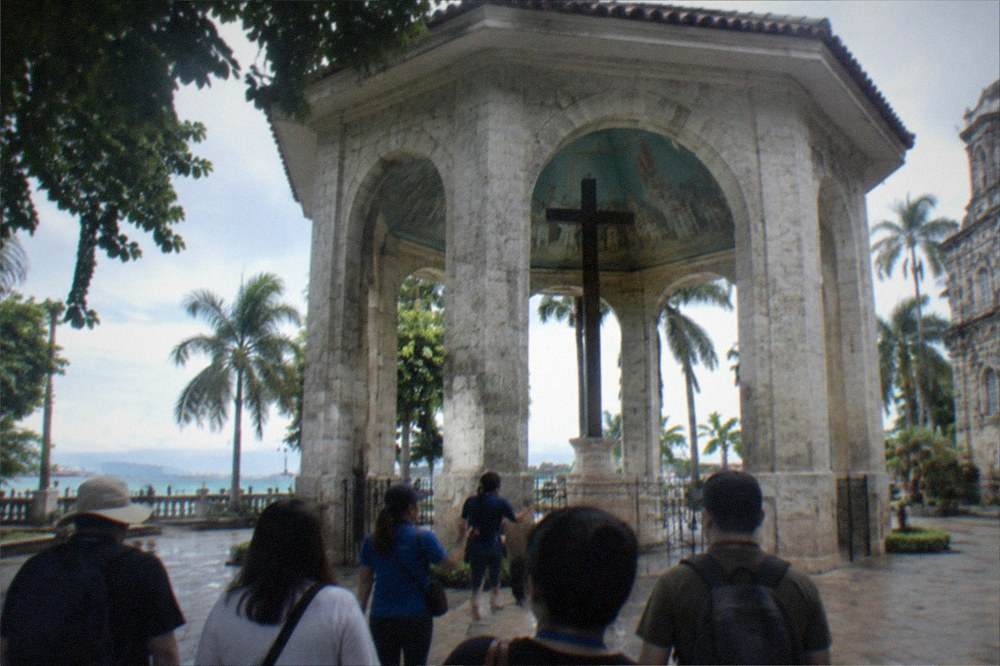
The practical hierarchy for the city, then, is simple. Grab for everything ordinary. A hotel-arranged car or a private transfer for anything involving equipment, a wheelchair, oxygen or a folding walker. Walking only in the pockets that suit you, and the heritage quarter around Magellan's Cross and the Basilica is compact enough that a car can drop you close to each site.
Are Cebu's Heritage Sites Manageable At A Slow Pace?
The colonial core of Cebu City is one of the most manageable sightseeing clusters in the Visayas: Magellan's Cross is free to visit, Fort San Pedro runs a modest municipal fee schedule with concession rates, and the sites sit within a few minutes' drive of each other, so a private car can move you between them with minimal street time, though interiors and exhibits involve steps, uneven stone and tropical heat rather than ramps.
Fort San Pedro, the oldest triangular bastion fort in the country, dates its present stone structure to 1738, with work first started in 1565 under Legazpi. The fee schedule is current: the city updated Fort San Pedro's rates in 2026, leaving entrance at P50 (about US$0.8) regular and P40 (about US$0.6) for students and seniors. Hours reported by local guides run 8 AM to 7 PM daily. The fort's lawn and outer paths are the easy part; the interior rooms involve thresholds and stone floors.
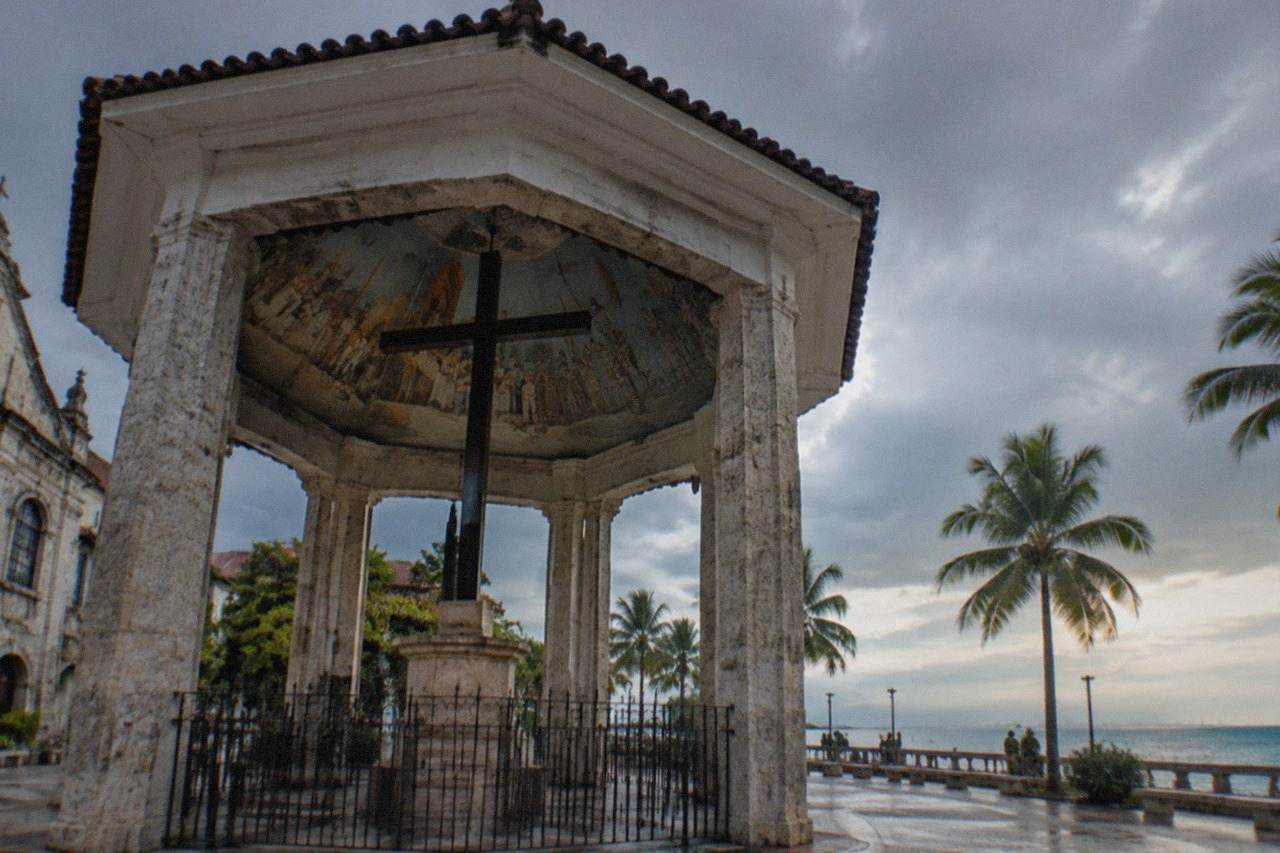
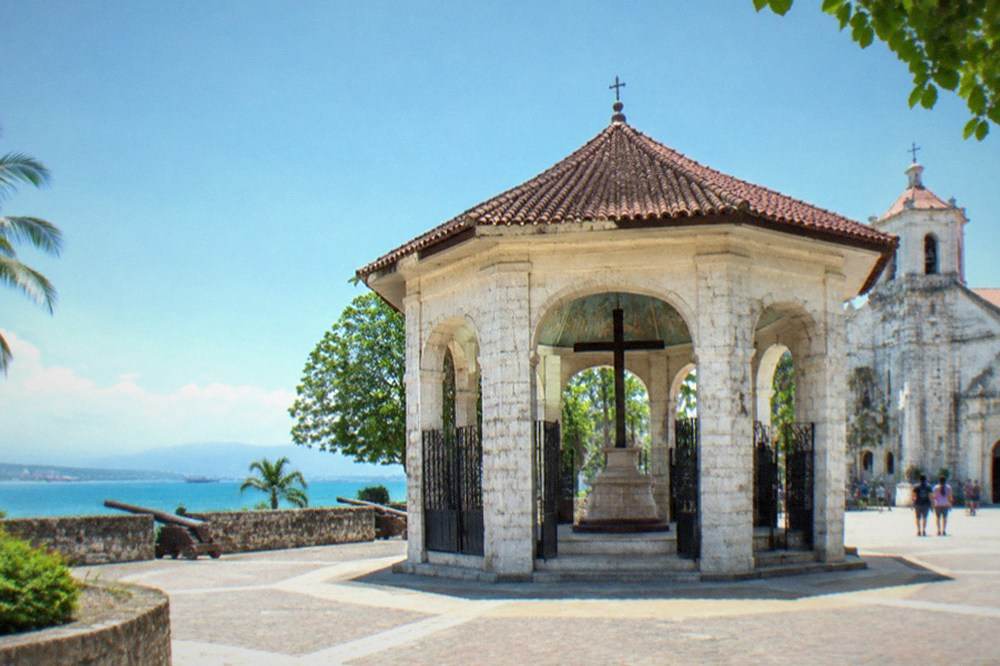
Magellan's Cross, the pavilion housing the cross planted in April 1521, is free to enter and is a short walk or drive from the fort. The Basilica Minore del Santo Niño next door, founded on 28 April 1565 on the site where the Santo Niño image was found, restored its pre-pandemic mass schedule in late 2024. Note one piece of recent history that matters for anyone sensitive to building safety: the 15 October 2013 Bohol earthquake collapsed the Basilica's belfry, and the 30 September 2025 magnitude 6.9 earthquake off northern Cebu prompted structural inspections at several city museums, including Casa Gorordo, Museo Sugbo and the Yap-Sandiego Ancestral House, in early October 2025. Museo Sugbo reopened on 29 August 2025 after nearly two years, with a P50 (about US$0.8) general fee and P25 (about US$0.4) for students, open Monday to Friday.
For the highlands sites above the city, the calculus changes. Tops Lookout is open 24 hours with a P100 (about US$1.6) entry fee, P70 (about US$1.1) for seniors and persons with disabilities with ID, and children under 2 free, and its own operator site lists a shuttle-plus-entry package from IT Park at P200 (about US$3.2). The shuttle removes the winding-drive problem, but the lookout decks themselves involve slopes and steps. Temple of Leah and Sirao Flower Garden, roughly P120 (about US$1.9) to P150 (about US$2.4) and about P100 (about US$1.6) respectively per recent reports, sit along the same highlands road, and Temple of Leah shortened its opening hours from April 2026, so confirm before you commit the drive.
| Cebu City and highlands site | Entry fee (verified or reported) | Access notes |
|---|---|---|
| Magellan's Cross | Free | Small pavilion, level floor, very short visit |
| Fort San Pedro | P50 (about US$0.8) regular, P40 (about US$0.6) students/seniors | Level lawns; interior rooms have thresholds and stone floors |
| Basilica del Santo Niño | Free entry; museum fee not verified | Crowded at mass times; steps at entrances |
| Museo Sugbo | P50 (about US$0.8) general, P25 (about US$0.4) students | Reopened 29 Aug 2025; Monday to Friday only |
| Tops Lookout | P100 (about US$1.6), seniors/PWD P70 (about US$1.1) | Open 24 hours; shuttle plus entry P200 (about US$3.2) from IT Park |
| Temple of Leah | About P120 (about US$1.9) weekday, P150 (about US$2.4) weekend | Hours shortened from April 2026; stairs on site |
The senior and PWD discounts at Tops point to something broader: Philippine law grants seniors and registered persons with disability discounts on many admission fees, so carry an ID and ask at the ticket window even where a discount is not posted.
Can You Do Cebu's Famous Trips, Whale Sharks And Waterfalls, With Support Needs?
The headline south-Cebu experiences are possible with support needs, but only through private, door-to-door tours: Oslob's whale shark interaction runs a two-tier municipal fee with boat and guide included, Kawasan Falls sells a simple walk-in swimming access at its main basin, and both involve boat boardings, briefing areas and natural terrain that no public-transport version of the trip makes easier.
Oslob's program is municipal-run and rule-bound, which cuts both ways. The interaction runs roughly 6 AM to noon, with a mandatory briefing, a minimum distance of about 4 meters from the animals, no sunscreen, no touching and no flash, and a limited session in the water. The fee structure, P1,000 (about US$15.9) for foreign visitors and P500 (about US$8.0) for Filipinos under the rates reverted in March 2025, applies to the standard boat-based watching and snorkeling. For a traveler who cannot swim or cannot sustain a long water session, watching from the boat is the realistic mode. Sightings are genuinely not guaranteed: in late May 2026 the whale sharks were absent from the Tan-awan interaction area for roughly four days when the plankton moved, and the local government said operations follow the sightings.
The join-in day tour above handles the 3 AM-adjacent departure and the long drive, and its listing carries the current price and the itinerary, including the Tumalog Falls stop, where the entrance is about P50 (about US$0.8) and the access path from the road is steep and often wet. That last sentence is the honest accessibility summary of every waterfall in Cebu.
Kawasan Falls in Badian is the harder case. Level 1, the main basin, is reachable by a walk-in path and costs about P200 (about US$3.2) for swimming access, and the site stayed open through a phased rehabilitation program that began in June 2026. But cliff jumping is now banned at the main basin, life jackets are mandatory, and the full canyoneering course with a Badian-accredited guide involves scrambling, jumps and swims that put it out of reach for most mobility-restricted travelers. The Alegria canyoneering route has been suspended through 2025 and 2026, so only the Badian route runs.
If waterfalls are on the list but canyoneering is not, the Level 1 walk-in at Kawasan, reached by private car from Moalboal in under an hour, is the version to price with a driver rather than a tour. The rest of the planning pages sit on Cebu Travel Guide.
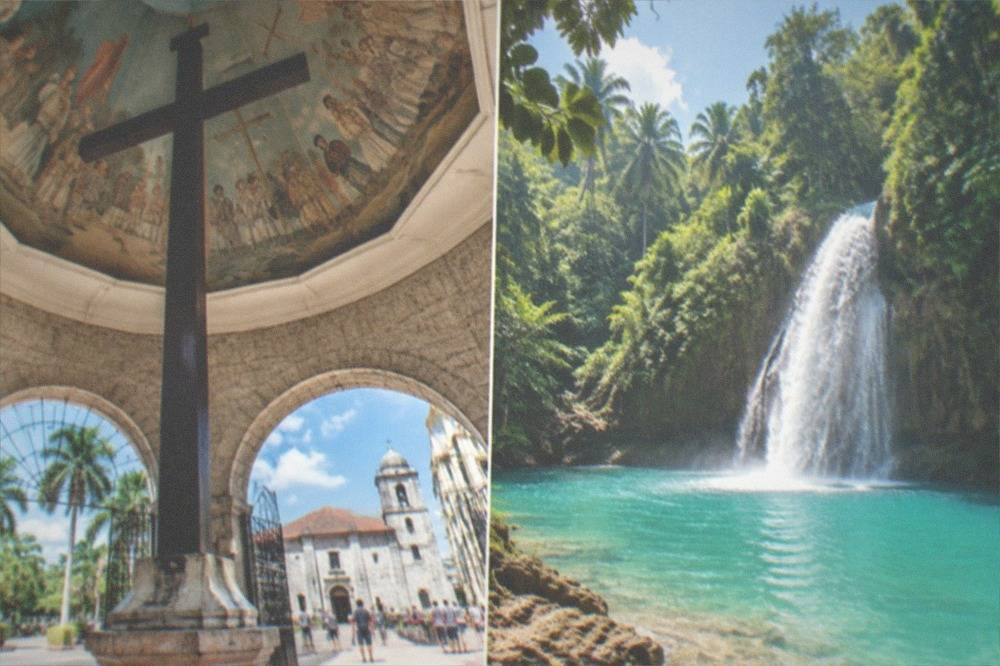
Moalboal's sardine run is, by contrast, one of the most accessible marine experiences in the province. The sardine school is permanent, resident year-round at the reef wall off Panagsama Beach, roughly 20 to 30 meters from shore, and the municipal tourism site confirms shore access. The environmental user fee to swim or snorkel is P100 (about US$1.6) under the 2021 ordinance. A traveler who can manage a short shore entry with a float vest and a guide can see one of the Philippines' great marine spectacles without a boat boarding at all, which makes it a genuine highlight for this itinerary.
What About Island Hopping And Ferries For Accessible Travelers?
Ferry travel from Cebu is workable with planning: the fastcraft to Bohol departs Pier 1 and takes about two hours in two seat classes, and business class on a fastcraft is the most comfortable public crossing available, while island-hopping banka boats involve step-down boardings over water that are the single riskiest transfer in a Cebu trip.
The OceanJet Cebu to Tagbilaran fares after the September 2026 fuel surcharge are P960 (about US$15.3) tourist class and P1,440 (about US$23) business class, and a slower Lite Ferries RORO alternative runs at about P400 (about US$6.4) to P520 (about US$8.3). The banka, the outrigger boat that runs every island-hopping trip in the Visayas, has no accessible boarding standard. Boarding typically means stepping from a beach or a pontoon onto a moving hull, then down onto a bench. If your trip depends on island hopping, book operators with larger boats and a crew briefed in advance, and treat the boarding as the decision point rather than the destination. The Lapu-Lapu environmental fee for island hopping is P100 (about US$1.6) for foreign tourists, cut to P20 (about US$0.3) for local tourists by a July 2025 amendment, and the marine sanctuary fees at Hilutungan and Nalusuan run roughly P150 (about US$2.4) to P300 (about US$4.8) each.
For the Mactan island-hopping trips specifically, a private boat charter through your resort is the arrangement that gives you a slower boarding, a shaded deck and a schedule you control. The operator's live listing for any group tour states the boat type and the itinerary.
The Bohol day trip is the one long crossing worth the effort for many travelers. The Cebu to Bohol ferry guide has the full schedule picture; the essentials are that OceanJet runs about 13 sailings a day from roughly 05:10 to 17:40, that Lite Ferries offers a slower RORO option at about P400 (about US$6.4) to P520 (about US$8.3), and that the terminal fee is about P25 (about US$0.4). A guided Bohol countryside tour from Cebu, with lunch on the Loboc River cruise, converts the whole day into a single managed booking.
| Crossing or trip | Fare (verified or reported) | Access considerations |
|---|---|---|
| OceanJet Cebu to Tagbilaran, tourist | P960 (about US$15.3) | About 2 hours; steps to board; terminal fee about P25 (about US$0.4) |
| OceanJet Cebu to Tagbilaran, business | P1,440 (about US$23) | Wider seats, quieter cabin, same boarding |
| Lite Ferries RORO | About P400 (about US$6.4) to P520 (about US$8.3) | About 4 hours; drive-on deck for vehicles |
| Mactan island hopping, environmental fee | P100 (about US$1.6) foreign, P20 (about US$0.3) local | Banka boarding over water is the hard part |
| Hilutungan or Nalusuan sanctuary fee | About P150 (about US$2.4) to P300 (about US$4.8) | Paid on top of the boat fee |
Where Should You Stay In Cebu For Easier Logistics?
For accessible logistics, stay either in central Cebu City near the Ayala or IT Park area, or on Mactan at a resort with its own beach and transfer services: the city puts hospitals, malls and the heritage core within a short Grab ride, while Mactan puts the airport, the dive boats and flat resort grounds within one property, and the choice between them is really a choice between sightseeing and resting.
The Mactan option deserves more weight than first-time visitors give it. The island holds the airport, the major beach resorts and the island-hopping departure points, and a resort with its own grounds answers the daily question of where to walk. The trade-off is that every city sightseeing day becomes a bridge crossing; the CCLEX tollway, opened in April 2022, carries a Class 1 car toll of P107 (about US$1.7) each way, and the older Marcelo Fernan and Osmeña bridges are toll-free but slower.
The where to stay in Cebu question is covered from the general traveler's side elsewhere on this site; for this reader the deciding factors are the hotel's own accessibility features, which must be confirmed with the property directly before booking, and the drive time to the places you actually intend to visit. A hotel that confirms a roll-in shower, a lift and an airport transfer has done more for your trip than any star rating.
One medical note that belongs in any honest Cebu accessibility guide: the province's main hospitals are concentrated in Cebu City, which is a genuine argument for the city base if your condition could need attention. Bring prescriptions in original packaging, and note that the Philippines runs on 230 V, 60 Hz with plug types A, B and C, so bring adapters for any medical device and check its voltage rating.
When Is The Best Time Of Year For An Accessible Cebu Trip?
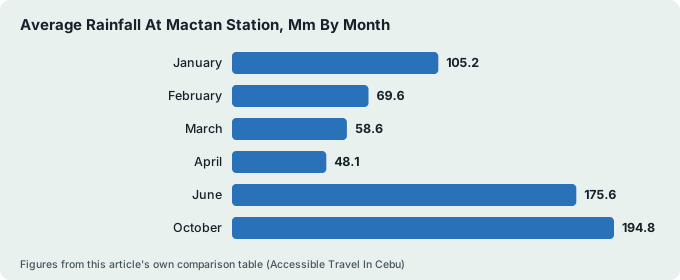
The dry season, December to May, is unambiguously the best window for accessible travel in Cebu: PAGASA's classification puts the rainy season from June to November with typhoon risk peaking roughly July to October, and the Mactan station's 1991-2020 normals show the driest months as March at 58.6 mm and April at 48.1 mm of rain, against October's 194.8 mm, which in practice means dry pavement, calm seas and fewer cancelled boats.
The rainfall table tells the story month by month. January through April are the reliable months; the totals climb through June and peak in October before easing. For a traveler whose risk tolerance is lower than average, the difference is not just comfort, it is whether the Kawasan path is slippery, whether the whale shark briefing area is a mud yard and whether the fastcraft sails at all, since coast guard typhoon suspensions are a real seasonal possibility.
| Month | Average rainfall at Mactan station, mm | What it means for planning |
|---|---|---|
| January | 105.2 | Dry season; Sinulog crowds in the third week |
| February | 69.6 | Comfortable, low rain |
| March | 58.6 | Excellent; hot dry season building |
| April | 48.1 | Driest month in the series |
| June | 175.6 | Rainy season begins |
| October | 194.8 | Wettest month; typhoon season peak area |
The best time to visit Cebu and the weather and typhoon season guide carry the full climate picture, including the November 2025 Typhoon Tino flooding and the DOT's confirmation that the core tourism zones stayed open.
One timing exception: if the Sinulog Festival is itself the reason for the trip, the third Sunday of January, 17 January 2027 with the Cebu City Sports Center as the main venue, is the date, and it comes with the year's biggest crowds. A festival that size is a sensory-intensive event, so plan a hotel within Grab range and treat the parade as a seated, booked-stand experience rather than a street-level one. The Sinulog festival guide has the schedule detail.
How Do You Book Accessible Tours In Cebu Without Guessing?
Read the physical demands section of the operator's live listing before booking anything, ask the operator in writing about boarding, walking distance, stairs and rest stops, and prefer private or small-group tours over join-in ones, because in Cebu the difference between an accessible day and an exhausting one is usually the guide-to-guest ratio and whether the vehicle picks you up at your hotel door.
The listings on this site state each product's duration, group format and inclusions, and those fields are the accessibility screen. A 3-hour small-group city tour is a different proposition from a 17-hour two-island day trip, whatever your mobility level. Where a listing does not answer a question, message the operator before paying; reputable Cebu operators answer direct questions about boat type and walking distance, and a slow answer is itself information.
For food and market experiences, a walking tour's pace and stop count matter more than its distance. The market food walk below is a walking format, and its listing carries the current meeting point and route.
For travelers who want a guided city introduction at minimum physical cost, the free walking tours listed on this site, including the GuruWalk tip-based Essential Cebu walk with 10 stops, let you set your own pace and reward accordingly; the same logic applies to the jeepney-ride walking tour, which builds the city's signature transport into the route.
A final booking rule for this province: anything involving a boat, a waterfall or a pre-dawn departure should be booked with free cancellation where the listing offers it, because weather, sightings and your own energy on the day are the three things no operator controls.
What Should You Pack And Prepare For An Accessible Cebu Trip?
Prepare four things before you fly: your eTravel registration within 72 hours of arrival, which is free on the official government site only, your passport valid for at least six months with an onward ticket, copies of prescriptions in original packaging, and a written day plan that pairs each activity with its transport, because the entry formalities are simple for visa-free nationals, who receive 30 days in the Philippines, and the logistics are where an accessible trip succeeds or fails.
The entry facts are favorable. Nationals of the United States, the United Kingdom, Australia and every EU state receive an initial 30-day visa-free stay for tourism, extendable through the Bureau of Immigration. Foreign tourists staying under a year are exempt from the Philippine travel tax on departure; that tax falls on Filipinos and residents, not on visitors. The eTravel QR code is generated free on the official site, and the Bureau of Immigration has repeatedly warned about fake lookalike sites that charge fees, so type the government address yourself. The Philippines visa and eTravel guide covers the whole process.
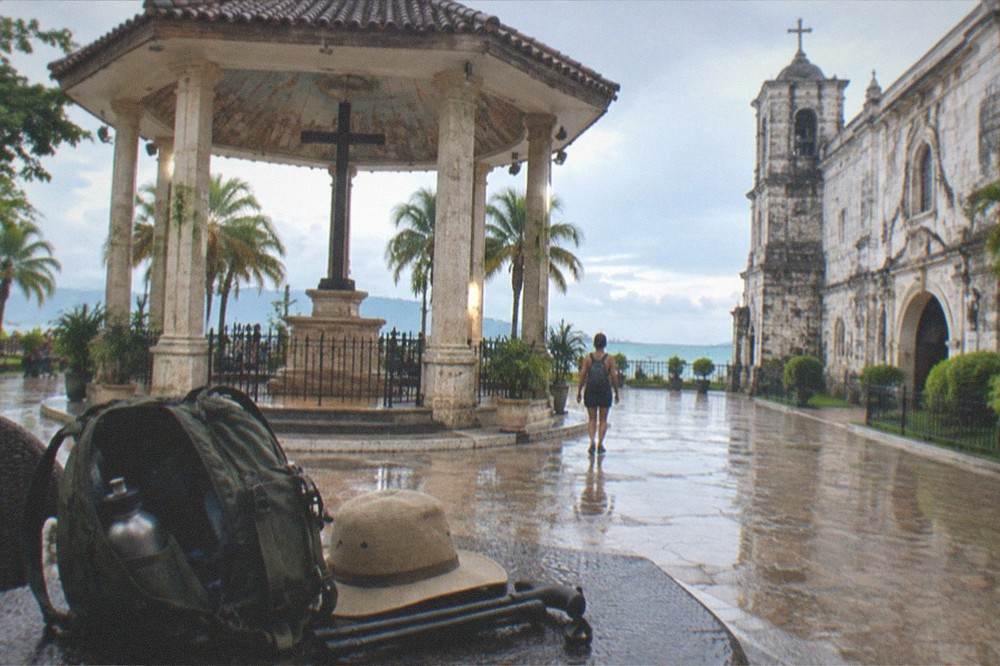
Packing for the tropical climate is its own accessibility layer. The dry season still runs hot, with the Mactan normals showing a mean maximum of 31.3 degrees Celsius, so heat management, a wide-brim hat, electrolytes, a refillable bottle and a midday rest block in the itinerary, does more for most travelers than any piece of equipment. A light rain shell earns its space even in February.
Safety-wise, Cebu sits under the standard country-level advisories, a Level 2 exercise-increased-caution notice from the United States and an exercise-a-high-degree-of-caution notice from Australia, with no Cebu-specific restriction in either, and the UK advisory names only Mindanao and the Sulu archipelago. The Cebu safety guide has the detail, and the Cebu family travel guide shares much of the same slow-travel logic for anyone pacing a trip around the least resilient member of a group.
Common Questions About Accessible Travel In Cebu
Is Cebu wheelchair accessible?
Cebu is not comprehensively wheelchair accessible: city sidewalks are uneven and step-heavy, jeepneys require a high step up, and island boats have no accessible boarding standard. A wheelchair user can still travel the province well by basing in a hotel with confirmed accessible rooms, using Grab or private transfers for every city journey, and choosing tours that state their physical demands on the live listing.
Can you visit Oslob whale sharks with limited mobility?
Yes, in watching mode. The Oslob fee of P1,000 (about US$15.9) for foreign visitors, P500 (about US$8.0) for Filipinos, covers boat-based watching with guide included, and viewing from the boat is a standard way to do the activity. The briefing area, the shore and the boat boarding all involve natural terrain, so a private tour with a driver who assists at each transfer is the workable arrangement.
Are Cebu's sidewalks and pedestrian crossings safe for slow walkers?
They are usable but require attention. Sidewalks in Cebu City are frequently interrupted, uneven and occupied by vendors, and crossings rarely give generous timing. Slow walkers do best crossing with a companion, using mall-linked routes where possible, and treating the heritage quarter as a series of short segments connected by car rather than one continuous walk.
Is Grab available for accessible travel in Cebu?
Grab operates across Cebu City, Mandaue and Lapu-Lapu with designated pickup zones at both airport terminals, and the app shows an upfront price before booking. Standard Grab cars are sedans, not wheelchair-accessible vans, so travelers with a folding wheelchair should note it in the booking or have the hotel arrange a suitable private vehicle.
What is the most accessible beach experience in Cebu?
A Mactan resort with its own beach is the most accessible shoreline option, since the property controls the path from room to sand. For a marine experience without a boat boarding, Moalboal's sardine run sits roughly 20 to 30 meters from shore at Panagsama Beach, reachable by a short shore entry with a float vest, with a P100 (about US$1.6) environmental user fee.
Do seniors and persons with disabilities get discounts in Cebu?
Registered persons with disabilities and seniors receive discounts on many admission fees under Philippine law, and some sites publish them, such as Tops Lookout at P70 (about US$1.1) for seniors and PWDs against the P100 (about US$1.6) regular rate. Carry an ID and ask at every ticket window, since not all sites post the discounted rate.
The pattern across every section of this guide is the same: Cebu rewards the traveler who books the vehicle, the boat and the guide in advance, travels in the dry months, and treats each excursion as its own planned operation. That is not a compromise version of the trip; for many visitors it is simply the best way to see the province.