Cebu Vs Boracay
This guide compares them honestly, using Cebu's figures on one side and plain, checkable character on the other.
Short answer
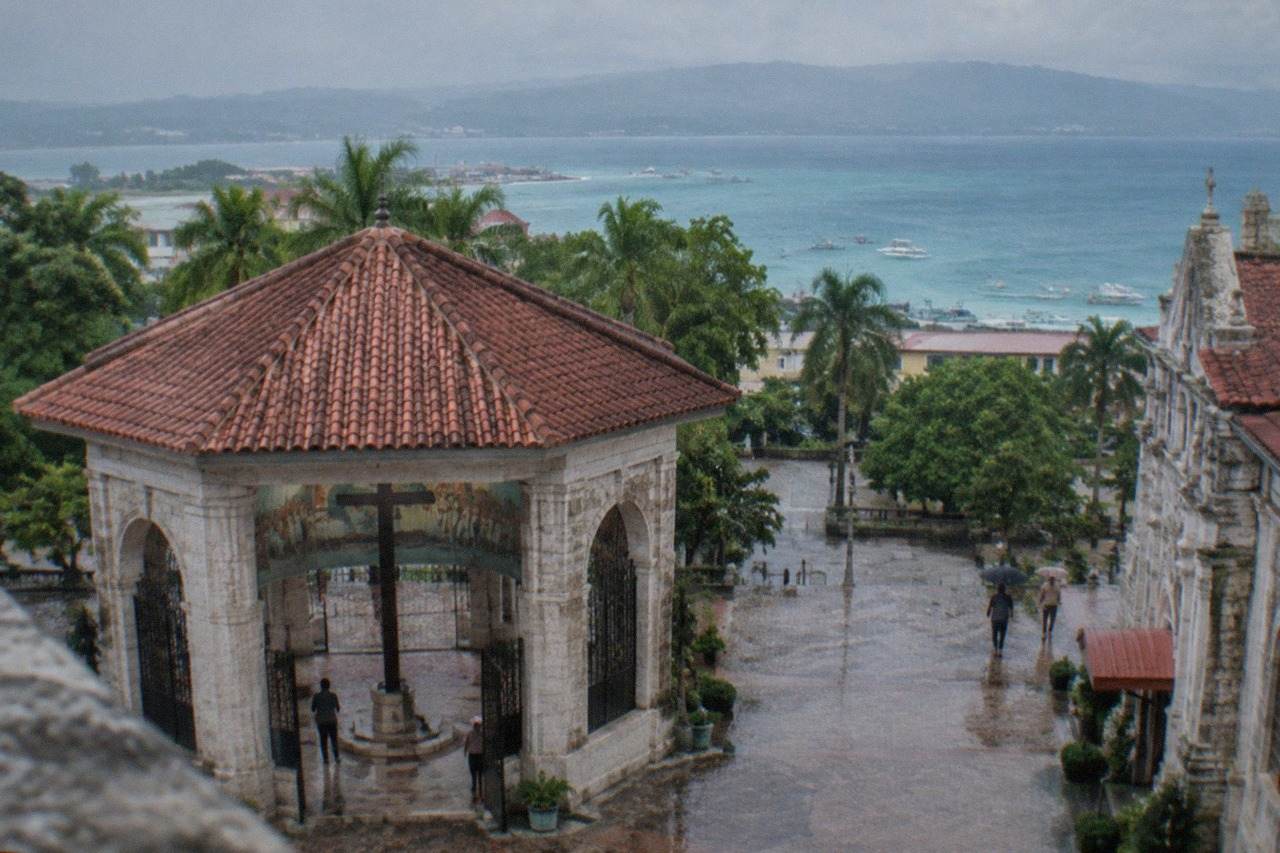
Choose Cebu for variety: heritage sites in the oldest city in the Philippines, canyoneering at Kawasan Falls, whale sharks in Oslob and diving at Malapascua, all from one base. Choose Boracay when the beach itself is the whole trip and you want everything walkable. Cebu rewards a week; Boracay suits a shorter, more relaxed stay.
Cebu is an island province in the Central Visayas region of the Philippines, home to the country's oldest city, and Boracay is a far smaller island in the Western Visayas, famous above all for one extraordinary stretch of sand. The two names come up together constantly in Philippines trip planning, yet they answer different questions. Cebu asks what you want from a whole region, with heritage churches, waterfalls, whale sharks and dive sites spread across a long island. Boracay asks only how you like your beach. Every figure in this comparison is Cebu's, from verified sources; the Boracay side is described qualitatively, because this site verifies Cebu facts, not Boracay ones.
Cebu Vs Boracay: Which Island Suits Your Trip?
Cebu suits travellers who want variety from a single base: colonial history in Cebu City, canyoneering and waterfalls in the south, whale sharks in Oslob, and thresher shark diving off Malapascua in the north. Boracay suits travellers whose holiday is the beach itself, with bars, restaurants and boats all within a short walk of the sand. Cebu needs three or four days minimum to make sense; Boracay works as a short, low-effort escape. Neither is objectively better, they simply optimise for different trips.
The honest starting point is scale. Cebu province stretches roughly 200 km from north to south, with the highly urbanized cities of Cebu City, Lapu-Lapu and Mandaue clustered around the Mactan Channel at its centre. Boracay is small enough that its whole tourist economy sits on foot. That difference drives everything else in this comparison: transport time, activity range, cost structure and even what you pack.
A useful rule of thumb from experienced Philippines travellers: if your group cannot agree on what a holiday is for, Cebu is the safer pick, because it contains a city, mountains, waterfalls and reefs. If everyone in your group agrees the beach is the point, Boracay removes every other decision. For a fuller map of the island's options, see things to do across Cebu, and for a second opinion on a different pairing, our Cebu vs Bohol comparison covers a trip you can combine with Cebu by ferry.
What Does Each Island Offer Beyond The Beach?
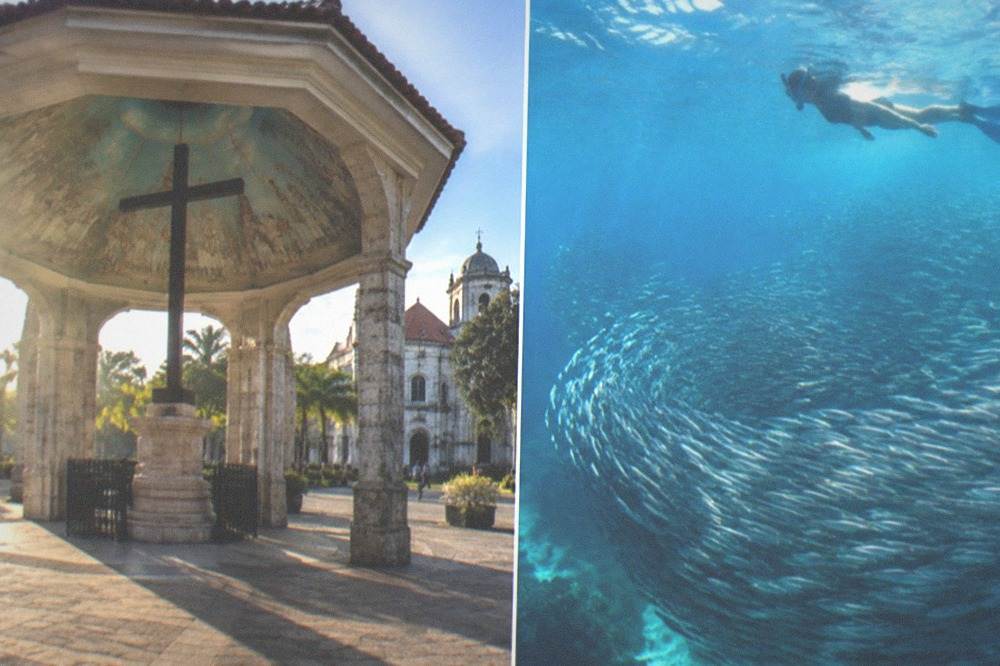
Cebu offers canyoneering at Kawasan Falls, whale shark watching in Oslob, a sardine run reachable from the shore at Moalboal, heritage sites from 1521 and 1565 in Cebu City, and the Sinulog festival every January. Boracay offers water sports, island hopping around nearby islets, a famous sunset view and a nightlife scene concentrated on one strip, with almost no heritage attractions or inland adventures. Cebu is a many-destination island; Boracay is a single-destination one.
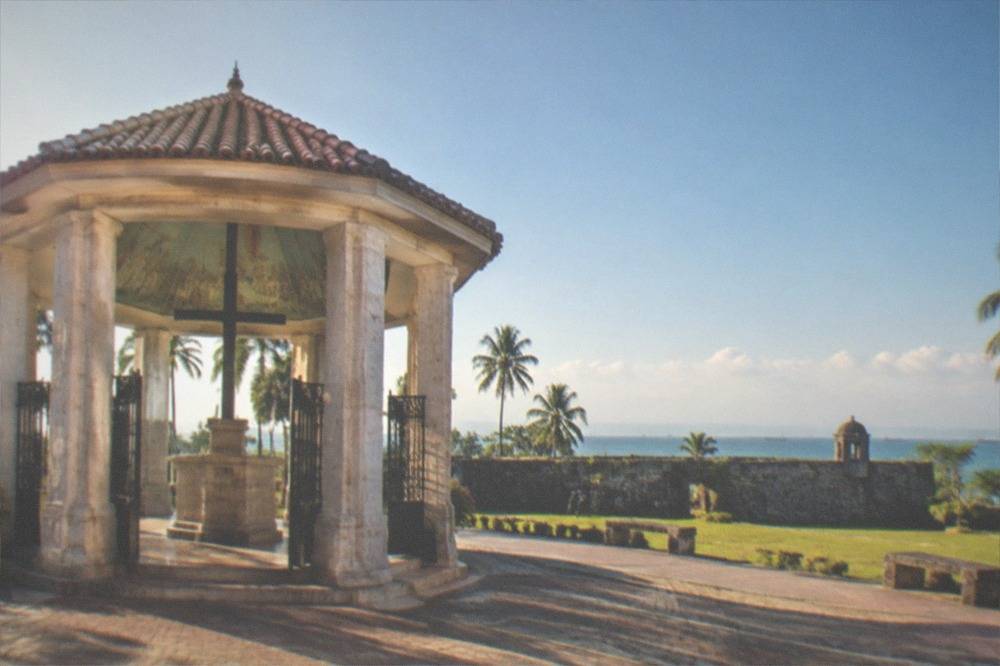
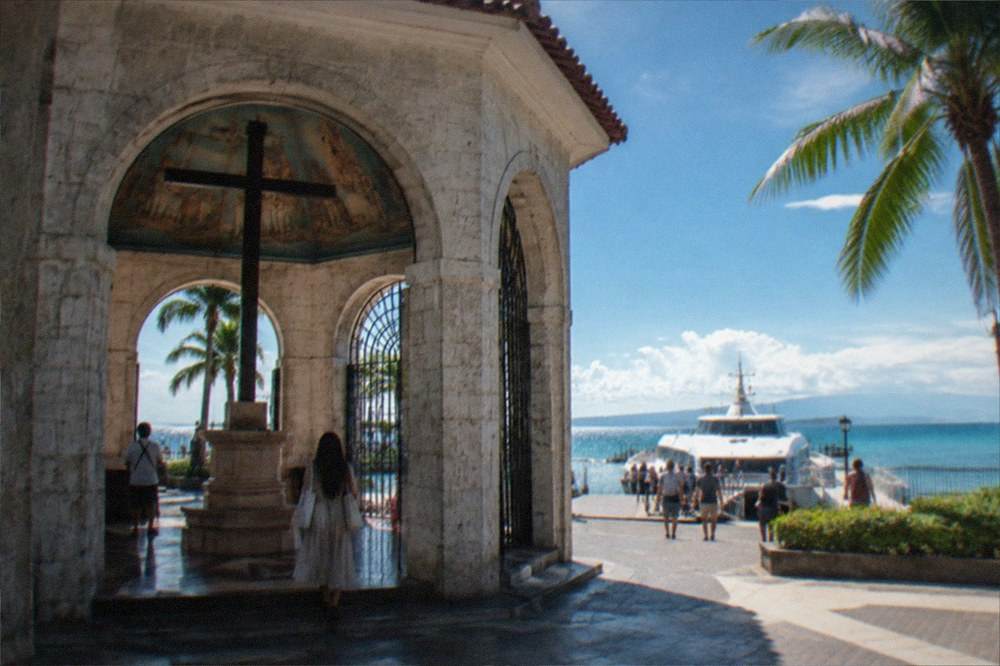
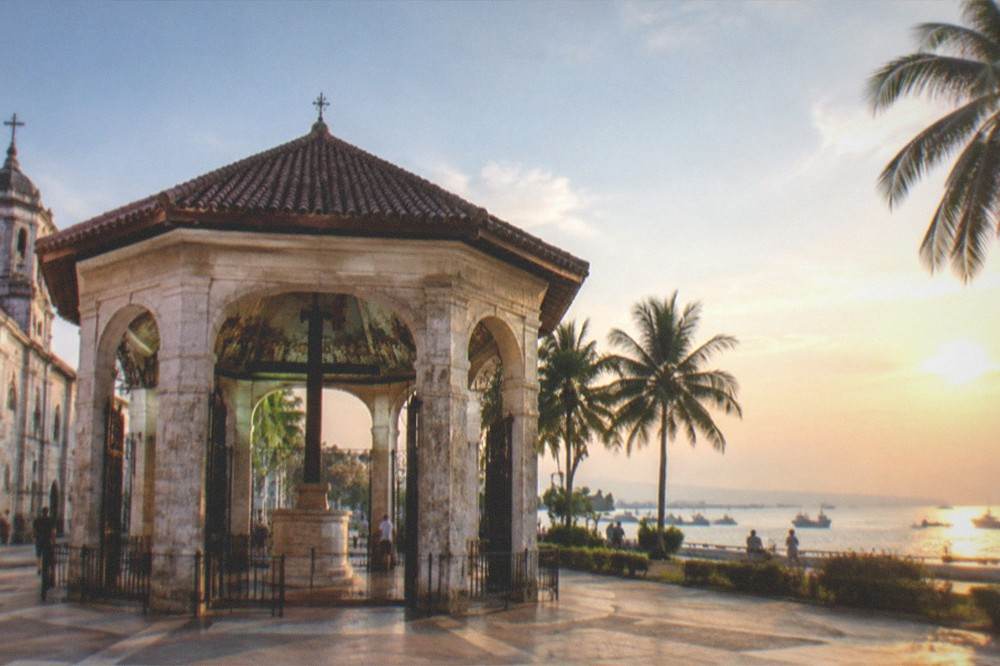
Cebu's range is its real argument. In one week you can stand at Magellan's Cross, planted in 1521 according to the Basilica's own chronicles, walk the coral-stone walls of Fort San Pedro, descend a canyon above Kawasan Falls, and snorkel over a permanent school of sardines at Panagsama Beach, which the Moalboal municipal site describes as sitting metres from shore. The Basilica Minore del Santo Niño was founded on 28 April 1565, the day the Legazpi expedition landed, making the surrounding quarter one of the oldest continuously active devotional sites in the country.
Boracay's counter-argument is focus. Everything on the island exists to serve beach time: sailing boats at sunset, paddleboards, reef trips, and a dining and nightlife scene that runs late. There is no equivalent of a Kawasan Falls day or a heritage walking tour, and travellers who want those things would have to fly elsewhere.
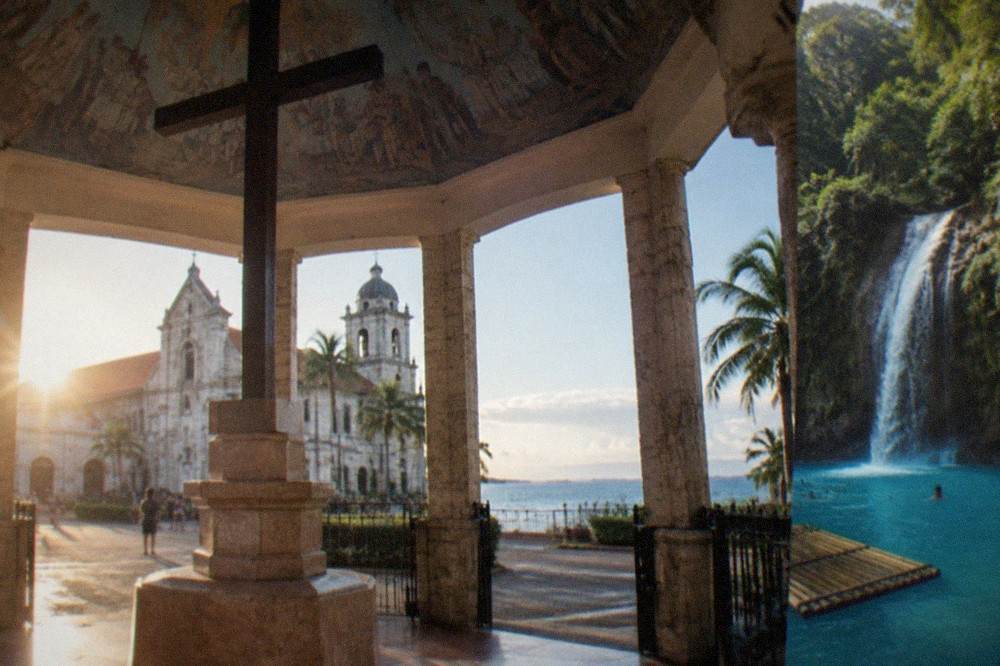
The three experiences below are the ones Cebu offers that Boracay simply cannot match, and they are the strongest reason to pick the bigger island.
How Do The Beaches Of Cebu And Boracay Compare?
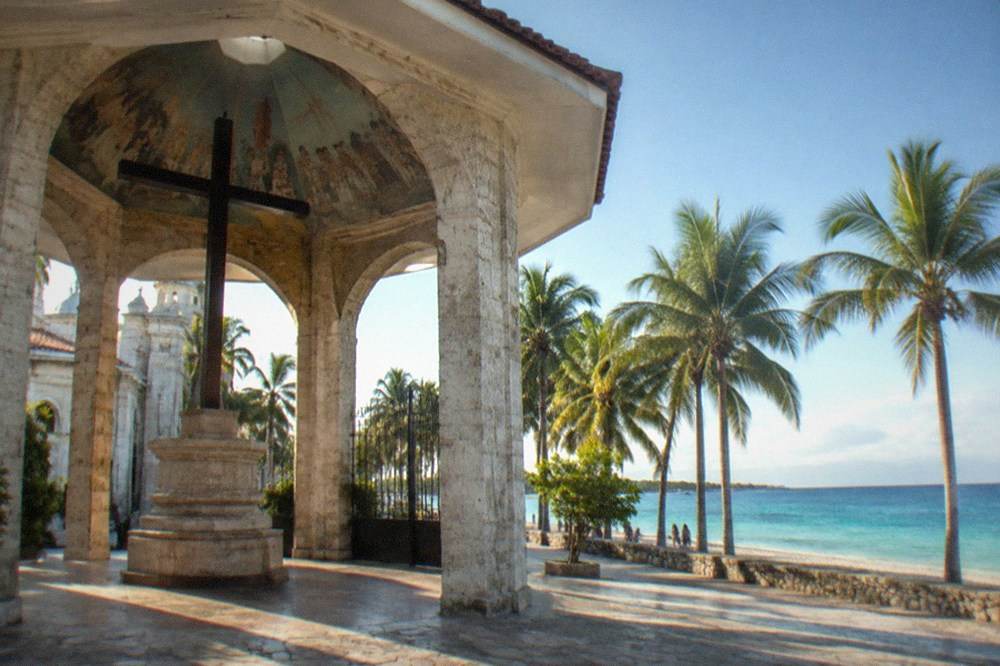
Boracay's White Beach is the stronger beach on pure sand quality, calm water and convenience, and this guide states that plainly rather than pretending otherwise. Cebu's best swimming beaches, on Mactan's resort coastline, on Sumilon Island and on Bantayan Island, are excellent but more spread out, and several require a boat ride or a long drive. Cebu trades beach concentration for beach variety: reef sanctuaries, island day trips and a sandbar or two, all reachable from a city base.
The concession matters. Travellers who have seen both islands generally agree that Boracay's four-kilometre White Beach is among the finest city-free stretches of sand in the region, and no Cebu beach competes with it as a single uninterrupted walk. What Cebu offers instead is a portfolio. Mactan's beach resorts sit twenty minutes from an international airport, which the Cebu airport guide covers in detail. Sumilon Island, a small island off Oslob, sells day passes through the Bluewater resort, whose official offers page lists day use from 8:00 AM to 3:00 PM with boat transfers included. Bantayan Island in the north charges a terminal fee of P25 (about US$0.4) at Hagnaya and an ecological fee of P30 (about US$0.5) on arrival at Santa Fe.
The table below shows what Cebu charges at its main beach and marine sites. These are Cebu's figures; no equivalent Boracay numbers appear here.
| Cebu beach or marine site | Verified fee (PHP) | What it covers |
|---|---|---|
| Panagsama, Moalboal | P100 (about US$1.6) environmental user fee | Swimming and snorkelling at the sardine run site |
| Pescador Island, Moalboal | P100 (about US$1.6) per dive | Marine sanctuary fee, collected via dive shops |
| Sumilon Island day pass | P1,600 (about US$25) to P2,000 (about US$32) net | Day use, transfers, gear and sanctuary access |
| Bantayan Island arrival | P30 (about US$0.5) ecological fee | Island environmental charge at Santa Fe |
| Lapu-Lapu island hopping | P100 (about US$1.6) for foreign tourists | Environmental fee for marine sanctuary tours |
For beach-focused planning across the whole island, the guide to Cebu's beaches ranks the swimming options by area, and the Mactan vs Cebu City stay comparison helps if you want the beach closest to the airport.
How Do You Get To Cebu And To Boracay?
Cebu is reached by direct international flights into Mactan-Cebu International Airport, which has grown a wave of new routes since late 2025, including services to Kuala Lumpur, Hanoi and Brisbane, and domestic connections from Manila. Boracay is reached by a flight to either of two nearby airports followed by a land transfer and a boat crossing. Cebu's airport sits roughly 13 to 15 km from the city centre, about 25 to 60 minutes by road depending on traffic.
Cebu's access advantage is real and getting stronger. Mactan-Cebu International Airport has been operated since 16 January 2025 by Aboitiz InfraCapital Cebu Airport Corporation under a public-private partnership, according to the airport's own corporate page, and its second runway opened on 30 January 2025. The MyBus service between the airport and SM City Cebu runs from 7:00 AM to 10:00 PM airport-bound and charges P30 (about US$0.5) to P50 (about US$0.8) depending on destination, per the official transport guide. A Grab ride is widely available with designated pickup zones at both terminals.
Boracay's extra legs, flight, van or taxi, ferry, then a trike to your hotel, are not difficult, but they add an hour or more to every arrival and departure, and they make short trips feel shorter. Cebu, by contrast, can have you at a Mactan beach resort within an hour of landing.
| Access question | Cebu answer | Boracay answer |
|---|---|---|
| International airport on the island | Yes, Mactan-Cebu (CEB), two terminals | No, flights land on a neighbouring island |
| Boat crossing required | No | Yes, to reach the island |
| Airport to main tourist area | About 25-60 minutes by road | Flight plus land transfer plus ferry |
| Getting around without booking | Jeepneys, taxis, Grab, buses | Mostly walking and trikes |
Once you are on Cebu, the getting around Cebu guide covers jeepneys, buses and the partially running bus rapid transit line, and the ferries from Cebu guide covers the sea links if you want to add Bohol to the same trip.
What Does A Cebu Trip Cost Compared With Boracay?
A Cebu trip spreads its costs across transport and entrance fees rather than concentrating them in accommodation. Several of Cebu's headline heritage sites are free, museums and forts charge modest local entrance fees, and the expensive line items are the marine activities, with the Oslob whale shark interaction the single largest verified charge on the island. This guide publishes no Boracay price figures, because none have been verified here, so treat the comparison as Cebu's cost structure against Boracay's reputation as a resort economy.
The Cebu fee structure rewards the independent traveller. The heritage core of Cebu City is remarkably cheap to see: Magellan's Cross is free, the Taoist Temple asks only for donations, Fort San Pedro charges P50 (about US$0.8) regular and P40 (about US$0.6) for students and seniors, and Museo Sugbo, reopened on 29 August 2025 after nearly two years, charges P50 (about US$0.8) general admission and P25 (about US$0.4) for students. The highland viewpoints cost more: Tops Lookout's own operator page lists P100 (about US$1.6) regular entry, open 24 hours, and the Temple of Leah charges around P120 (about US$1.9) on weekdays and P150 (about US$2.4) on weekends per recent reports, with no official price list published.
The expensive line items are the marine activities. The Oslob whale shark interaction, regulated by the municipal government, costs P1,000 (about US$15.9) per foreign tourist and P500 (about US$8.0) per Filipino, boat and guide included, under rates the Oslob tourism office confirmed effective 21 March 2025. Kawasan Falls charges about P200 (about US$3.2) for Level 1 access, with guided canyoneering running roughly P1,500 (about US$24) to P2,000 (about US$32) with a Badian-accredited guide, a range reported across local sources. The full budget picture, including meals and rooms, is broken down in the Cebu budget and costs guide.
| Cebu site or activity | Regular fee (PHP) | Discounted fee (PHP) |
|---|---|---|
| Magellan's Cross | Free | Free |
| Fort San Pedro | P50 (about US$0.8) | P40 (about US$0.6) students and seniors |
| Museo Sugbo | P50 (about US$0.8) | P25 (about US$0.4) students and seniors |
| Tops Lookout | P100 (about US$1.6) | P70 (about US$1.1) seniors and PWDs |
| Temple of Leah | About P120 (about US$1.9) weekday, P150 (about US$2.4) weekend | About P80 (about US$1.3) to P100 (about US$1.6) per recent reports |
| Oslob whale sharks (foreign tourist) | P1,000 (about US$15.9) | P500 (about US$8.0) for Filipino citizens |
| Kawasan Falls Level 1 | About P200 (about US$3.2) | Canyoneering about P1,500 (about US$24) to P2,000 (about US$32) guided |
Bookable tours price in US dollars on the operator's live listings, and those figures render below from verified data rather than from this page's text. The canyoneering day tour from Moalboal is the single best-value adventure on the island and pairs directly with a sardine run morning; you can read more on the Kawasan Falls guide page or Check availability on the live listing.
Which Island Is Better For Diving And Marine Life?
Cebu is the stronger diving destination by almost any measure, with thresher sharks at Malapascua, the shore-accessible sardine run at Moalboal, whale sharks at Oslob and the Pescador Island marine sanctuary, while Boracay's diving is respectable reef diving centred on nearby sites without a signature large-animal encounter. Cebu's dive economy is spread across three separate north, centre and south bases, so a dive-focused week on Cebu does not repeat itself.
The signature facts are Cebu's. Malapascua's thresher sharks, now seen mostly at Kimud Shoal, are the only reliable place in the country where divers regularly encounter threshers at dawn, and dive fees run about P1,800 (about US$29) to P2,000 (about US$32) per dive plus marine park fees. Moalboal's sardine run is a permanent resident school, present year-round, not a seasonal migration, and it sits close enough to Panagsama Beach that snorkellers reach it from shore after paying the P100 (about US$1.6) environmental user fee. Oslob's whale sharks run from about 6:00 AM to 12:00 PM daily, with a mandatory briefing, a minimum four-metre distance, no sunscreen and no touching, all enforced by the municipal government.
One honest caveat on Oslob: sightings are not guaranteed. In late May 2026 the whale sharks were absent from the Tan-awan interaction area for roughly four days when seasonal plankton moved to a neighbouring barangay, and the local government clarified that operations pause and resume with the sharks' movements. The ethics of the Oslob feeding programme are debated, and the whale shark ethics guide covers both sides. The full dive picture across all three bases is in the Cebu diving guide.
Which Island Is Better For Food And Nightlife?
Boracay concentrates its dining and nightlife along the beachfront, which makes it the easier island for evenings out, while Cebu counters with the Philippines' most celebrated roast pork, lechon, a genuine city restaurant scene in Cebu City and the IT Park nightlife district, plus street food heritage along Colon Street, the country's oldest commercial street. Cebu's food scene is deeper; Boracay's is more convenient.
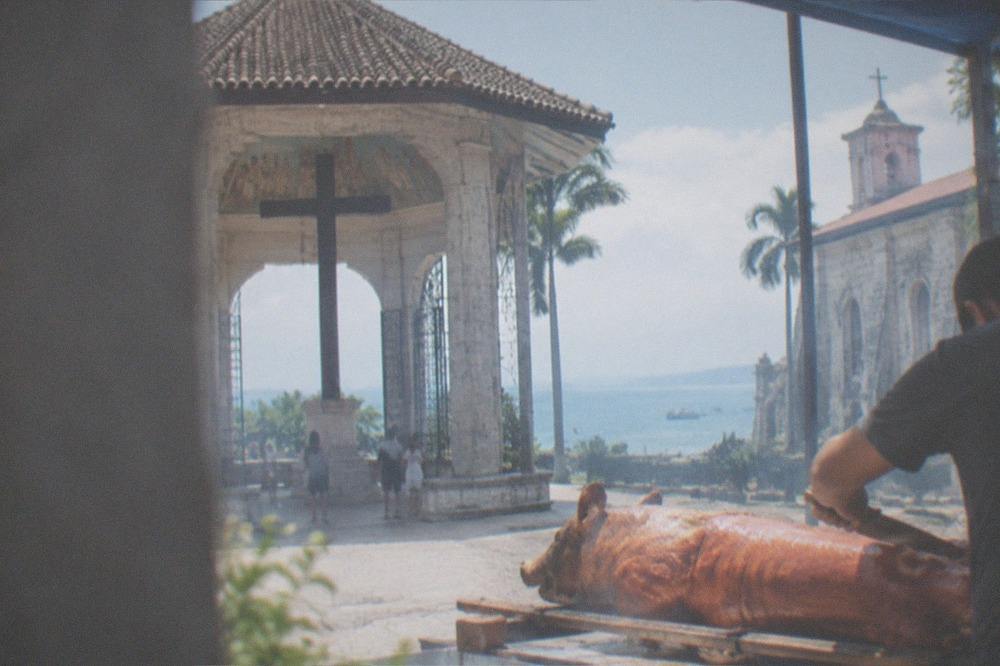
Cebu's food reputation rests on lechon, whole roasted pig that national food writers have repeatedly ranked among the country's best, and the Cebu lechon guide maps the famous outlets. Beyond it, the city offers a full spectrum from backstreet barbecue to hotel dining, and the Cebu nightlife guide covers the bars of IT Park and the beach clubs of Mactan. The Colon Street guide walks the street often called the oldest in the Philippines, inside the historic core of the Spanish settlement founded in 1565.
Boracay's evenings are its own argument: sunset drinks on the sand, a walkable strip of restaurants, and beach parties that run late into the night. For travellers whose holiday rhythm is beach by day and bars by night, that convenience beats Cebu's deeper but more dispersed scene. For food-motivated travellers, Cebu wins on range and on the single dish the island is most famous for.
When Is The Best Time To Visit Each Island?
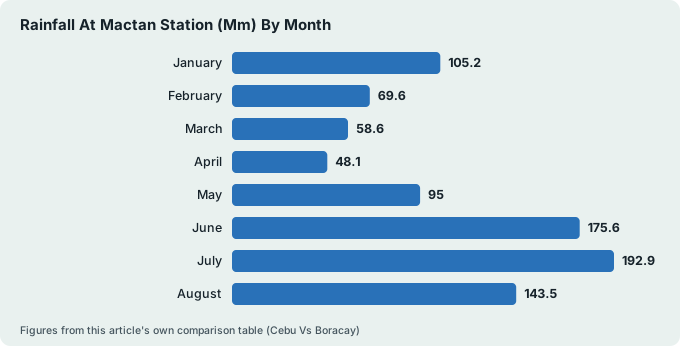
Both islands share the same Philippine climate pattern, and PAGASA's national rule applies to each: dry season December to May, rainy season June to November, with typhoon risk peaking roughly July to October. Cebu's Mactan station recorded 1,685.0 mm of rain across 138 rain days in the 1991-2020 normals, with October the wettest month at 194.8 mm and April the driest at 48.1 mm. The practical difference is that Cebu offers rainy-day city alternatives while Boracay's activities are almost all outdoors.
The rainfall table below is Cebu's own, from PAGASA's Mactan station normals, and it is the most useful planning tool on this page. No equivalent Boracay figures are published here.
| Month | Rainfall at Mactan station (mm) | Season |
|---|---|---|
| January | 105.2 | Dry |
| February | 69.6 | Dry |
| March | 58.6 | Dry |
| April | 48.1 | Dry, driest month |
| May | 95.0 | Dry, turning wetter |
| June | 175.6 | Rainy |
| July | 192.9 | Rainy |
| August | 143.5 | Rainy |
| September | 179.6 | Rainy |
| October | 194.8 | Rainy, wettest month |
| November | 161.9 | Rainy, tail of typhoon season |
| December | 139.7 | Turning dry |
Two Cebu-specific timing notes matter. First, Sinulog, the grand festival held on the third Sunday of January, fills the city for the 17 January 2027 grand parade at the Cebu City Sports Center, and hotel prices and crowds peak around it; the Sinulog festival guide covers the schedule. Second, the typhoon and earthquake experience of late 2025, including Typhoon Tino's severe flooding in early November and the 30 September 2025 magnitude 6.9 earthquake off northern Cebu, is a reminder to check current conditions before any rainy-season trip; the typhoon season guide and the best time to visit guide carry the detail.
Which Should First-Time Visitors To The Philippines Choose?
First-time visitors who want a structured, varied introduction to the Philippines should choose Cebu: one international airport, a walkable heritage core, day trips that can be booked individually, and enough range that a bad-weather day never strands you. First-time visitors whose priority is a postcard beach holiday with minimal logistics should choose Boracay. A strong third option is both: fly into Cebu for four days, then continue onward, since Cebu's airport and ferry network make it a natural hub.
The hub argument deserves emphasis. Cebu City's Pier 1 sends fastcraft to Bohol, with OceanJet fares of P960 (about US$15.3) tourist and P1,440 (about US$23) business following a 10% fuel surcharge effective 21 September 2026, and the Cebu to Bohol ferry guide covers the crossing. The airport's route expansion since late 2025, including new services to Kuala Lumpur, Hanoi and Brisbane, means Cebu increasingly works as a secondary gateway to the country, not just a destination.
For itinerary building, the 3 days in Cebu and 7 days in Cebu plans sequence the city, south and north, and the Cebu itinerary hub collects every option. If your decision is really between Cebu and a different island altogether, the Cebu vs Palawan comparison covers the country's other headline destination.
The two day tours below extend the case for Cebu as a first-timer's base: one covers the islands off Mactan with lunch included, the other the highland temples and gardens above the city.
The island-hopping day trip is the gentler of the two, a single day on the water with lunch handled, and it pairs well with a Mactan resort stay. The highlands tour below is its counterweight, trading the sea for the temples, gardens and viewpoints of the hills above the city, and it suits a first or last day when you want something memorable without an early ferry.
Can You Combine Cebu And Boracay In One Trip?
Yes, combining them is practical, because both sit on the domestic flight network and Cebu is a hub in its own right, but the combination works best as Cebu first, Boracay second, since Cebu rewards energy and planning while Boracay rewards doing nothing at the end. Allow at least a week total, with three or four days on Cebu and the remainder on Boracay, and book the inter-island flight before either stay rather than trusting same-day availability.
The sequencing logic is simple. Cebu's highlights, canyoneering, whale sharks, dive trips, heritage walks, are all scheduled activities with early starts. Boracay's highlight is unscheduled. Travellers who do Cebu second tend to arrive at Kawasan Falls tired; travellers who do it first arrive in Boracay having earned the rest. The Cebu Travel Guide hub page collects every planning resource for the Cebu leg, including visa and eTravel registration rules for the Philippines, which the visa and eTravel guide summarizes: 30 days visa-free for most Western nationals, with free registration on the official eTravel site within 72 hours of arrival.
If the combined trip is too much, the choice collapses back to the opening question: variety or simplicity. Cebu is the island that keeps a whole region in reach of one hotel; Boracay is the island that removes every decision after the first one.
Common Questions About Cebu Vs Boracay
Is Cebu or Boracay better for a first trip to the Philippines?
Cebu is better for a first trip that wants variety, since one base covers a heritage city, waterfalls, whale sharks and diving. Boracay is better for a first trip that is purely a beach holiday. Cebu also works as a hub, with an international airport and ferry links that let you add other islands afterward.
Are Cebu's beaches as good as Boracay's?
As a single uninterrupted stretch of sand, no, and this guide says so plainly. Cebu's strength is variety: resort beaches on Mactan, the island day trips around Mactan and Sumilon, and Bantayan Island in the north, each excellent but spread out rather than concentrated.
Is Cebu cheaper than Boracay?
This site publishes only Cebu's figures, so no Boracay prices appear here. Cebu's cost structure is favourable for independent travellers: Magellan's Cross and the Taoist Temple are free, Fort San Pedro is P50 (about US$0.8), and the big-ticket items are the marine activities, with Oslob whale sharks at P1,000 (about US$15.9) for foreign tourists.
Which island has better diving, Cebu or Boracay?
Cebu, by a wide margin. Thresher sharks at Malapascua, the year-round sardine run at Moalboal, whale sharks at Oslob and the Pescador Island sanctuary give Cebu three separate dive bases with signature large-animal encounters.
Can you visit Boracay from Cebu?
Yes, by a short domestic flight from Mactan-Cebu International Airport to an airport near Boracay, followed by the standard land and boat transfer. Many travellers combine the two, usually doing Cebu's active highlights first and finishing on Boracay's beach.
When is the worst time to visit either island?
Both follow the same national pattern: rainy season June to November with typhoon risk peaking roughly July to October. On Cebu, October is the wettest month in the Mactan station normals at 194.8 mm of rain. The difference is that a rainy day on Cebu still leaves museums and heritage sites, while a rainy day on Boracay leaves little to do.