Cebu Vs Manila
Cebu, an island province in the Central Visayas region of the Philippines, and Manila, the capital on Luzon, play completely different roles in a Philippine trip. Here is how they compare on beaches, cost, transport, weather and safety, using verified Cebu figures.
Short answer
Choose Cebu for beaches, island hopping, whale sharks and waterfalls within a few hours of the airport. Choose Manila as a flight gateway and for big-city dining and history. Many travellers fly into one and out of the other.
Cebu, an island province in the Central Visayas region of the Philippines, gets compared to Manila for one simple reason: almost every international flight to the country lands in one of the two. Manila is the capital, a megacity on Luzon that functions as the country's main gateway. Cebu is the smaller, island-flavoured alternative, with Mactan-Cebu International Airport on Lapu-Lapu City and a province that puts waterfalls, whale sharks and dive sites within a day trip of the arrivals hall. This comparison lays out what each does best, and it is honest about its evidence: every figure below is a verified Cebu figure, and the Manila side is described qualitatively, because this site verifies Cebu facts, not Manila ones.
Cebu Vs Manila: Which Should You Visit?
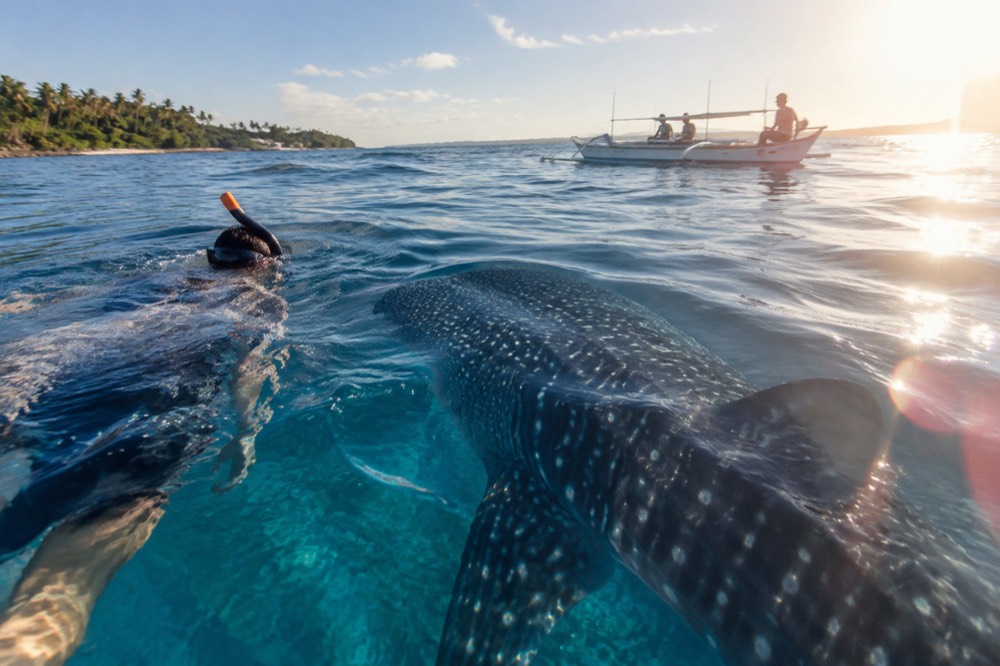
Visit Cebu if your trip is about the sea: swimming with whale sharks in Oslob, canyoneering at Kawasan Falls, snorkelling the Moalboal sardine run, or diving with thresher sharks off Malapascua, all reachable from a single base. Visit Manila if your trip is about the capital itself: its museums, its Spanish-era walled district, its restaurant scene and its role as the country's main international hub. The two are not substitutes; they are different legs of the same country.
The honest framing is that travellers do not have to choose between them at all. Manila's airport handles the country's largest share of long-haul flights, so plenty of visitors pass through it whether they like it or not, then continue onward. Cebu's own airport has grown fast as a second gateway, with new routes added through 2025 and 2026 including direct services from Kuala Lumpur, Hanoi and Brisbane, so bypassing Manila entirely is easier than it used to be.
What Cebu offers that Manila cannot is concentration. From Cebu City, the whale-shark interaction area at Oslob is roughly three and a half to four and a half hours south by bus, the sardine run at Moalboal is about two and a half to three and a half hours away, and island-hopping boats leave from Mactan half an hour from the city. A single week in Cebu can cover reefs, waterfalls and mountains without an internal flight.
Manila's strength is the opposite: depth rather than reach. It is where the national museums, the oldest stone churches in the colonial core and the country's most varied dining are concentrated. If your Philippine interest is urban culture rather than beaches, the capital rewards several days on its own, and the cool highlands of northern Luzon, not Cebu, are its natural hinterland.
What Is The Difference Between Cebu And Manila For A Traveller?
The core difference is what surrounds the city. Cebu City is a real, traffic-carrying Philippine city, but it sits on an island where the countryside starts within an hour: highlands at Busay, dive sites at Mactan, waterfalls and whale sharks to the south. Manila is a metropolitan region of many cities with no beach-and-falls hinterland within a day trip; its escapes are flights and ferries to places like Cebu. One is a base for an island, the other is a hub.
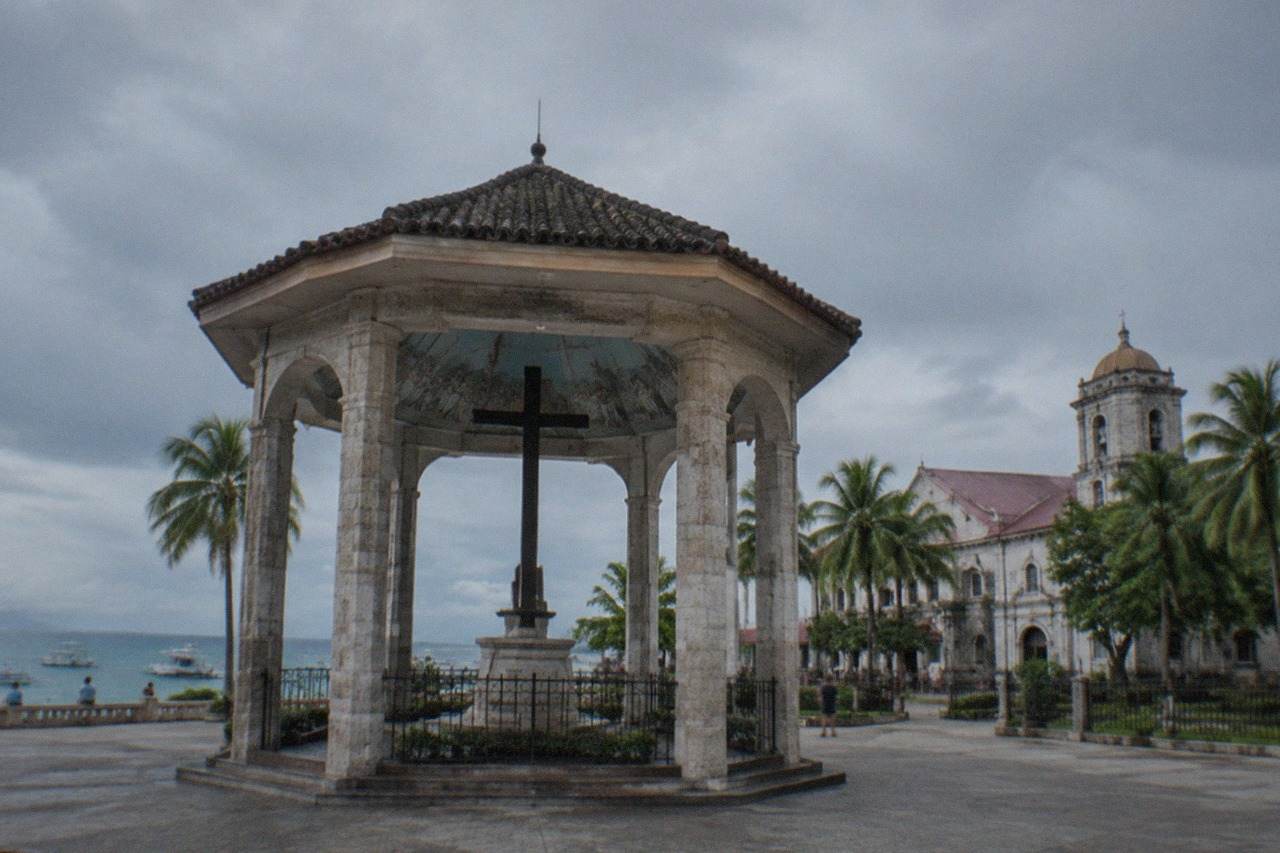
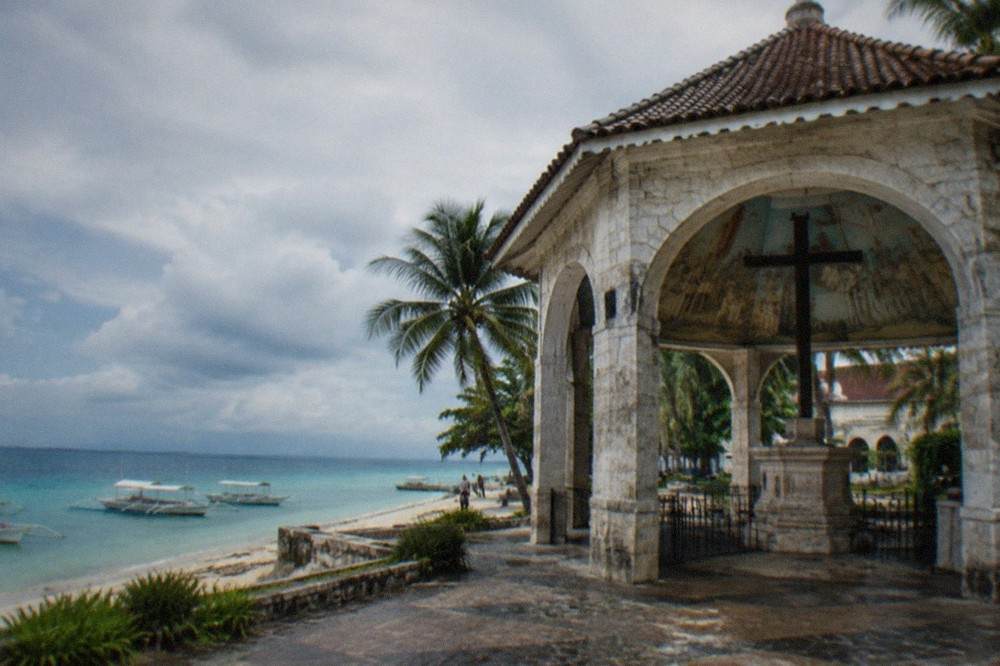
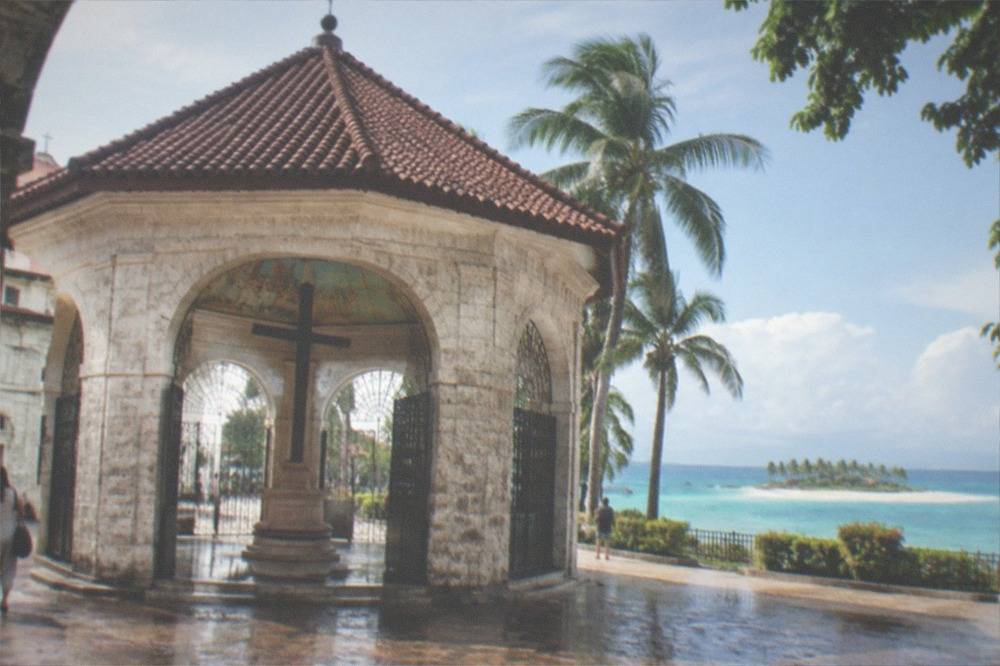
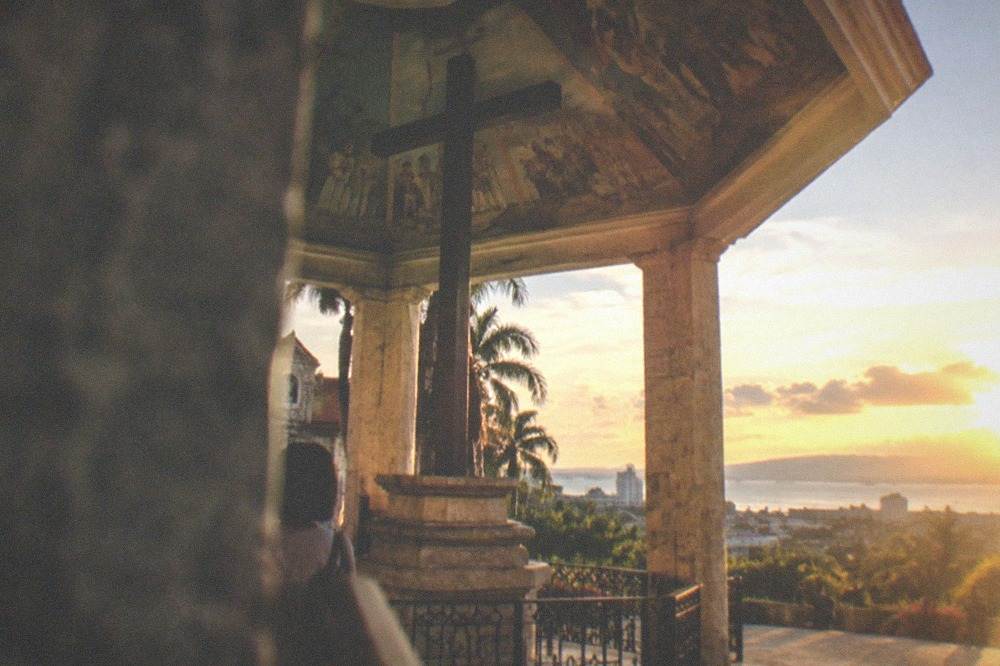
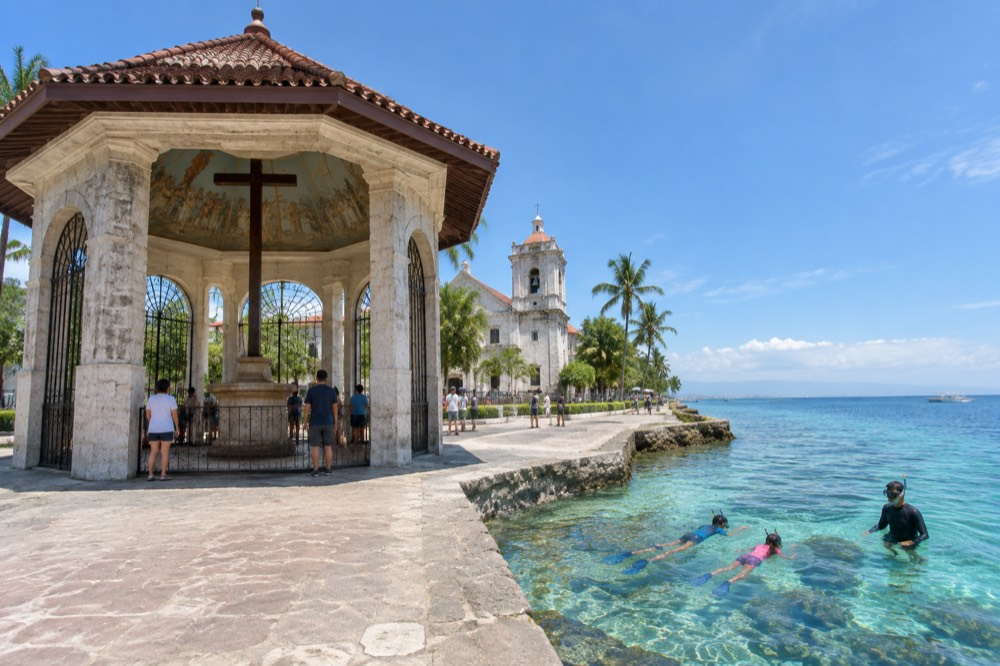
Cebu City itself should not be oversold. It has heritage sites worth half a day, Magellan's Cross and the Basilica Minore del Santo Niño among them, plus museums such as Casa Gorordo and the reopened Museo Sugbo. But almost nobody comes to Cebu for the city alone. The Cebu travel guide hub exists because the province, not the city, is the product.
Manila, by contrast, is the destination as well as the hub. Intramuros, the walled colonial district, the national museum complex and a dining scene that ranges from street food to high-end are all in the capital. The trade-off is that reaching the sea from Manila means a flight, or a long drive to coasts that are not the postcard ones.
There is a practical middle path many travellers take: fly into Manila, spend two or three days there, then take the short domestic hop to Cebu for the island half of the trip. The Manila or Cebu fly-in question is covered separately, but the short version is that flying into Cebu saves a connection if Cebu is your main goal.
For a sense of what the Cebu side of that split looks like in practice, these are three of the most-booked experiences on the island:
Is Cebu Cheaper Than Manila?
There is no verified price comparison between the two cities, and this site does not publish numbers it cannot source, so treat any confident "Cebu is X percent cheaper" claim you read elsewhere with suspicion. What can be said is that Cebu's costs are well documented and modest, from the airport bus into the city to the island's headline experiences, and the full list of verified fees appears in the table below.
The useful exercise is not a phantom comparison but a concrete Cebu budget, because those figures are verified. The MyBus ride from the airport to SM City Cebu costs P50 (about US$0.8). Entrance fees at heritage sites are small: Fort San Pedro is P50 (about US$0.8) regular and P40 (about US$0.6) for students and seniors, Magellan's Cross is free, and the Taoist Temple asks only for donations. The highland viewpoints near the city are similarly priced; Tops Lookout charges P100 (about US$1.6) for regular entry and is open around the clock.
| Cebu cost item | Verified figure |
|---|---|
| MyBus airport transfer to SM City Cebu | P50 (about US$0.8) |
| Oslob whale-shark fee, foreign visitor | P1,000 (about US$15.9) |
| Oslob whale-shark fee, Filipino visitor | P500 (about US$8.0) |
| Kawasan Falls Level 1 entrance | P200 (about US$3.2) |
| Fort San Pedro entry, regular | P50 (about US$0.8) |
| Tops Lookout entry, regular | P100 (about US$1.6) |
| Moalboal environmental user fee to swim or snorkel | P100 (about US$1.6) |
| OceanJet fastcraft to Tagbilaran, tourist class | P960 (about US$15.3) |
Getting around Cebu on a budget is genuinely cheap. The jeepney minimum fare for traditional units was set at P14 (about US$0.2) for the first four kilometres in the national adjustment of late September 2026, with modern air-conditioned units at P17 (about US$0.3), though the national reporting does not confirm exactly how the adjustment applies in Region 7. Long-distance Ceres buses south to Oslob run roughly P145 (about US$2.3) to P250 (about US$4.0), and to Moalboal about P120 (about US$1.9) to P210 (about US$3.3).
What about Manila? The honest answer is that its costs feel broadly similar for a visitor, since both cities draw on the same national economy, but this site publishes no Manila figures because it verified none. If a tight budget is your deciding factor, read the Cebu budget and costs guide and plan against what is documented rather than against internet folklore about either city.
One Cebu cost that surprises visitors in the other direction is the whale-shark fee. At P1,000 (about US$15.9) per foreign visitor it is one of the more expensive single activities on the island, and it is discussed in detail in the dedicated Oslob guide. For many people it remains the trip's defining experience, and the fee includes the boat and the guide.
Which Has Better Beaches And Islands, Cebu Or Manila?
Cebu wins this category outright, and it is not close. The province's beaches are the reason it competes with the country's famous island destinations at all: Bantayan and Malapascua in the north, the Camotes Islands to the east, Sumilon in the south, and island-hopping routes off Mactan through Hilutungan, Caohagan and Nalusuan. Manila is a coastal capital, but its immediate shoreline is a working harbour and bay, not a swimming coast; beach time from Manila means travelling on.
The Mactan side alone supports a full island-hopping industry. A day boat trip from Lapu-Lapu City typically covers two or three sanctuary islands with lunch, and the city charges an environmental fee of P100 (about US$1.6) for foreign tourists taking those trips. The marine sanctuaries themselves add their own entrance fees, generally in the range of about P150 (about US$2.4) to P300 (about US$4.8) per island.
South of the city, the beach-and-waterfall belt is what defines Cebu. Sumilon Island, next to the whale-shark town of Oslob, sells day passes through the Bluewater resort that include boat transfers and sanctuary access, with a weekday group offer at P2,000 (about US$32) net per guest running into October 2026. Further south, Moalboal pairs its sardine run, a resident school of sardines a short swim from Panagsama Beach, with White Beach and Pescador Island's dive sites.
The north is quieter and, since the September 2025 earthquake, worth checking ahead. The Department of Tourism declared Bantayan Island and Malapascua open to visitors in late October 2025, with the ports at Santa Fe, Maya and Kawit fully operational, but some heritage churches in northern Cebu remain damaged and closed. Bantayan charges a terminal fee of P25 (about US$0.4) at Hagnaya and an ecological fee of P30 (about US$0.5) on arrival at Santa Fe.
Manila's nearest swimmable escapes are hours away by road or a short flight, which is precisely why so many Manila residents fly to Cebu themselves. If your holiday is measured in beach days, basing in Cebu removes an entire leg of travel. The full rundown lives in the Cebu beaches guide.
For the single most concentrated sea experience on the island, the whale-shark trip is the one to book ahead:
How Do The Airports And Getting Around Compare?
Cebu's airport, Mactan-Cebu International, is the smaller and often faster one: two terminals, a second runway opened in January 2025, and a transfer programme that cut minimum connection times, with over 500,000 transfers processed by September 2026. The airport sits about 13 to 15 kilometres from Cebu City, typically 25 to 60 minutes by road depending on traffic. Manila's airport is the country's primary hub with far more long-haul lift, but it is a bigger, busier operation; this site publishes no verified Manila operational figures.
The Cebu side is easy to plan because it is documented. MyBus runs between the airport and SM City Cebu for P50 (about US$0.8), from 7 AM to 10 PM airport-side and 6 AM to 9 PM from the mall. White metered taxis flag down at about P40 (about US$0.6) plus roughly P14 (about US$0.2) per kilometre, yellow airport taxis start at about P70 (about US$1.1), and Grab operates with designated pickup zones at both terminals. The Cebu airport guide has the full breakdown.
| Cebu transport option | Verified detail |
|---|---|
| MyBus airport to SM City Cebu | P50 (about US$0.8), about every 20 minutes |
| White metered taxi | About P40 (about US$0.6) flag-down, about P14 (about US$0.2) per km |
| Yellow airport taxi | About P70 (about US$1.1) flag-down |
| Jeepney minimum, traditional | P14 (about US$0.2) first 4 km, plus P2 (about US$0.0) per km after |
| Jeepney minimum, modern | P17 (about US$0.3) first 4 km, plus P2 (about US$0.0) per km after |
| CCLEX toll, Class 1 car | P107 (about US$1.7) one way |
| Ceres bus to Oslob | About P145 (about US$2.3) to P250 (about US$4.0), 3.5 to 4.5 hours |
| Ceres bus to Moalboal | About P120 (about US$1.9) to P210 (about US$3.3), 2.5 to 3.5 hours |
Inside Cebu City, transport is in transition. The Cebu Bus Rapid Transit began partial operations on 13 March 2026 on a single route between the South Road Properties and IT Park, mixing a short dedicated corridor with ordinary traffic, and free rides were offered at launch while a distance-based fare of P18 (about US$0.3) minimum was also published. The full system is not expected before 2027 at the earliest. The practical takeaway for a visitor is simple: jeepneys, taxis and Grab carry most daily travel, as the getting around Cebu guide explains.
One Cebu-specific wrinkle worth knowing is the water. Fastcraft ferries to Bohol leave from Pier 1 in Cebu City, with OceanJet running roughly thirteen sailings a day and the tourist fare at P960 (about US$15.3) since the September 2026 fuel surcharge. That makes Cebu a genuine two-island base, since Bohol is a two-hour boat ride away, a flexibility Manila cannot match by sea. The details are in the ferries from Cebu guide.
Is Cebu Safer Than Manila?
No official advisory separates the two. The US State Department's Level 2 "exercise increased caution" rating and the UK and Australian advisories all cover the Philippines as a country, with their sharpest warnings reserved for parts of Mindanao and the Sulu archipelago, not for either Cebu or Manila. What can be said with sources is that Cebu was explicitly cleared for tourists by the Department of Tourism in October 2025, after both the September 2025 earthquake and Typhoon Tino in November 2025, with the main tourism zones reported open.
The 2025 events are the reason this question gets asked. On 30 September 2025 a magnitude 6.9 earthquake struck offshore of northern Cebu, near Bogo City, damaging coral-stone churches in the north and closing several Cebu City museums for inspection. In early November 2025 Typhoon Tino brought severe flooding to the province. Yet within weeks, the tourism department's position was that Cebu City and Mactan were largely unaffected and open, and that visitors should not cancel.
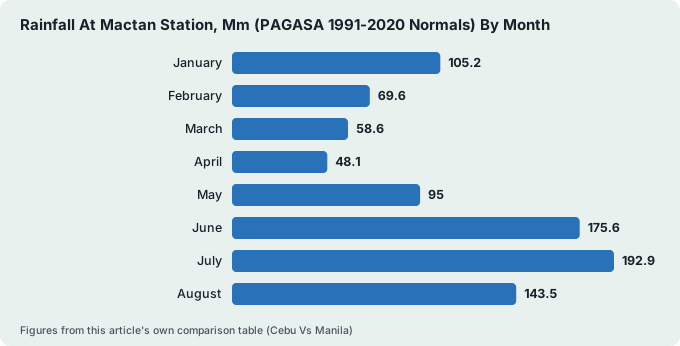
The weather calendar matters more for planning than any crime statistic. PAGASA's national rule puts the rainy season from June to November and the dry season from December to May, and the Mactan station's 1991-2020 normals show the pattern plainly: October is the wettest month at 194.8 mm of rain and April the driest at 48.1 mm, out of an annual 1,685 mm. The best time to visit Cebu guide and the typhoon season guide unpack this month by month.
| Month | Rainfall at Mactan station, mm (PAGASA 1991-2020 normals) |
|---|---|
| January | 105.2 |
| February | 69.6 |
| March | 58.6 |
| April | 48.1 |
| May | 95.0 |
| June | 175.6 |
| July | 192.9 |
| August | 143.5 |
| September | 179.6 |
| October | 194.8 |
| November | 161.9 |
| December | 139.7 |
Both cities share the same country-level advisory picture, so safety is unlikely to be the deciding factor between them. Ordinary big-city precautions apply in either place: keep valuables out of sight, use app-based rides late at night, and watch weather advisories during the typhoon half of the year. The Cebu safety guide collects the local specifics.
Which Is Better For Food, Cebu Or Manila?
Manila has the deeper and broader dining scene, as any capital does, with regional cuisines from across the archipelago represented in one place. Cebu's answer is narrower and famous: lechon, the roast pig that many Filipinos call the country's best, plus a strong seafood culture built on the island's own coasts. If eating is a primary purpose of the trip, the capital wins on range; if you want one iconic dish in its home setting, Cebu delivers it.
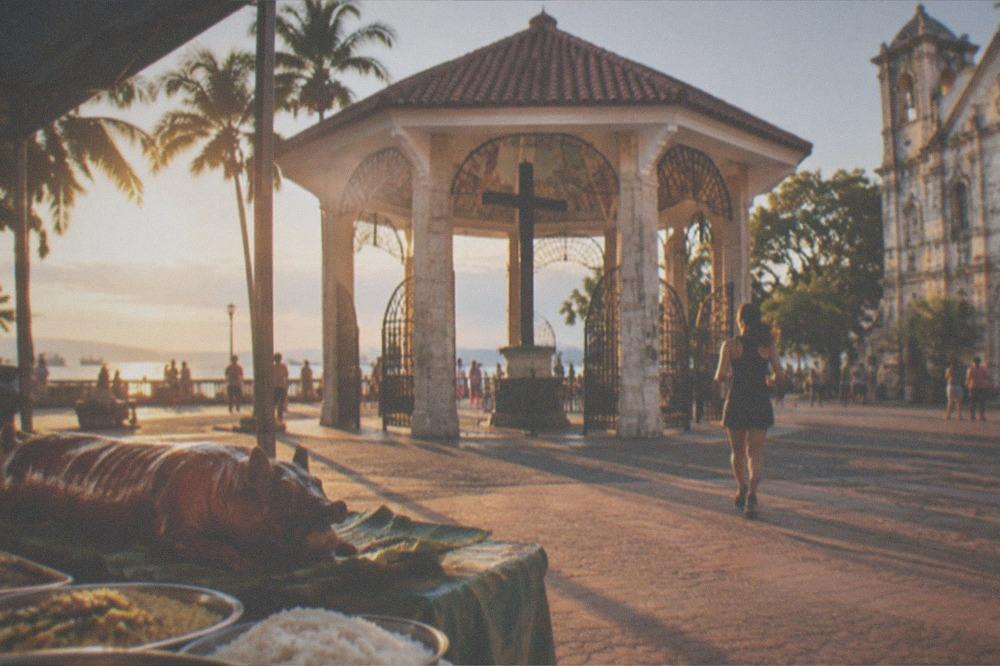
Cebu's food reputation rests heavily on lechon, and specifically on the Carcar-style and Cebu City lechon that national food writers have spent years ranking. The island's position also means its seafood is genuinely local rather than trucked in: reef fish, blue marlin and the sardines that draw divers to Moalboal all come from Cebu's own waters.
The capital's advantage is aggregation. Every regional tradition in the country, from Ilocos to Mindanao, has an outpost in Manila, and the international dining scene is far larger. That is a real difference, and there is no point pretending otherwise. What Manila cannot offer is eating the island's signature dish a short walk from where it was perfected, which is covered in the Cebu lechon guide.
For a taste of the island beyond the restaurants, a market walk pairs well with a city morning. This tour covers the food side of Cebu City:
How Many Days Do You Need In Cebu Vs Manila?
For Cebu, plan on at least five full days: one for the city and heritage sites, one for Oslob and Tumalog Falls, one for Moalboal and the sardine run, one for Kawasan Falls canyoneering, and one for island hopping off Mactan or a highland day at Busay. Manila rewards two to four days if the capital itself interests you, or a single night if it is purely a transit stop. A combined trip of eight to ten days suits most first-time visitors.
The Cebu allocation is not arbitrary; it follows the geography. The south-coast highlights sit two to four hours from the city, so each southern day is a full day. The Cebu itinerary guide builds the sequencing, and ready-made versions exist for three, five and seven days on the island.
| Cebu day plan | What it covers | Key local fee |
|---|---|---|
| Day 1, city and heritage | Magellan's Cross, Basilica, Fort San Pedro, Casa Gorordo | Fort at P50 (about US$0.8) |
| Day 2, Oslob south | Whale sharks, Tumalog Falls, optional Sumilon | Whale sharks P1,000 (about US$15.9) foreign |
| Day 3, Moalboal | Sardine run, Pescador Island, White Beach | Environmental fee P100 (about US$1.6) |
| Day 4, Kawasan Falls | Canyoneering on the Badian route, Level 1 swimming | Entrance about P200 (about US$3.2) |
| Day 5, Mactan islands | Hilutungan, Caohagan, Nalusuan boat trip | Environmental fee P100 (about US$1.6) foreign |
Manila's day count depends entirely on intent. A traveller focused on Intramuros, the museums and the food scene can fill three or four days comfortably. A traveller using the capital purely as an entry point needs little more than an airport hotel and a morning flight, and loses nothing by doing so.
The split decision also interacts with the calendar. Sinulog, Cebu's grand festival, holds its main parade on the third Sunday of January, 17 January in 2027, at the Cebu City Sports Center. That weekend is the single most vivid time to be in Cebu and the worst time to expect hotel bargains, a trade-off the Sinulog guide explains.
If a longer island stay is on the table, pairing Cebu with Bohol by ferry is the classic combination, and the Cebu vs Bohol comparison covers how the two neighbours differ.
What About Families, Nightlife And Day Trips?
Cebu is the stronger family base, because its day trips are short, water-based and varied: island hopping with lunch, a waterpark day pass, an eco-adventure park, and gentle highland viewpoints all sit within an hour or two of the city. Manila's family offer is urban, malls, museums and theme-park style attractions inside the metro, with the beach options requiring travel. Nightlife tilts the other way, since the capital's scene is larger, though Cebu City holds its own for a city of its size.
For families, the practical Cebu advantage is that the headline activities scale down. Younger children can skip canyoneering and swim at Level 1 of Kawasan Falls instead, or spend the day on a Mactan boat trip where the snorkelling is shallow and the lunch is included. The Cebu family travel guide handles the details, including which properties sit right on the calm Mactan coast.
Nightlife is where Manila's size tells. The capital simply has more of everything, from dive bars to megaclubs, and later transport to match. Cebu City's scene is compact but real, centred on IT Park, the Cebu Business Park area and the beach clubs of Mactan.
Day trips are the category where the comparison becomes almost unfair. From Cebu City, the verified menu includes Oslob, Moalboal, Kawasan Falls, the Camotes Islands, Bantayan, Malapascua and Bohol by ferry. Manila's equivalent list requires either domestic flights or multi-hour drives. For an adventure-focused family day out, this eco-park pass is one of the closer options:
Common Questions About Cebu Vs Manila
Is Cebu or Manila better for a first trip to the Philippines?
For a first trip built around beaches and islands, Cebu is the easier start: the airport is close to the city, and the headline experiences are day trips rather than internal flights. For a first trip focused on history, museums and dining, start in Manila. Many first-timers split the trip between the two.
Can you fly directly to Cebu without passing through Manila?
Yes. Mactan-Cebu International Airport has grown its route network considerably through 2025 and 2026, with additions including direct services from Kuala Lumpur, Hanoi, Macau and Brisbane, alongside its established regional and domestic links.
Is Cebu cheaper than Manila for tourists?
There is no verified side-by-side price study this site can cite, so no percentage claim is made. Cebu's own costs are well documented and modest, with the airport bus at P50 (about US$0.8) and major activity fees published by local ordinance, but treat confident comparisons from other sources with caution.
Which has better weather, Cebu or Manila?
Both sit in the same tropical climate zone with the same national seasons, rainy from June to November and dry from December to May. Cebu's documented Mactan station normals show 1,685 mm of annual rain with October the wettest month, but this site publishes no equivalent verified Manila figures, so no direct comparison is made.
How do you travel between Cebu and Manila?
By air, on the many daily domestic flights between Mactan-Cebu International and the Manila airports; the flight is short and the route is one of the country's busiest. There is no practical sea or land link between the two islands.
Is Cebu safe compared to Manila?
Official travel advisories for the Philippines apply to the whole country, with the strictest warnings covering parts of Mindanao and the Sulu archipelago, not either Cebu or Manila. The Department of Tourism explicitly declared Cebu open and safe for tourists after the earthquake and typhoon of late 2025.
The two destinations answer different questions, and the strongest Philippine trips usually ask for both. Use Cebu Travel Guide to plan the island half, and treat Manila as what it is: the country's front door, worth a few days of its own before the ferry-and-waterfall half of the journey begins.