1 Day Cebu City Itinerary
One day is enough to see the core of Cebu City, the oldest city in the Philippines, if you start early and group the sights by area: heritage downtown in the morning, highland viewpoints in the afternoon, the waterfront after dark.
Short answer
Spend the morning on Magellan's Cross, the Basilica Minore del Santo Niño and Fort San Pedro, all within a short walk of each other. After lunch, head uphill to Temple of Leah, Sirao Flower Garden and Tops Lookout, then finish with dinner and the evening waterfront. Entrance fees are modest and everything is reachable by taxi, ride-hailing app or jeepney.
One day is enough to see the essential sights of Cebu City, the oldest city in the Philippines and the capital of the island province of Cebu in the Central Visayas region, provided you start early and group stops by area. The city packs its Spanish-era heritage into a compact downtown pocket around Magellan's Cross, the Basilica and Fort San Pedro, then climbs into the hills of Busay where Temple of Leah, Sirao Flower Garden and Tops Lookout sit along one continuous mountain road. This itinerary walks through the full day hour by hour, with verified entrance fees, transport costs and timing so nothing is left to guesswork. For deeper planning, the Cebu itinerary hub extends this same route across three, five and seven days.
What Can You Realistically See In Cebu City In One Day?
A single well-sequenced day in Cebu City covers the three downtown heritage anchors, one or two museums, the highland viewpoint trio in Busay and an evening meal, roughly 6 to 8 stops in total. The key is geography: the heritage sites cluster within walking distance of each other, and the three highland attractions sit along one road, so you make two bases instead of eight separate trips. Trying to add south-coast destinations like Oslob or Moalboal breaks the plan entirely.
Those southern destinations sit three to four hours away by road and deserve their own day, covered in the Oslob day trip and Moalboal day trip planners. Within the city itself, the day splits cleanly into three blocks. Downtown heritage fills the morning before the heat builds. The Busay highlands fill the afternoon, when the mountain air is cooler and Tops Lookout is at its best as the light softens. The evening returns to the lowlands for dinner and the waterfront.
Here is the shape of the day at a glance:
| Time | Block | Stops |
|---|---|---|
| 08:00-11:30 | Downtown heritage | Magellan's Cross, Basilica Minore del Santo Niño, Fort San Pedro |
| 11:30-13:00 | Lunch and Colon Street | Carbon Market area, Colon Street, Casa Gorordo Museum |
| 13:00-17:30 | Busay highlands | Temple of Leah, Sirao Flower Garden, Tops Lookout |
| 18:00 onward | Evening | Dinner in the city, IT Park or the waterfront |
Morning: Magellan's Cross, The Basilica And Fort San Pedro?
The three anchor heritage sites of downtown Cebu City sit within a few minutes' walk of one another, cost almost nothing to enter, and fill a morning comfortably. Magellan's Cross is free, Fort San Pedro charges modest regular and discounted rates, and the Basilica is a working church with free entry. All three date to the earliest years of Spanish presence, 1521 and 1565, and the whole loop is flat and walkable.
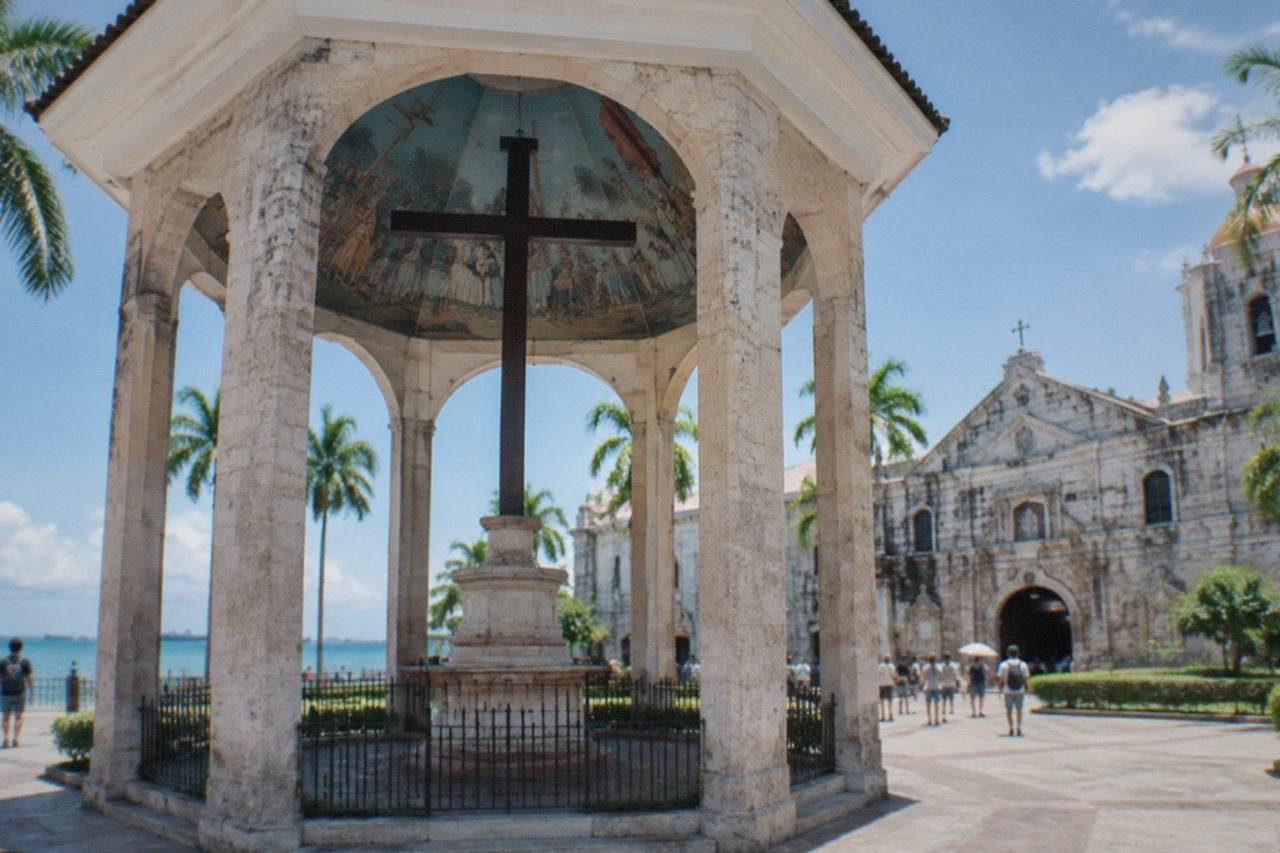
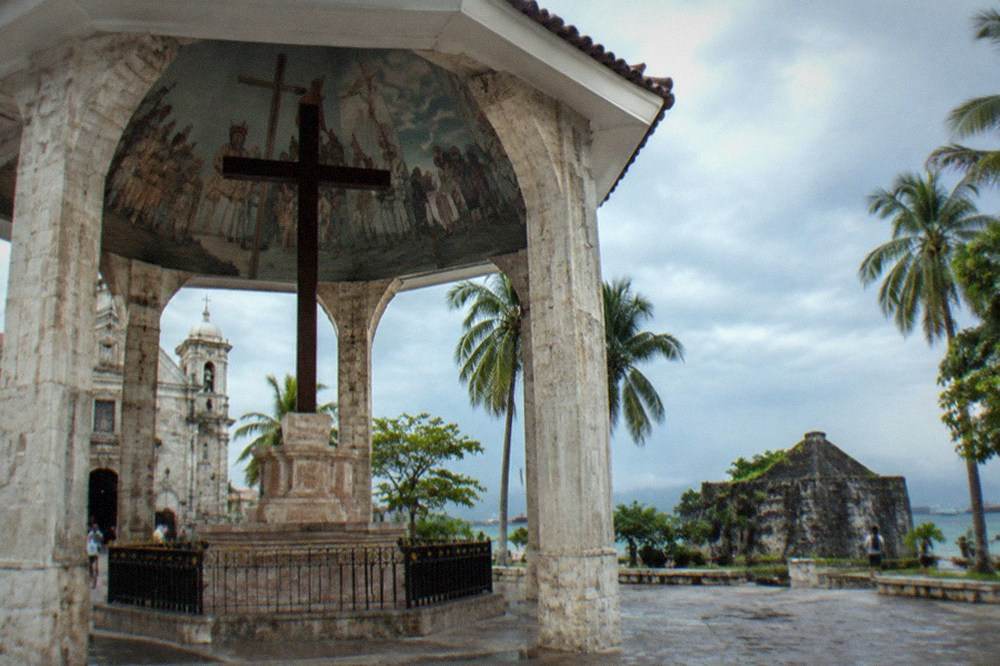
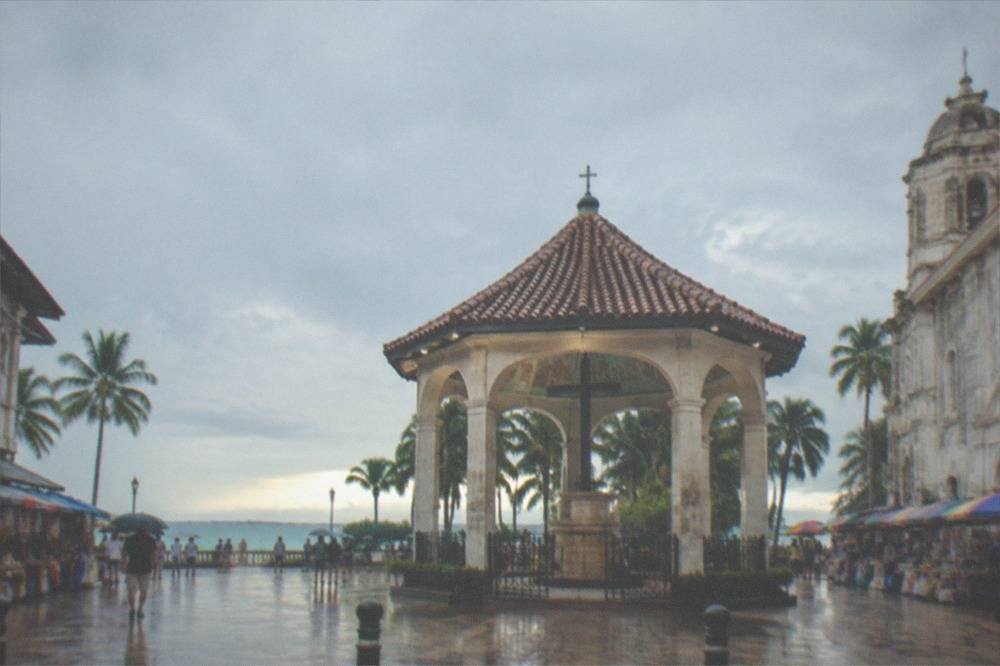
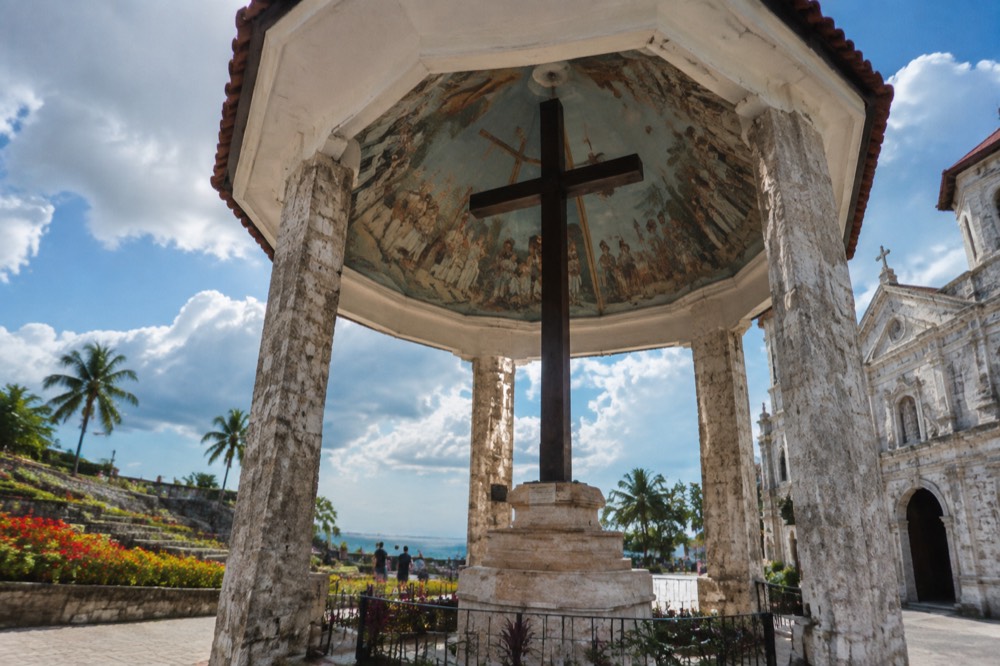
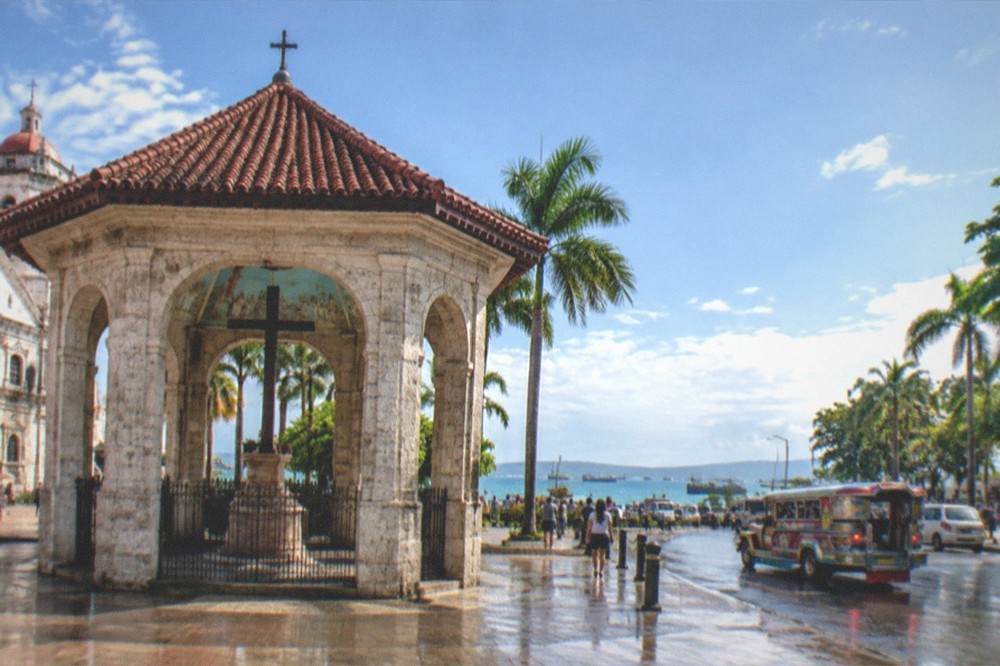
Start at Magellan's Cross, the pavilion sheltering the cross planted in April 1521 by Ferdinand Magellan's expedition, according to the Basilica's own chronicles. The painted ceiling above it depicts the arrival and the baptism of Rajah Humabon and Queen Juana. The site is free and generally open from about 8 AM to 6 PM, though no official operator page publishes hours, so treat those as planning figures. The full history of the cross and the 1834 gazebo is covered in the Magellan's Cross guide.
Two minutes away stands the Basilica Minore del Santo Niño, founded on 28 April 1565 by Fr. Andres de Urdaneta on the spot where the Santo Niño image was found, and home to the Flemish wooden statue given to Queen Juana in 1521. The present structure dates from roughly 1735 to 1740. It is an active church, so dress modestly and keep quiet during Mass; the pre-pandemic Mass schedule was restored in late 2024. The Basilica guide lists the Mass times in detail.
Fort San Pedro, a ten-minute walk along the port side, is the oldest triangular bastion fort in the country: work started in 1565 under Legazpi and the present stone structure dates from 1738. The SunStar report on the 2026 fee update confirms entrance stayed at P50 (about US$0.8) regular and P40 (about US$0.6) for students and seniors, with only event rental rates revised. Hours run roughly 8 AM to 7 PM. Give it forty-five minutes; the walls, gardens and small museum exhibits inside are compact. The Fort San Pedro guide has the full background.
If your day happens to fall on a weekend, note that some museums close: Casa Gorordo is listed Monday to Saturday, and Museo Sugbo, which reopened in late August 2025 after nearly two years, runs Monday to Friday only, charging P50 (about US$0.8) general and P25 (about US$0.4) for students and seniors.
For travelers who would rather have a local lead the downtown portion, the tip-based Essential Cebu free walking tour on GuruWalk covers ten central stops and is a strong fit for the morning block, and a guided market walk is worth considering for the lunch hour instead of exploring the stalls alone.
Midday: Colon Street, Carbon Market And Where To Eat Lunch?
Lunch is the moment to leave the heritage plazas for Cebu City's oldest commercial street, Colon, and the market food scene around it, where a full local meal costs a fraction of a hotel restaurant. Colon Street, often called the oldest street in the Philippines, sits in the heart of the 1565 Spanish settlement, and the Carbon Market district behind it is the city's produce and street-food heart. Cebu's signature dish, lechon, roasted pig, is the thing to order, and the market stalls serve it by weight with rice.
The practical move is to eat early, around 11:30, before the midday heat peaks and before the afternoon drive uphill. Casa Gorordo Museum, a 19th-century ancestral house on Lopez Jaena Street, fits neatly into this window if it is a weekday: the listed fee is about P100 (about US$1.6) regular, about P50 (about US$0.8) for students and seniors, with hours Monday to Saturday. The Yap-Sandiego Ancestral House nearby is another heritage option, though no verified current fee or hours exist for it, so check on-site.
For food, the Cebu Market & Food Tour is the related pick for this itinerary: a market food walk through the downtown food scene, rated highly from a small number of reviews, with the price only on the operator's live listing. A local guide matters at the markets, where the best stalls are unmarked and ordering lechon by the kilo has its own etiquette. The full index of guides sits on Cebu Travel Guide.
The guided walk is not the only way to eat well at midday, but it removes the guesswork from the stalls, and the same operator's listing carries the current price and availability. Booking ahead also locks the lunch window so the afternoon mountain leg is not squeezed.
If you would rather self-direct, keep it simple: pick a lechon stall with a visible queue, add puso, rice cooked in woven coconut leaves, and finish with fresh mango. Then get moving uphill by 13:00, because the Busay attractions close in the early evening and the mountain road takes real time.
Afternoon: Temple Of Leah, Sirao Garden And Tops Lookout?
The Busay highland trio fills the afternoon on a single uphill road: Temple of Leah, Sirao Flower Garden and Tops Lookout, in that order, with modest combined entrance costs on a weekday. Temple of Leah charges a little more on weekends than weekdays, Sirao Garden a flat per-person rate, and Tops Lookout a regular and a discounted rate. Tops is the payoff, open 24 hours, so time your arrival for late afternoon light.
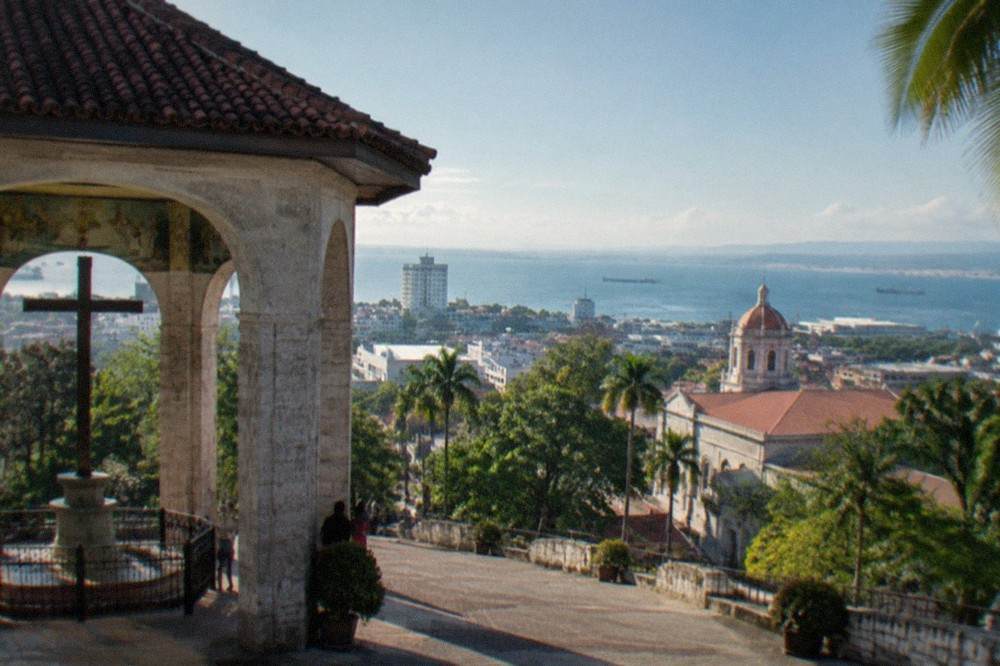
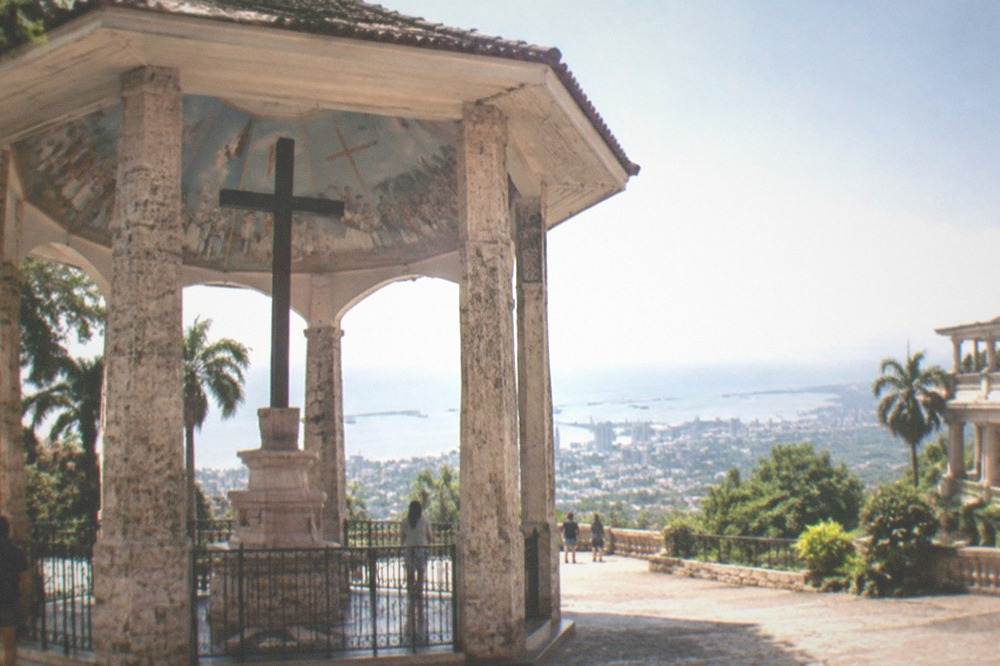
The drive from downtown to Busay takes roughly 30 to 45 minutes by car or taxi depending on traffic, a figure to treat as a planning estimate since no official timing exists for that exact journey. Do them in ascending order. Temple of Leah first, the hilltop shrine built as a grand mausoleum in Roman style; note that its hours were shortened from April 2026 and it occasionally closes for private events, so a quick check of its hotline before you go saves a wasted trip. Its listed fee is about P120 (about US$1.9) on weekdays and P150 (about US$2.4) on weekends. The Temple of Leah guide covers the fee history and the dispute over its future.
Sirao Flower Garden comes next, a few minutes further along, famous for its celosia blooms and the "little Amsterdam" flower fields. The fee is about P100 (about US$1.6) per person, with discounts for seniors and PWDs and free entry for children under three. There are two adjacent gardens and hours vary by day, so confirm on-site. The Sirao guide explains the difference between the two.
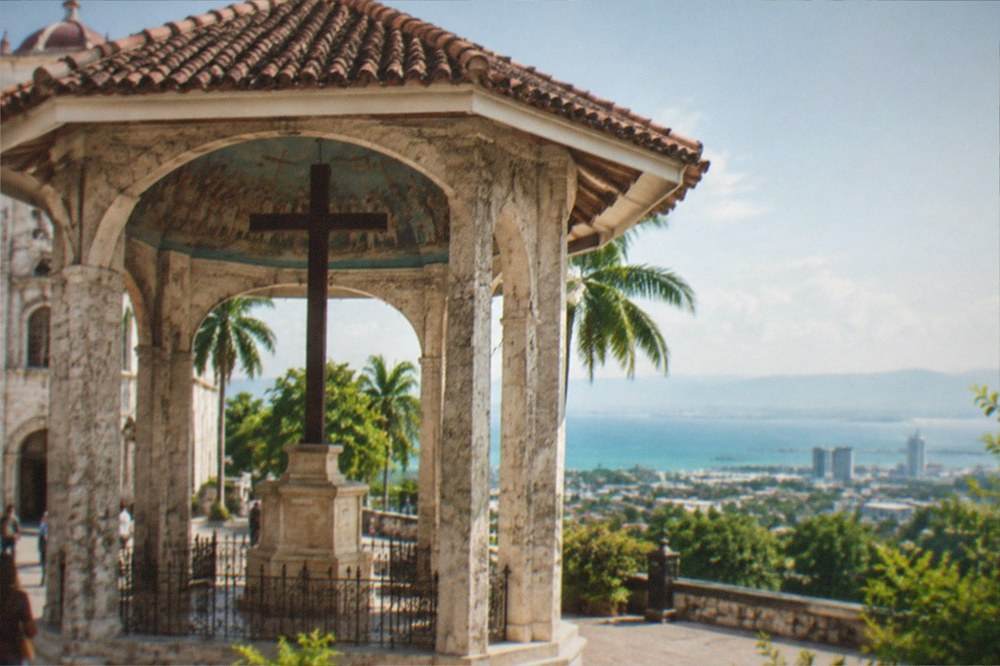
Finish at Tops Lookout, the highest of the three and the operator's own site confirms it is open 24 hours, with entry at P100 (about US$1.6) regular and P70 (about US$1.1) for seniors and PWDs, plus a rooftop deck add-on for about P50 (about US$0.8). Arrive by 16:30 or 17:00, watch the light change over the city and the Mactan Channel, and stay for sunset if the sky is clear. A shuttle-and-entry bundle from IT Park is listed at P200 (about US$3.2). The Tops Lookout guide has the full fee and transport detail. For travelers who would rather not arrange the mountain leg themselves, the half-day highlands guided tour covering temples, gardens and views is the natural fit for this block.
Evening: Dinner, The Waterfront And Night Views?
After dark, Cebu City's evening splits into three obvious choices: dinner back downtown, the IT Park on the former Lahug airport grounds, or a second visit to Tops Lookout for the night skyline, since it never closes. Lechon remains the dish to seek out, and the Cebu Food guide covers where the city's most famous lechon houses are. A one-day visitor should pick one evening base and stay put, because traffic between districts eats the night.
The IT Park guide covers the dining and nightlife cluster in the city's business district, while the Cebu nightlife page maps the bar streets. Cruise passengers on a short port call have a dedicated plan in the Cebu cruise day itinerary, which compresses this same day further. Families traveling with children should check the Cebu with kids itinerary for child-paced swaps, such as skipping the temple in favor of a resort afternoon on Mactan.
How Much Does A One Day Cebu City Itinerary Cost?
A solo traveler can run this full one-day Cebu City itinerary for a modest total in entrance fees and local transport, before food, with every figure below verified from current sources. The biggest variable is transport: jeepneys cost a few pesos for the first 4 km, while taxis and ride-hailing multiply that several times. All entrance fees together stay low on a weekday. Add meals at market prices and the whole day remains inexpensive.
Here is the fee and transport picture in one table:
| Item | Cost | Notes |
|---|---|---|
| Magellan's Cross | Free | Pavilion, about 8 AM-6 PM |
| Basilica Minore del Santo Niño | Free | Working church, donations welcome |
| Fort San Pedro | P50 (about US$0.8) regular, P40 (about US$0.6) student/senior | SunStar-confirmed 2026 rates |
| Casa Gorordo Museum | about P100 (about US$1.6) | Mon-Sat, fee from listing sources |
| Temple of Leah | about P120 (about US$1.9) weekday, P150 (about US$2.4) weekend | Hours shortened since April 2026 |
| Sirao Flower Garden | about P100 (about US$1.6) | Two adjacent gardens, confirm on-site |
| Tops Lookout | P100 (about US$1.6) regular, P70 (about US$1.1) senior/PWD | Open 24 hours, operator site |
| Jeepney first 4 km | P14 (about US$0.2) traditional, P17 (about US$0.3) modern | DOTr-approved fares from 28 Sept 2026 |
A realistic daily budget, at market prices rather than hotel prices:
| Budget tier | Per person, one day | What it covers |
|---|---|---|
| Bare-bones | P800 (about US$12.7)-P1,200 (about US$19.1) | Jeepneys, market meals, all entrance fees |
| Comfortable | P2,500 (about US$40)-P4,500 (about US$72) | Ride-hailing, sit-down meals, one guided tour |
| Full-day private | from US$38 per person | Small-group city tour, 3 hours |
The Cebu budget and costs page expands these tiers into a full trip budget. For a structured version of the day, the Small Group Cebu City Tour covers the heritage core with a guide at a published from-price.
How Do You Get Around Cebu City In One Day?
The practical transport stack for one day in Cebu City is jeepneys for short downtown hops, a taxi or ride-hailing app for the Busay mountain leg, and your own feet inside the heritage district, since its three anchors sit within walking distance of each other. Jeepney minimum fares are set by the DOTr-approved adjustment of 28 September 2026, with a slightly higher rate on modern units. The Busay climb is the one leg where a car is genuinely worth it.
Grab operates across Cebu City, Mandaue and Lapu-Lapu with app-shown upfront pricing, and it is the default for the mountain road, where jeepneys also run but fill up. The Cebu Bus Rapid Transit began partial operations on 13 March 2026 on a single Il Corso-to-IT Park route mixing a short dedicated corridor with ordinary traffic; free rides were offered at launch, and later reporting lists the regular air-conditioned bus fare of P18 (about US$0.3) for the first 5 km, so check the current fare before relying on it. Full BRT operations are not expected before 2027.
The transport comparison for the day:
| Mode | Cost | Best used for |
|---|---|---|
| Walking | Free | The heritage district loop |
| Jeepney | P14 (about US$0.2) first 4 km, then P2 (about US$0.0)/km | Downtown hops, Colon Street |
| Grab or taxi | App-metered, varies | The Busay mountain leg, airport runs |
| CBRT bus | P18 (about US$0.3) first 5 km, then P3 (about US$0.0)/km | Il Corso to IT Park corridor only |
| MyBus from the airport | P50 (about US$0.8) to SM City Cebu | Arrival day, airport to downtown |
The getting around Cebu guide covers routes, apps and the airport transfer in full, and the Grab app in Cebu page explains pickup points and surge pricing.
When Is The Best Time Of Year For A One Day Cebu City Itinerary?
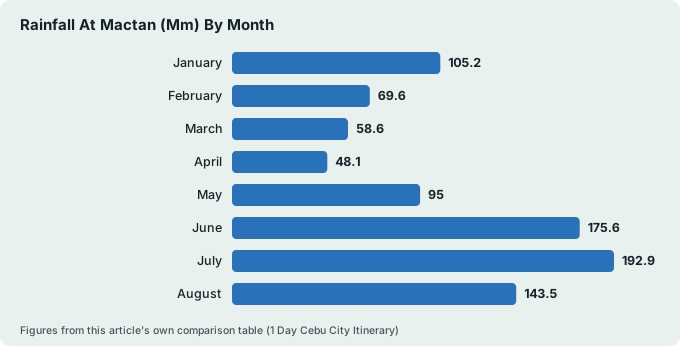
The best months for this one-day Cebu City itinerary are January through May, the PAGASA dry season, with April the driest month of all at just 48.1 mm of rain at the Mactan station. January adds the Sinulog festival, whose Grand Parade falls on the third Sunday, 17 January in 2027, at the Cebu City Sports Center. Avoid October, the wettest month at 194.8 mm, for the outdoor highland block, since the Busay viewpoints lose their value in cloud.
Cebu is tropical, not temperate: PAGASA's national rule puts the rainy season from June to November and the dry season from December to May, and the Mactan station's 1991-2020 normals show 1,685.0 mm of rain and 138 rain days across the year, with a mean temperature of 28.1 °C. The monthly rainfall shape matters for this itinerary because two of its three blocks are outdoors.
| Month | Rainfall at Mactan (mm) | Season |
|---|---|---|
| January | 105.2 | Dry, Sinulog month |
| February | 69.6 | Dry |
| March | 58.6 | Dry |
| April | 48.1 | Dry, driest month |
| May | 95.0 | Dry season's end |
| June | 175.6 | Rainy season begins |
| July | 192.9 | Rainy |
| August | 143.5 | Rainy |
| September | 179.6 | Rainy |
| October | 194.8 | Wettest month |
| November | 161.9 | Rainy, typhoon tail |
| December | 139.7 | Transition to dry |
If your trip falls in the rainy half of the year, the plan still works with a weather-flexible order: do the museums and Fort San Pedro in rain, and hold Tops Lookout for any clear evening, since it is open around the clock. The best time to visit Cebu and Cebu weather and typhoon season pages go deeper, and the Sinulog festival guide covers the January crowds, when hotel demand surges around parade day.
Common Questions About One Day In Cebu City
Is one day enough for Cebu City?
Yes, for the city itself. One day covers the heritage district, one museum, the Busay highland viewpoints and an evening meal. It is not enough for the south-coast highlights like Oslob or Moalboal, which need separate days; the 3 days in Cebu plan adds them properly.
What is the number one thing to see in Cebu City in one day?
Magellan's Cross and the adjacent Basilica Minore del Santo Niño, the two anchors of the 1521 and 1565 story, are the city's most significant sights and they sit a short walk from Fort San Pedro, making them the efficient core of any single-day plan.
How do I get from Cebu Airport to the city center for this itinerary?
The MyBus airport service runs between MCIA and SM City Cebu for P50 (about US$0.8), from 6 AM to 9 PM toward the airport and 7 AM to 10 PM from it, and SM City Cebu is a short taxi or jeepney hop from the heritage district. The Cebu airport guide covers taxis and ride-hailing too.
Can I do this itinerary without a tour?
Yes. Every stop is independently accessible and the fees are paid at the gate. The guided options, the market food walk, the highlands half-day tour and the small-group city tour, add context and convenience rather than access, and the tip-based GuruWalk free walking tour is a budget alternative for the downtown block.
Is Cebu City safe for a one-day visit?
The UK, US and Australian travel advisories carry no Cebu-specific restrictions, and the country-level caution notes apply to other regions. Ordinary city precautions apply, as the Cebu safety page details.
What should I skip if I am short on time?
Cut Casa Gorordo and Colon Street before you cut anything in Busay, and if the afternoon collapses, keep Tops Lookout and drop Sirao Garden, since Tops is open 24 hours and can absorb any schedule slip.
One final note on pacing: the single most common mistake on this route is leaving the heritage district too late. The Basilica area gets crowded by mid-morning, the Busay road slows after 15:00, and Tops rewards an unhurried last hour. Start at 08:00, keep lunch short, and the whole of Cebu City's essential day fits before dark with room to spare.