Cebu Itinerary With Kids
Cebu, an island province in the Central Visayas region of the Philippines, is one of the easiest places in the country to travel with children: short distances, calm beaches and a stack of low-cost attractions.
Short answer
Cebu works well with kids because the main family attractions sit within an hour or two of each other, entry fees are low, and the dry season from December to May gives reliable beach weather.
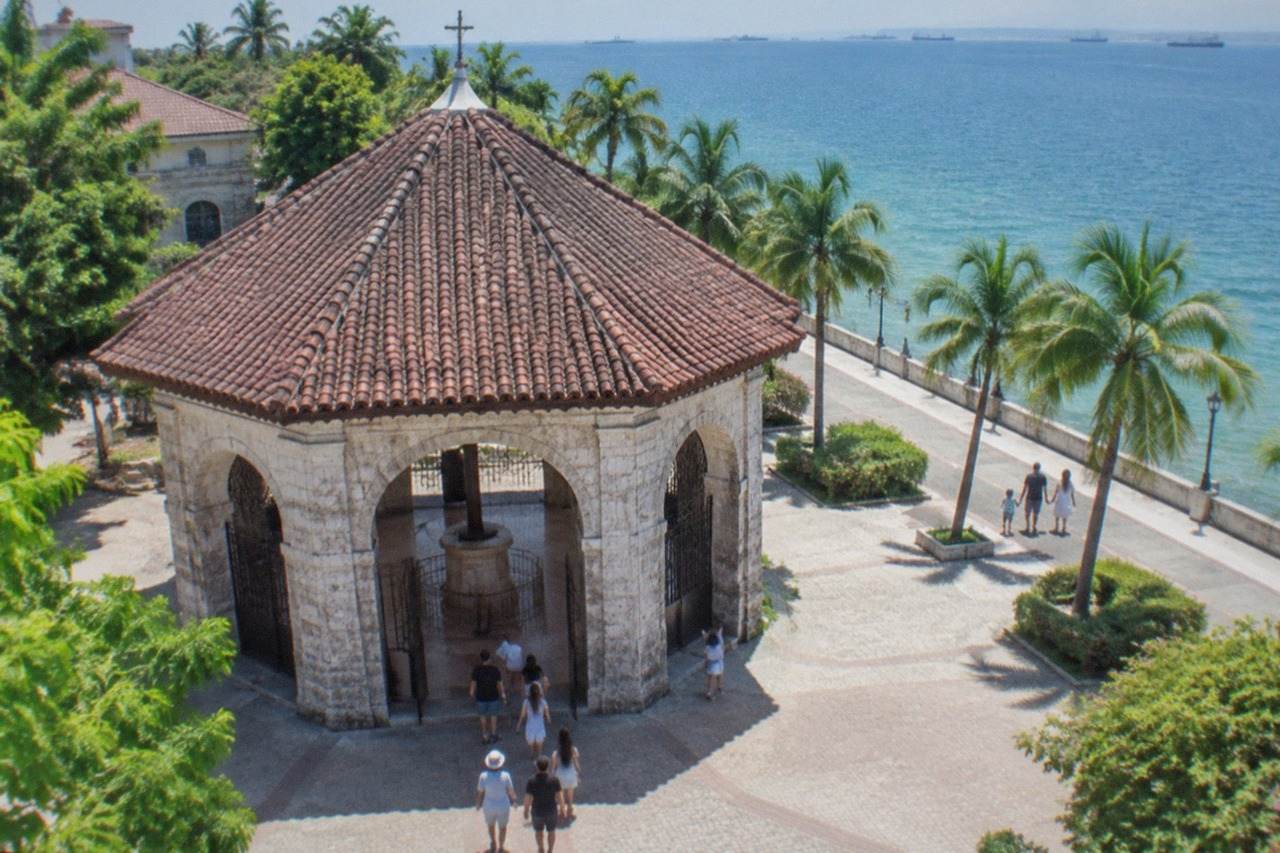
Cebu, an island province in the Central Visayas region of the Philippines, is one of the most forgiving destinations in the country for families. The distances are short, the attractions are cheap, and the mix is unusually broad: coral-stone forts and a cross planted in the city in 1521, calm swimming lagoons on Mactan, whale sharks and waterfalls two to three hours south. This itinerary lays out a realistic plan for families with children, built around verified fees, sensible travel times and the kinds of stops that hold a child's attention past the first twenty minutes.

Is Cebu A Good Place To Visit With Kids?
Yes, Cebu is a genuinely good destination for children, and for reasons that are structural rather than lucky. The island combines a walkable colonial core in Cebu City with shallow, sheltered swimming areas around Mactan, and its headline day trips, from Oslob's whale sharks to Kawasan Falls, all sit within a few hours by road. Entry fees at the main attractions are small, so a family of four can fill a day for the price of one theme-park ticket in Europe or the United States.
The practical details matter as much as the attractions. Cebu's climate is tropical, not seasonal in the temperate sense: PAGASA, the Philippine weather service, classifies December through May as the dry season and June through November as the rainy season, and the Mactan station's 1991-2020 normals put annual rainfall at 1,685.0 mm spread over 138 rain days. In plain terms, a family visiting between December and May can plan beach days with reasonable confidence, while a July or August trip should carry indoor backup plans, and several of those already exist: Casa Gorordo Museum, Museo Sugbo and the Basilica del Santo Niño all work in a downpour.
One more structural point deserves an early mention. Cebu City, Lapu-Lapu City and Mandaue City are highly urbanized cities, administratively independent of Cebu Province even though they sit on the same island. Families usually sleep in one of these three cities, most often on Mactan for the beaches or in Cebu City for the heritage sites, and the two are connected by two road bridges plus the newer CCLEX crossing, so a single base serves the whole itinerary below.
What Does A Perfect Three-Day Cebu Itinerary With Kids Look Like?
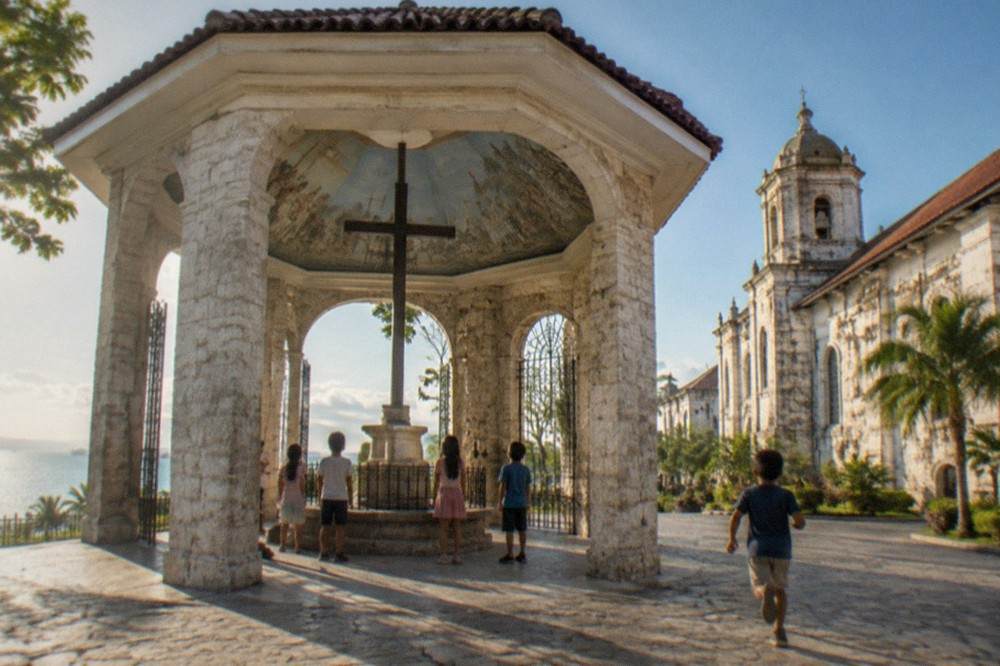
The strongest three-day plan splits Cebu into a city day, a south-coast nature day and a Mactan beach day, in that order. Day one covers Fort San Pedro, Magellan's Cross and the Basilica del Santo Niño on foot, all within a few blocks. Day two heads south to Oslob for whale sharks and Tumalog Falls, an early start that rewards families with calmer water. Day three stays close to base on Mactan for island hopping or a resort waterpark.
The order is deliberate. The city day needs the least energy and lets children adjust to the heat at a stroll-friendly pace. The Oslob day is the one that demands a pre-dawn wake-up, so it belongs in the middle, when excitement is highest, and the Mactan day at the end can shrink or stretch depending on flight times. Families with more time can stretch this into the fuller plans in our three days in Cebu or five days in Cebu itineraries, which add Moalboal and Bantayan.
A guided option also exists for the city portion, and for some families it is the difference between a stressful morning and a relaxed one. The market and food walk below is the one this site recommends most often for visitors with older children, since it pairs the heritage stops with tastes a child would never pick on their own.
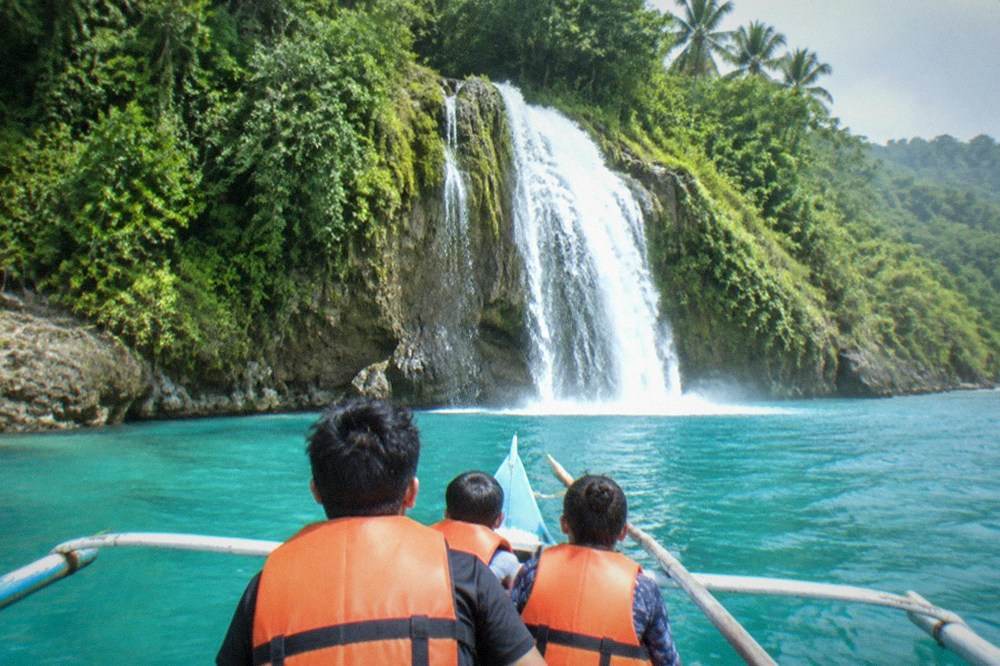
For the south-coast day, the practical anchors are the Oslob whale-shark interaction, which the Oslob municipal government prices at P1,000 (about US$15.9) per foreign visitor and P500 (about US$8.0) per Filipino, boat and guide included, and Tumalog Falls, whose entrance runs about P50 (about US$0.8) per person. Children can watch from the boat, which many families with younger kids prefer, and the interaction area operates roughly 6 AM to 12 PM, which is why every tour leaves Cebu before dawn. The falls stop is short, a swim and a photo, and it breaks up the return drive well.
Which Cebu Attractions Are Best For Children?
The attractions that consistently work for children in Cebu are Fort San Pedro for climbing and open space, Tops Lookout for the sunset drive, Sirao Flower Garden for photos, the Moalboal sardine run for snorkeling from shore, and the marine sanctuaries around Mactan for calm, shallow swimming. Each of these charges a small fee or none at all, and each can absorb a family for between one and three hours.
The biggest letdowns for kids are the opposite: long bus rides to sights that look better in photos than in person.
The verified fee picture for the main family-friendly stops looks like this:
| Attraction | Child-friendly because | Entry fee | Hours |
|---|---|---|---|
| Fort San Pedro | Open lawns, walls to walk, shade | P50 (about US$0.8) regular, P40 (about US$0.6) students and seniors | About 8 AM to 7 PM |
| Magellan's Cross | Free, quick, next to the Basilica | Free | About 8 AM to 6 PM |
| Tops Lookout | Short drive, big view, cool air | P100 (about US$1.6) regular, P70 (about US$1.1) seniors and PWD, under 2 free | Open 24 hours |
| Sirao Flower Garden | Flower fields, easy paths | About P100 (about US$1.6) | Roughly 8 AM to 5 PM |
| Taoist Temple | Free, colorful, uphill drive | Free, donations welcome | Daytime, confirm locally |
| Moalboal sardine run | Snorkel from shore, no boat needed | P100 (about US$1.6) environmental user fee | Year-round from shore |
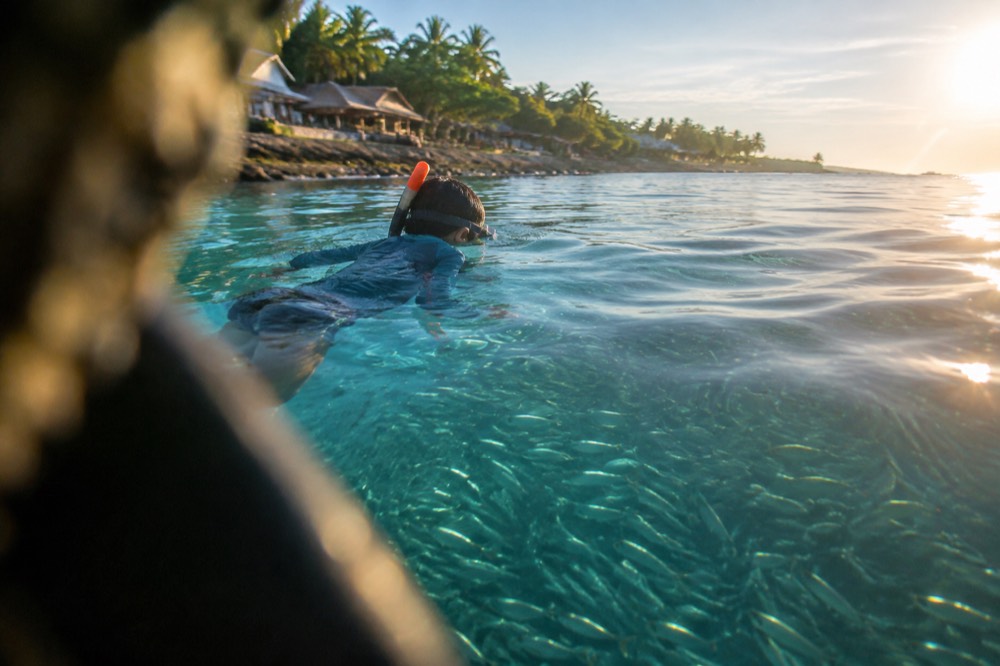
Two of these deserve special mention for families. Tops Lookout, high in the hills of Busay above Cebu City, is the classic evening trip: the operator's own site confirms 24-hour access and the P100 (about US$1.6) regular fee, and the temperature drop alone is worth the drive after a hot city morning. The Moalboal sardine run is the other standout, because the permanent school of sardines sits a few dozen metres off Panagsama Beach, meaning a confident child swimmer can snorkel over a bait ball the size of a house without ever boarding a boat. Our Moalboal sardine run guide covers the practical details, and the municipal government's own tourism page notes the sardines are present year-round.
For the city morning, a guided walk takes the pressure off parents to narrate four centuries of history. The food-focused option below is the one most often booked by families on this site, and the historical half-day tour suits those who want the landmarks covered efficiently.
A guided walk also solves a problem specific to Cebu City with children: the heritage core is compact but the streets are busy, and a guide who knows the shortcuts between the Basilica, Magellan's Cross and Fort San Pedro keeps small legs from tiring before lunch. The market walk adds a second layer, since children who would refuse an unfamiliar dish at a restaurant will often try the same dish when a guide hands it over at the stall it was made at.
How Much Does A Family Trip To Cebu Cost?
A family of four should expect the attraction and local-transport side of a Cebu trip to be inexpensive by Western standards, with the biggest single line usually being a guided south-coast day tour. Individual entry fees are small: the priciest attraction on a family list is the Oslob whale-shark interaction for foreign visitors, while most city sights charge far less. Foreign tourists staying under a year are also exempt from the Philippine travel tax, which removes a fee many guides wrongly add to family budgets.
The exemption point is worth dwelling on, because it is one of the most commonly misstated facts about Philippine travel. The travel tax, P1,620 (about US$26) economy class, falls on Filipinos and residents departing the country; TIEZA, the tourism authority that collects it, exempts non-immigrant foreigners whose stay is under one year. A visiting family pays it only on the departure of any Filipino family member, not on the visitors' own tickets.
The verified per-person fees a family actually pays, by itinerary day:
| Itinerary day | Verified per-person fees | Notes |
|---|---|---|
| City heritage day | Fort San Pedro P50 (about US$0.8) regular, P40 (about US$0.6) student; Magellan's Cross and the Basilica free | All within walking distance |
| Busay highlands day | Tops Lookout P100 (about US$1.6) regular, P70 (about US$1.1) senior or PWD, under 2 free; Sirao Flower Garden about P100 (about US$1.6) | Private car or habal-habal for the hill roads |
| Oslob and Tumalog day | Whale sharks P1,000 (about US$15.9) foreign, P500 (about US$8.0) Filipino; Tumalog Falls about P50 (about US$0.8) | Boat and guide included at Oslob |
| Mactan island-hopping day | Environmental fee P100 (about US$1.6) for foreign tourists; sanctuary stops about P150 (about US$2.4) to P300 (about US$4.8) each | Usually booked as a tour with boat and lunch |
The pattern is clear: the city and highlands days cost very little, and the southern day trips are where the budget goes. Many families balance the two by doing the expensive Oslob day once and filling the remaining days with free or near-free stops. Our Cebu budget and costs page breaks this down further, including food and accommodation ranges.
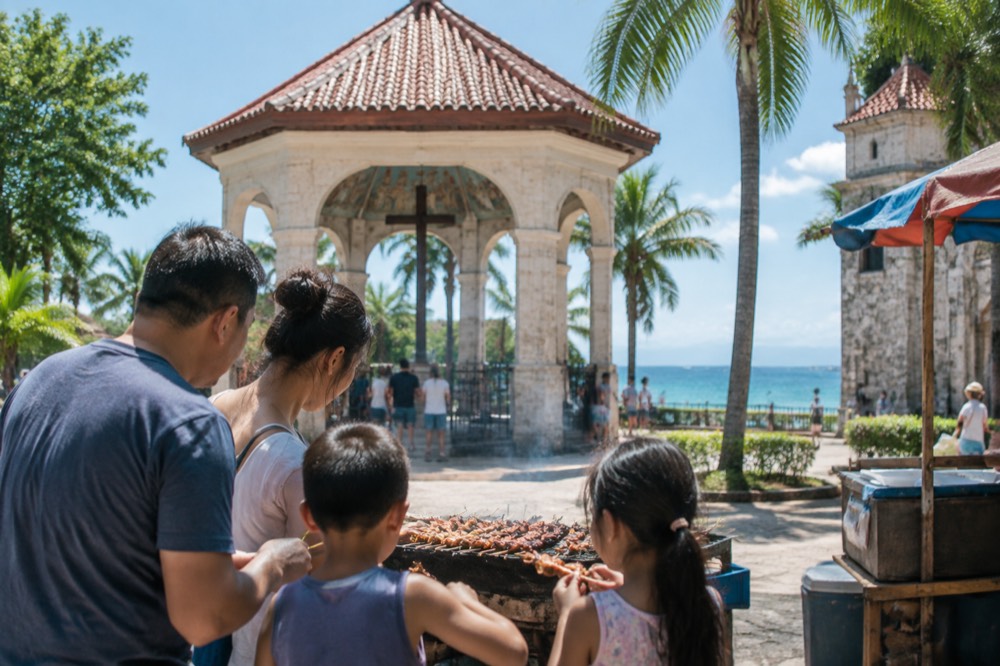
How Should You Get Around Cebu With Children?
The realistic transport options for families in Cebu are Grab rides for city days, private van or car hire for the southern day trips, and the airport MyBus for arrival day, with jeepneys as a fun, cheap add-on rather than a primary plan. The MyBus between Mactan-Cebu International Airport and SM City Cebu runs from about 6 AM to 10 PM toward the airport.
For Oslob and Moalboal, a private hire is almost always the right call with children, because the Ceres bus rides run three to four hours each way.
The airport's own transport guide confirms the MyBus details, and the same page covers the taxi picture: yellow airport taxis flag down at about P70 (about US$1.1), while white metered city taxis flag down at about P40 (about US$0.6) plus roughly P14 (about US$0.2) per kilometre. Grab operates throughout Metro Cebu with designated pickup zones at both airport terminals, which removes most of the haggling stress that families rightly want to avoid.
A word on the bus option, because it is genuinely good for some families and wrong for others. Ceres Liner runs frequent services from the Cebu South Bus Terminal to Moalboal, roughly every 30 to 45 minutes at fares of about P120 (about US$1.9) to P210 (about US$3.3), and to Oslob several times daily at about P145 (about US$2.3) to P250 (about US$4.0). With teenagers this is an adventure; with a six-year-old after a 4 AM start, it is a long, air-conditioned-or-not gamble. Our getting around Cebu guide covers every mode in detail.
| Transport mode | Best for | Ballpark cost | With kids |
|---|---|---|---|
| MyBus airport bus | Arrival and departure days | P50 (about US$0.8) per person to SM City Cebu | Luggage racks, air-conditioned |
| Grab | City days, short hops | App-priced, dynamic | Car seats not guaranteed |
| White metered taxi | Airport, evening returns | About P40 (about US$0.6) flag-down plus per km | Agree on meter use before boarding |
| Private car or van hire | Oslob, Moalboal, Badian day trips | Set day rate, arranged in advance | The default family choice |
| Jeepney | Short fun rides with older kids | Flat minimum fare, pay onboard | An experience, not a plan |
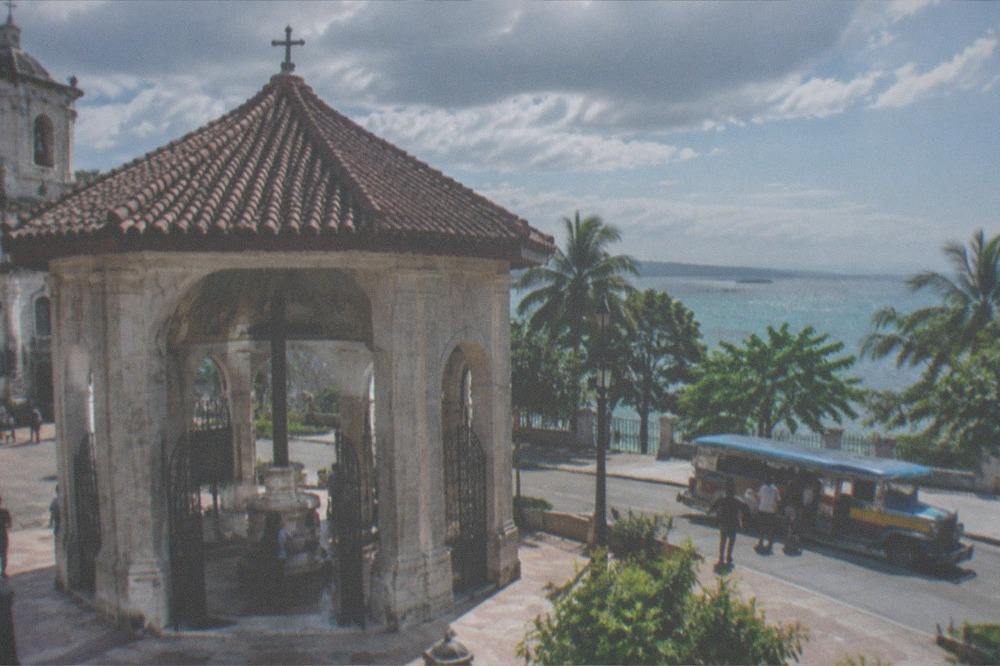
Which Cebu Day Trips Work Best With Children?
The day trips from Cebu that work with children are Oslob for whale sharks and Tumalog Falls, Moalboal for the sardine run and Pescador Island, and the Mactan marine sanctuaries for a half-day of swimming, while Kawasan Falls canyoneering suits only older, strong-swimming teenagers and Bantayan Island needs an overnight to be worth the journey. The dividing line is travel time: everything on the first list sits within about three hours of the city.
The whale-shark day deserves its careful framing. The Oslob interaction is regulated by the municipal government: a mandatory briefing, a minimum distance of about four metres from the animals, no touching, no sunscreen in the water, and a session of roughly 30 minutes. Children can and do join from the boat, and the fee structure, P1,000 (about US$15.9) for foreign visitors and P500 (about US$8.0) for Filipinos, includes the boat and guide. One honest caveat belongs in every family plan: sightings are not guaranteed. In late May 2026 the whale sharks were absent from the Tan-awan interaction area for about four days when the plankton they follow moved to a neighbouring barangay, and the local tourism office confirmed operations simply paused until the animals returned. Our Oslob whale sharks page covers the practical details and the debate around the feeding practice in full.
Kawasan Falls needs the most careful family judgment. The Level 1 entrance fee is about P200 (about US$3.2) per person for swimming only, and that lower basin, with its rope barriers and mandatory life jackets, is fine for children. The canyoneering route above it is a different activity entirely, roughly fifteen hundred to two thousand pesos with a Badian-accredited guide, and the rules tightened after an October 2025 rockfall: cliff jumping is banned at the main basin, the Alegria route is suspended, and only the Badian route operates. Our Kawasan Falls guide lays out which parts suit which ages.
| Day trip | Distance from Cebu City | Suits | Watch out for |
|---|---|---|---|
| Mactan island hopping | Within the metro area | All ages, strongest pick for under-6s | Sanctuary fees of about P150 (about US$2.4) to P300 (about US$4.8) per person |
| Oslob whale sharks and Tumalog | About 3.5 to 4.5 hours by bus, less by private van | 6 and up, boat viewing for younger | Dawn start, sightings not guaranteed |
| Moalboal sardine run | About 2.5 to 3.5 hours by bus | Confident swimmers 8 and up | Environmental user fee, shore entry |
| Kawasan Falls Level 1 | Southern Cebu, usually via Moalboal or direct tour | Swimmers, all ages at the basin | Canyoneering is a separate, tougher activity |
| Bohol day trip | About 2 hours by fastcraft each way | 8 and up | Very long day, about 14 hours door to door |
The Bohol option, a same-day return trip via ferry from Pier 1, is a genuine contender for families with older children, but it is a 14-hour day and should be scheduled with that honestly in mind.
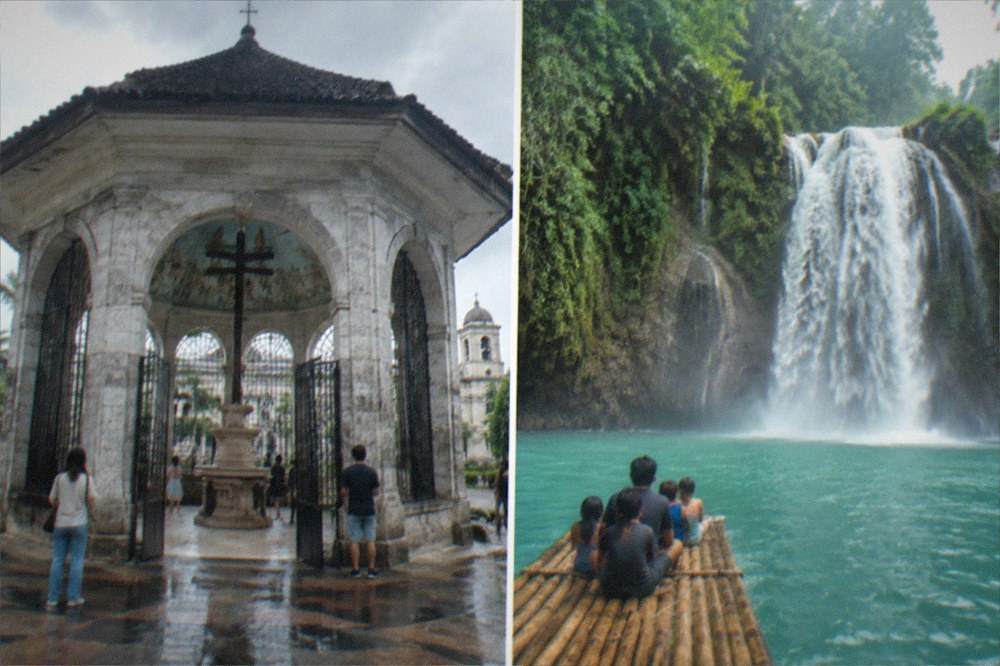
When Is The Best Time To Visit Cebu With Kids?
The best months to visit Cebu with children are January through May, with the sweet spot in March and April, when the dry season is at its most reliable and the January Sinulog crowds have gone. PAGASA's national classification puts the rainy season from June to November, and the Mactan station's normals show October as the wettest month at 194.8 mm of rain against April's 48.1 mm. Families tied to school holidays in July or August can still travel, but they should keep the museum list ready.
The numbers behind that advice come straight from the weather service. The driest stretch runs from February through April, with monthly rainfall between 48.1 mm and 69.6 mm, while every month from June through October exceeds 140 mm. The typhoon season officially spans June to November with a peak roughly July to October, and the Visayas region carries a high landfall risk in November and December. This is not abstract: Typhoon Tino (international name Kalmaegi) brought severe flooding to Cebu in early November 2025, and the province declared a state of calamity, though the tourism department confirmed the core zones around Cebu City and Mactan were largely unaffected and open within days.
January deserves a special note for one reason: Sinulog. The festival's grand parade falls on the third Sunday of January, 17 January in 2027, and the main venue is the Cebu City Sports Center. For some families the festival is the trip; for others, that weekend is the one to avoid, since the city fills and roads close. Our best time to visit Cebu page covers both perspectives.
What Should You Pack For Cebu With Kids?
Pack for a hot, humid, occasionally wet destination: reef-safe sun protection, swim gear for every family member, light rain covers from June to November, and modest clothing for the churches, plus motion-sickness remedies for the southern day trips. Cebu sits at a mean temperature of 28.1 C per the Mactan normals, with electricity at 220 to 230 V on plug types A, B and C, so most North American devices need no adapter for the plug shape but may need a voltage check.
The church dress code point matters more than visitors expect. The Basilica del Santo Niño is an active place of worship with a full mass schedule, and shoulders and knees need to be covered to enter comfortably; families often keep a light wrap or a pair of longer shorts in the day pack for exactly this stop. The reef-safe sunscreen point matters too, and not only for the environment: it is banned outright in the Oslob interaction water, so a family that arrives with only conventional sunscreen has to choose between skipping the swim or going without protection.
| Item | Why | Season |
|---|---|---|
| Reef-safe sunscreen | Required for Oslob water entry, better for all marine sites | All year |
| Rain ponchos or compact umbrellas | Afternoon downpours are normal in the wet season | June to November |
| Light cover-ups | Church entry at the Basilica and other active sites | All year |
| Motion-sickness remedy | Winding southern roads to Oslob and Moalboal | All year |
| Water shoes | Rocky entries at Tumalog and Kawasan | All year |
| Type A plug adapter | Philippine sockets take A, B and C at 220 to 230 V | All year |
One planning note that saves families real trouble: eTravel registration. Every arriving passenger, Filipino or foreign, must register on the official eTravel platform within 72 hours before arrival, and the registration is free. The Bureau of Immigration has repeatedly warned about fake eTravel sites that charge fees, so the only site to use is the official government one, and it should be completed before the family boards, with the QR codes saved where they can be shown at check-in. Our Philippines visa and eTravel guide covers the 30-day visa-free stay that most visiting families qualify for.
Where Should A Family Stay In Cebu?
Most families should stay on Mactan Island if the trip centres on beaches and waterparks, or in Cebu City around Fuente Osmeña or the IT Park if the trip centres on heritage and day tours, and a split of a few nights in each is the plan that serves this itinerary best. Mactan puts the airport, the island-hopping boats and the resort pools within a short radius, while Cebu City puts the colonial core and the south-bound bus terminal closer. Tours pick up in both areas.
The airport itself sits on Mactan, about 13 to 15 km from central Cebu City, a drive that takes roughly 25 minutes in light traffic and up to an hour when the bridges congest. That geography quietly favours Mactan for shorter trips: a family with four nights or fewer loses less holiday to transit by staying on the airport side. Our where to stay in Cebu page compares the two bases in detail, and the Cebu family travel guide covers resorts that specifically cater to children.
For the final evening wherever you stay, Tops Lookout is the reliable choice: a short uphill drive, a P100 (about US$1.6) entry, and a view over the whole metro area that gives children the geography of the trip in one glance. It is the kind of bookend that makes an itinerary feel finished.
Common Questions About Cebu With Kids
Is Cebu safe for a family trip?
The foreign advisories for the Philippines are country-wide and none name Cebu specifically: the UK guidance covers Mindanao and the Sulu archipelago, not the Visayas, and the Australian advice is a general "exercise a high degree of caution" for the country. Cebu's main family areas, the city heritage core and the Mactan resort zone, are standard tourist environments.
How many days do you need in Cebu with kids?
Three days covers the city, one southern day trip and a Mactan beach day well. Five days adds Moalboal and a second south-coast stop without rushing, and seven allows the northern islands. Our five days in Cebu itinerary shows the extended version.
Can children swim with the whale sharks in Oslob?
Yes, within the rules: the interaction is open to children with a mandatory briefing, life jackets, a minimum distance of about four metres and no sunscreen in the water. Many families with younger children choose boat viewing instead of in-water snorkeling. The fee is P1,000 (about US$15.9) per foreign visitor, P500 (about US$8.0) per Filipino, boat and guide included.
Is the water safe to drink in Cebu?
Use bottled or filtered water for drinking, as is standard practice across the Philippines; tap water is treated in the metro area but not recommended for visitors, particularly for children. Sealed bottled water is available everywhere at low cost, and most family resorts provide filtered dispensers.
Do kids pay entry fees at Cebu attractions?
Most attractions charge a reduced or free rate for small children: Tops Lookout admits children under 2 free and seniors and PWD visitors at P70 (about US$1.1), while Sirao Flower Garden admits children under 3 free. At Fort San Pedro the student and senior rate is P40 (about US$0.6); confirm the child rate at the gate.
What is the easiest Cebu day trip with a toddler?
Mactan island hopping is the easiest: short boat transfers, calm marine-sanctuary water, and lunch usually included on the sandbar stops. The environmental fee for island hopping is P100 (about US$1.6) for foreign tourists, and the sanctuary stops charge roughly P150 (about US$2.4) to P300 (about US$4.8) per person.
Families who plan around the dry season, pick one guided day to take the logistics off their own shoulders, and keep the museum list ready for a wet afternoon will find Cebu one of the least demanding tropical destinations in Asia to travel in with children, and Cebu Travel Guide covers every stop in this itinerary in dedicated depth.